

Mobile Esports Trends: Unpacking Market Growth and Global Reach
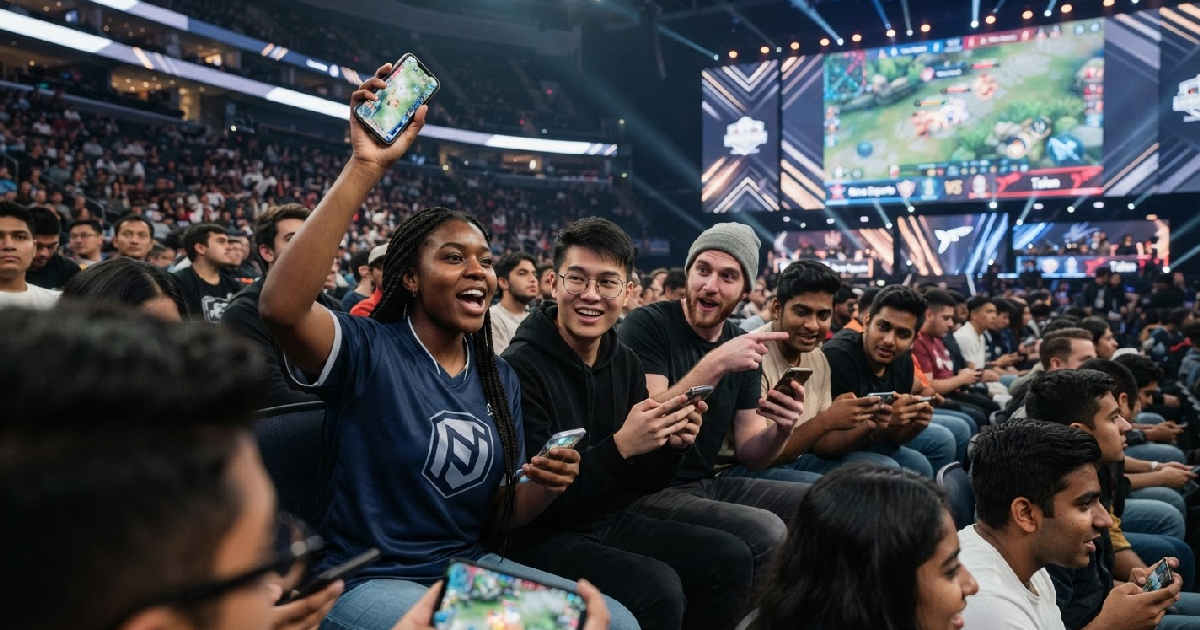
Mobile esports trends, a key part of esports gaming trends, involve competitive video game playing on smartphones and tablets that has become a global phenomenon. These mobile esports trends are defined by organized competitions ranging from massive international tournaments to smaller community-driven events.
This sector’s explosive growth stems from widespread smartphone adoption and continuous technological advancements, effectively lowering the barrier to entry for competitive gaming worldwide.
What Defines Mobile Esports Growth?
The accessibility of mobile devices underpins much of mobile esports’ expansion. Nearly everyone owns a smartphone, making competitive gaming more approachable than traditional PC or console setups.
This broad reach allows players to engage in high-level competition from virtually any location. It’s a significant shift in how competitive gaming operates.
Accessibility and technological leaps
Rapid advancements in smartphone technology are continuously pushing the boundaries of mobile gaming. Improved 5G connectivity now enables smoother, more responsive mobile esports experiences, significantly boosting player engagement.
Modern mobile devices boast hardware capabilities that rival those once exclusive to dedicated gaming consoles and PCs. This evolution supports increasingly complex graphics and intricate game mechanics.
Specialized mobile titles
A crucial driver for the market has been the development of mobile-specific esports titles. These games are meticulously optimized for handheld play, offering sophisticated experiences tailored to touchscreen interfaces.
Games like PUBG Mobile and Call of Duty Mobile exemplify this trend, providing competitive depths previously confined to larger platforms. Developers are actively building games from the ground up for mobile competitive play.
Explosive Market Trajectory and Investment
The financial scale of mobile esports underscores its burgeoning importance in the gaming industry. Projections show remarkable growth, attracting significant capital and attention.
This includes investment from game developers, corporate sponsors, and major tournament organizers, elevating the entire sector.
Billions in market value
The global mobile esports market is set for exponential growth. Experts project its value to climb from an estimated $655.1 million in 2024 to approximately $8.62 billion by 2034.
Another analysis forecasts an even higher trajectory, anticipating a rise from $1.94 billion in 2024 to $21.8 billion by 2035. This sustained expansion is driven by various factors.
Publisher and sponsor commitment
Major publishers such as Tencent and NetEase are heavily investing in mobile esports, organizing large-scale events and professional leagues. This commitment helps solidify the sport’s legitimacy.
The influx of investment leads to larger prize pools, attracting top talent and further professionalizing the scene. For more on the wider industry, exploring the latest esports trends can provide broader context.
Global Dominance and Regional Powerhouses
While mobile esports is a global phenomenon, certain regions have emerged as dominant forces. Their unique market conditions and cultural adoption patterns contribute significantly to this.
This geographical distribution highlights the diverse factors driving engagement and competitive success across the world.
Asia-Pacific’s commanding lead
The Asia-Pacific region stands out for its unparalleled dominance in mobile esports. High smartphone penetration combined with budget-friendly data plans creates an ideal environment for growth.
Countries within Southeast Asia, India, and other parts of Asia are seeing a surge in mobile device adoption. This fuels massive player bases and enthusiastic audiences.
Expanding player bases
Emerging markets globally are experiencing a rapid expansion of mobile gaming communities. This includes Latin America and parts of Africa, where mobile phones are often the primary internet access point.
These regions contribute significantly to the sheer volume of players and viewers. Their engagement is a vital component of the sector’s overall health.
Top Titles Fueling the Competitive Scene
Several marquee mobile titles have become pillars of the competitive mobile esports ecosystem. These games consistently draw millions of players and spectators, defining much of the competitive landscape.
Their developers continually innovate to keep the experiences fresh and engaging for a global audience.
Honor of Kings and PUBG Mobile’s massive draw
Honor of Kings, a MOBA from Tencent Games, is among the most played games globally, boasting an estimated 100 million daily players. Its 2022 International Championship featured a staggering $10 million prize pool.
PUBG Mobile, a battle royale title, has also set prize pool records and garnered immense viewership, with over 127 million hours watched in 2024. These titles demonstrate the scale of mobile competitive play.
Mobile Legends: Bang Bang breaks viewership records
Mobile Legends: Bang Bang (MLBB) has cemented its status as a global mobile gaming giant, rivaling established PC MOBAs. It led mobile esports viewership in 2024 with nearly 476 million hours watched.
The M7 World Championship in 2026 shattered records, peaking at 5,680,511 concurrent viewers. This monumental achievement showcases the intense fan engagement and strategic depth of the game.
Evolving Mechanics and Competitive Integrity
The structure and mechanics of mobile esports tournaments closely mirror those of traditional esports. Organized, multiplayer competitions are standard, featuring skilled players and teams.
However, the unique aspects of mobile play necessitate continuous adaptation to maintain fairness and engagement.
Diverse game genres and platforms
Mobile esports encompasses a wide array of game types. Multiplayer Online Battle Arena (MOBA) games, like MLBB and Honor of Kings, held the largest share at 25.1% in 2024 due to their strategic depth and high engagement.
Battle Royale, First-Person Shooter (FPS), Sports, Racing, and Card and Strategy Games also feature prominently. Tournaments are hosted across various platforms, including YouTube Gaming, Twitch, Facebook Gaming, and regional apps like Nimo TV, alongside offline events.
Ensuring fair play
Maintaining competitive integrity is paramount in mobile esports. Developers are constantly working to standardize competition formats, enhance security measures, and balance gameplay mechanics.
These efforts ensure that matches are fair and outcomes are legitimate. Adapting regulations to keep pace with rapid technological advancements remains a continuous challenge.
What’s Next for Mobile Esports?
The future of mobile esports looks exceptionally bright, driven by ongoing innovation and expanding global interest. Its trajectory suggests even greater integration into the mainstream sports and entertainment landscape.
Continued investment and technological refinement will undoubtedly shape its evolution for years to come. The broader key trends gaming industry are also impacting this evolution significantly.
Increased professionalization and prize pools
We can expect to see further professionalization of players and teams, accompanied by even larger prize pools. This will attract more dedicated talent and broaden the competitive talent pool.
As esports sponsorship trends continue to evolve, the financial backing for mobile competitions will only intensify.
Convergence with traditional sports and betting
The convergence between esports and traditional sports is becoming more pronounced. Collaborations, such as the NBA 2K League, hint at future crossover events and increased mainstream acceptance for mobile competitive titles.
The global esports betting market, projected to generate nearly $2.8 billion in 2025, also represents a significant and growing revenue stream closely tied to mobile competitions. This integration signals a maturation of the industry.