

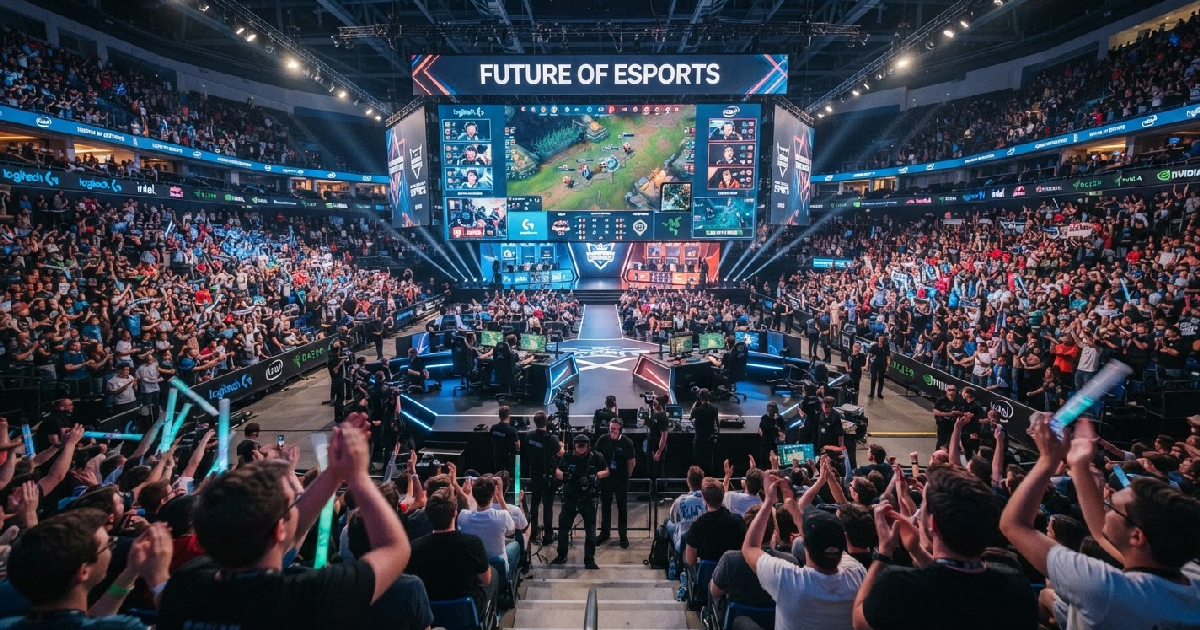
The future of esports: sustained growth and deeper integration
The future of esports looks bright, marked by robust growth, increasing professionalization, and deeper technological integration. What was once a niche community is rapidly evolving into a global entertainment powerhouse. This expansion, however, brings ongoing challenges related to governance, player welfare, and economic sustainability.
Esports, or electronic sports, involves organized, competitive video gaming where amateur and professional gamers compete individually or in teams for monetary prizes. These events, akin to traditional sports, captivate audiences through human-versus-human play across various platforms including computers, consoles, and mobile devices.
projecting esports market value and growth drivers
The esports market is on an aggressive upward trajectory, with analysts projecting its value to reach between USD 10.5 billion and USD 12.77 trillion by 2035. This remarkable expansion represents a Compound Annual Growth Rate (CAGR) ranging from 16.40% to 20.92% between 2025/2026 and 2035.
Several key factors fuel this rapid growth. Rising viewership, now exceeding 640 million globally, alongside increased participation and significant technological advancements, are primary contributors. Compelling match-ups, such as Team Spirit’s recent triumph over G2 Esports, further boost this engagement. Youth engagement and investment from traditional sports organizations also play a crucial role in widening its appeal and securing its financial backing.
diverse revenue streams power expansion
Unlike its early days, esports now boasts a diverse and robust set of income sources. Sponsorships and advertising remain the largest revenue generator, accounting for over 40.0% of global revenue in 2025.
Major corporations invest heavily in teams, tournaments, and individual players, eager to connect with a young, tech-savvy demographic. Media rights and content revenue are also becoming increasingly lucrative, mirroring the broadcasting landscape of traditional athletics. This includes exclusive streaming deals and advertising on platforms like Twitch and YouTube Gaming.
Merchandise, ticket sales for live events, and income from digital platforms through subscriptions and creator monetization further diversify the industry’s financial bedrock. The growing trend of franchising, where owning teams provides stable, long-term commercial opportunities, also contributes significantly to revenue generation.
how technology shapes competitive gaming
Technology acts as a profound game-changer, fundamentally reshaping how competitive gaming is played, broadcast, and consumed by fans. Innovations in areas like virtual reality (VR), augmented reality (AR), and artificial intelligence (AI) aren’t just enhancing the experience; they’re redefining it.
immersive experiences with VR and AR
Virtual Reality offers deeply immersive experiences, transporting players directly into virtual arenas. Platforms such as Oculus Venues allow fans to feel truly present at live events, bridging the gap between digital and physical attendance.
Augmented Reality blends these worlds further, enhancing live broadcasts with real-time player statistics and tactical overlays. It also creates interactive fan engagement, like virtual scavenger hunts at tournament venues, adding layers to the spectator experience.
AI and streaming revolutionize engagement
Artificial Intelligence is already revolutionizing gameplay through AI-driven bots for player training and broadcast production by automating camera angles and dynamic highlight reels. AI also contributes to advanced responsible gaming tools, detecting potentially risky gambling patterns.
Streaming platforms, notably Twitch and YouTube Gaming, provide essential infrastructure. They enable players and fans worldwide to connect, watch live events, and foster community, driving unparalleled audience reach and engagement.
The rise of mobile esports, particularly in the Asia-Pacific region, also marks a significant shift. Increased smartphone penetration and affordable internet access are making competitive play more accessible, with mobile esports projected to expand approximately 27.6% annually between 2026 and 2036.
professional growth and career pathways
The esports ecosystem is becoming increasingly structured, moving away from its amateur origins to establish clear pathways for player development and varied career opportunities. This maturing infrastructure offers more than just playing professionally.
nurturing player talent and coaching
Player development typically involves several years of dedication, with many professionals spending two to four years honing skills before joining competitive teams. This includes rigorous training in ranked matches, community engagement, team formation, and leveraging social media presence. Such structured development is key for teams like FaZe Clan to achieve their competitive success.
Professional gaming teams now widely employ dedicated coaches, similar to traditional sports, focusing on refining skills, building mental resilience, and improving teamwork. Mentorship programs also connect aspiring talent with established professionals, sharing invaluable experience and guidance.
expanding career horizons beyond playing
The professional landscape in esports extends far beyond the competitive arena. Opportunities abound for content creators and streamers, coaches and analysts, and even casters and hosts who bring games to life for audiences.
Behind the scenes, there’s a growing need for event organizers, team management staff, and game developers and designers specializing in competitive titles. Establishing branded training facilities and venues is also crucial for long-term franchises and connecting with local populations. Scholarships for esports players are becoming more common, mirroring traditional sports education pathways.
governance and regulatory challenges
Despite its rapid growth and increasing sophistication, esports faces significant hurdles in governance and regulation. This area remains complex and fragmented, heavily influenced by game publishers.
fragmented rules and publisher influence
Unlike traditional sports, which often benefit from unified international governing bodies like FIFA or the International Olympic Committee (IOC), esports lacks a single, widely recognized global authority. Game developers frequently regulate their own titles, setting rules and running competitions.
While practical for specific games, this arrangement can lead to conflicts of interest and inconsistent rulings across the broader industry. The power of game publishers, whose primary revenue typically comes from game sales rather than esports directly, remains substantial.
This influence can sometimes impede the establishment of unified governance and consistent competitive integrity across different titles. Efforts by organizations like the International Esports Federation (IESF) and the Global Esports Federation (GEF) to centralize governance are ongoing, though they face competition and varied levels of recognition.
National bodies, such as the United States Esports Federation (USEF), are working to represent their regions in international competitions and ensure fair selection processes. These groups also work to develop clearer legal frameworks for player contracts, broadcasting rights, and intellectual property, which is crucial for an evolving industry.