

Latest esports trends: audience, revenue, and tech redefine gaming
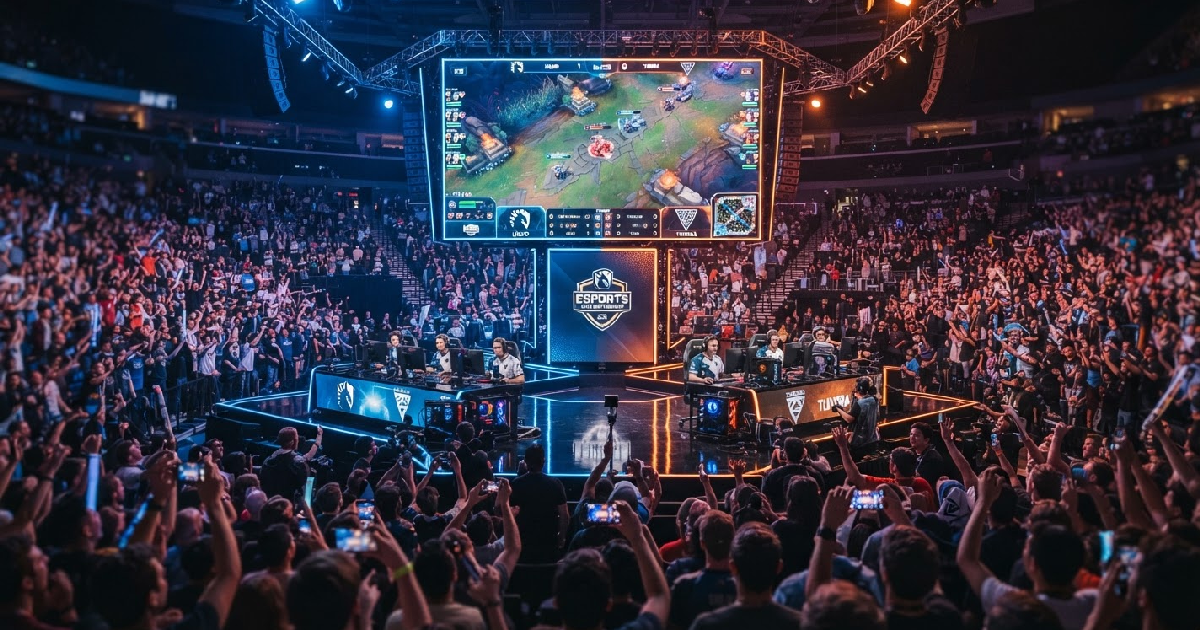
The latest esports trends show esports gaming trends evolving into a global entertainment powerhouse with hundreds of millions of viewers and billions in revenue. These latest esports trends reveal an industry rapidly professionalising, integrating cutting-edge technology, and establishing legitimate career pathways for its participants. It’s a shift from hobby to mainstream phenomenon, marked by sustained growth and deeper integration into the broader entertainment ecosystem.
This competitive gaming sector is defined by its organised tournaments, professional players, and a captivating spectator experience that now rivals traditional sports. The evolution points to a mature, economically significant industry that continues to capture global attention and investment.
Explosive audience and revenue expansion
The esports landscape continues its remarkable trajectory of growth, demonstrating substantial increases in both viewership and financial scale. Global audience figures for esports reached 640.8 million in 2025, a number comprising 318.1 million dedicated enthusiasts and 322.7 million occasional viewers.
Projections indicate this audience will surge past 924.9 million by 2030, underscoring the sport’s expanding reach. A significant portion of this fanbase, over 57%, resides in the Asia-Pacific region, with China and the Philippines collectively accounting for 40% of all global esports viewers.
Global viewership milestones
The sheer scale of esports viewership reflects its broad appeal, attracting both casual observers and dedicated fans worldwide. These impressive numbers highlight the effectiveness of streaming platforms and content creators in bringing competitive gaming to a massive, global audience.
It also underscores the cultural shift towards digital entertainment, particularly among younger demographics. This widespread engagement is a key factor in the industry’s long-term viability and influence.
Financial powerhouses
Financially, the global esports market is a behemoth, valued at $5.13 billion in 2026 by Statista, or $5.34 billion according to Mordor Intelligence’s more expansive definition. Grand View Research, excluding betting revenue, anticipates the market will hit $7.46 billion by 2030.
Revenue streams are diverse, encompassing sponsorships, advertising, media rights, merchandise, and ticket sales. Sponsorships and advertising alone contribute a staggering $1.1 billion to $1.2 billion, showcasing corporate confidence in esports as a powerful marketing channel. The industry’s financial success has sparked a surge in investments from grassroots initiatives to established corporations looking to expand their presence in this burgeoning market.
Professionalisation and mainstream acceptance
Esports is increasingly shedding its “niche” label, gaining widespread recognition as a legitimate professional career path. Over half of people globally, 54%, now view esports as a credible profession, with this sentiment climbing to 67% among Gen Z and 60% among Millennials.
This cultural shift is evident in career aspirations; nearly one in ten people worldwide would choose professional gaming if given a career restart, outranking traditional roles like politician or recruiter. This points to a significant validation of professional gaming as a viable and desirable occupation.
Career pathways and league structures
Like traditional sports, esports features highly organised teams, dedicated coaches, and structured leagues with clear competitive frameworks. Publishers such as Riot Games, the force behind *League of Legends*, have even implemented financial regulations like salary caps.
These measures aim to foster sustainability and fair competition within their respective leagues. The meticulous structure mirrors established athletic organisations, offering clear progression for aspiring players.
Crossover with traditional sports
The integration of esports into mainstream sports continues to accelerate. Major professional sports leagues, including the NBA with its NBA 2K League, are actively incorporating esports into their portfolios. This creates synergistic events and shared experiences that appeal to diverse audiences.
Such collaborations help traditional sports connect with younger, digitally-native demographics, while also lending further legitimacy to the competitive gaming scene. The future of esports promises even deeper integration and collaborative ventures.
Technological innovation propels esports forward
Technology remains a foundational driver of esports expansion, continually enhancing both the gameplay and spectator experience. High-speed internet and sophisticated streaming platforms are crucial for global accessibility and fan engagement.
Platforms like Twitch dominate, capturing 71% of total esports streaming hours, while YouTube Gaming and TikTok Live also secure significant viewership. Cloud gaming further lowers entry barriers, reducing the need for expensive hardware for aspiring players.
Streaming, mobile, and immersive tech
Mobile gaming stands out as the fastest-growing platform, propelling a significant portion of esports growth. A remarkable 56% of all esports viewership now occurs on mobile devices, with this segment projected to expand at a 27.6% compound annual growth rate through 2036.
Moreover, immersive technologies such as Augmented Reality (AR) and Virtual Reality (VR) are becoming more common. They’re transforming how matches are played and viewed, offering richer, more engaging experiences for both competitors and spectators. These advancements are key elements of key trends shaping the broader gaming industry.
AI and 5G’s impact
Artificial Intelligence (AI) plays an increasingly critical role in refining gaming and esports. It particularly aids in player training, performance analytics, and customising viewing experiences for fans.
AI bots are proving to be effective training partners for professional players, sharpening their skills and strategies. The ongoing rollout of 5G networks also contributes significantly, enabling faster internet speeds, quicker downloads, and high-quality streaming with minimal latency—all vital for competitive, cooperative gaming.
Collegiate and grassroots development
Esports has gained substantial traction within educational institutions, nurturing new talent and opening fresh career pathways. Collegiate esports has evolved from student-led clubs into professionally coached varsity teams, often complete with scholarships and dedicated arenas.
As of 2024, at least 185 U.S. colleges had established varsity esports programs, a figure that grew to over 260 member schools across the U.S. and Canada by late 2024 through the National Association of Collegiate Esports (NACE).
Academic programs and scholarships
Universities are actively building academic programs, including course clusters and minors, that align esports with fields like game design, data analytics, media, and marketing. This provides students with highly transferable skills for a growing industry.
Massachusetts’s Becker College, for instance, introduced the first Bachelor’s of Science in Esports Management in 2018. The financial commitment to collegiate esports is also rising, with national scholarship dollars reaching $15 million in 2019, a 600% increase from $2.5 million in the 2015-16 academic year, showcasing the significant investment in developing future talent.
Navigating regulatory challenges
The rapid expansion of esports has, however, outpaced its regulatory framework, leading to unique legal and ethical considerations. Unlike traditional sports which often benefit from established international governing bodies, esports currently lacks a single, overarching authority.
Organisations like the International Esports Federation and the Global Esports Federation are working to centralise governance. But they face competition and have yet to achieve widespread recognition, contributing to inconsistencies across different competitive titles. This fragmented approach often means individual game developers regulate their own games, setting rules and managing their competitions independently. This can create challenges in standardisation and fair play.