

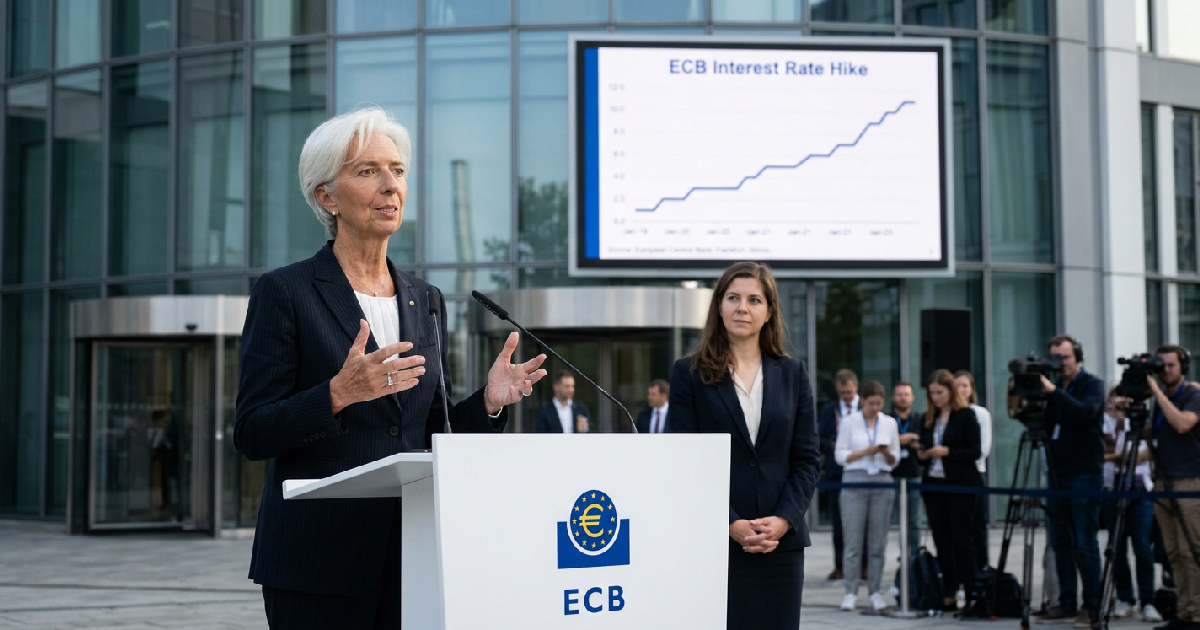
Christine Lagarde’s ECB targets 25 basis point hike on June 10, 2026
The European Central Bank (ECB) Governing Council is set to implement a 25 basis point interest-rate hike at its upcoming monetary policy meeting on June 10-11, 2026. This move, spearheaded by ECB President Christine Lagarde and Executive Board member Isabel Schnabel, marks a definitive shift as the institution becomes the G7’s lead hawk.
The decision follows a period of rate cuts in 2024 and 2025, signaling a pivot toward restrictive policy to combat persistent price pressures within the Eurozone.
Market analysts have almost entirely priced in this adjustment, with the probability of a June hike reaching 97.0%. Currently, the Deposit Facility Rate stands at 2.00%, while the Main Refinancing Operations Rate is 2.15% and the Marginal Lending Facility Rate is 2.40%.
Following the anticipated 25 basis point (bps) increase, the deposit rate is expected to rise to 2.25%. A Bloomberg survey suggests this may only be the beginning, with a second hike likely in September 2026 to reach 2.50% by year-end.
The hawkish turn is a direct response to Eurozone flash inflation, which accelerated to 3.2% in May 2026. This figure surpassed the April rate of 3.0% and remains significantly higher than the ECB’s 2% medium-term target. Core inflation, which excludes volatile food and energy, also climbed to 2.
5% in May, exceeding consensus estimates of 2.4%. These figures have fueled concerns that share price moves across European indexes may soon reflect a tighter credit environment.
Energy prices and Middle East conflict drive inflation risks
A primary driver of this inflationary spike is the surge in energy prices linked to the ongoing conflict in Iran. The situation has been exacerbated by the blockade of the Strait of Hormuz, a critical maritime artery for global energy supplies. While the U.S.
Navy redirects commercial vessels in the region, the resulting shipping disruptions have created entrenched price risks that the Frankfurt-based bank can no longer ignore.
ECB officials are particularly worried that these persistent energy costs could cause inflation expectations to become unanchored. Staff projections for headline inflation in 2026 have already been revised upward to 2.6%. Although the bank forecasts a return to 2.
0% in 2027, the immediate pressure from energy markets necessitates a “data-dependent” and “meeting-by-meeting” approach to monetary tightening. This strategy mirrors the cautious but firm stance seen when oil prices fall on deal expectations during periods of diplomatic progress, though currently, the trend is reversed.
Market sentiment shifts toward aggressive tightening
The rhetoric from the Governing Council has turned notably more hawkish in the weeks leading up to the June session. Michael Field, Chief European Markets Strategist at Morningstar, noted on June 2, 2026, that the probability of a 25 basis point hike was high even before the latest flash inflation data.
The acceleration of price growth in May has only solidified this outlook for investors and economists alike.
Beyond the June meeting, the ECB has several policy sessions scheduled for the remainder of the year. Following this week’s assembly, the Council will meet on July 22, September 9, October 28, and finally on December 16-17.
Some economists are already forecasting that the September session will be the venue for an additional rate increase as the bank maintains its focus on price stability over industrial stimulus.
Economic growth prospects face downward revisions
This aggressive monetary path comes at a cost to the Eurozone’s economic expansion. The ECB staff projections for real GDP growth in 2026, originally set at a 0.9% baseline, may be revised downward to approximately 0.7%. This slowdown reflects the impact of higher borrowing costs on both corporate investment and consumer spending. Despite these headwinds, the bank appears committed to its inflation-fighting mandate.
The Governing Council will base its final decision on an updated assessment of inflation dynamics and the strength of monetary policy transmission. Officials like Isabel Schnabel have leaned into this hawkish stance, arguing that the risks of allowing inflation to linger above the 2% target outweigh the short-term benefits of lower rates.
The bank’s willingness to act aggressively distinguishes it from other G7 peers that may be more hesitant to risk economic cooling.
Timeline for the June 11 policy announcement
The financial world will be watching Frankfurt on June 11 for the official results of the policy meeting. The schedule for the announcement is precise. At 12:15 GMT, the ECB will release the Main Refinancing Operations Rate decision. This will be followed at 1:45 PM CET by a press release containing the full scope of the Governing Council’s decisions.
The most significant detail for long-term forecasting will likely emerge during the press conference at 2:30 PM CET. During this session, ECB leadership will explain the rationale behind the 25 bps hike and potentially offer clues regarding the path for late 2026.
Given the conflict in the Middle East and the volatility of energy imports, the bank is expected to emphasize that future decisions remain entirely contingent on incoming data and price trends.