

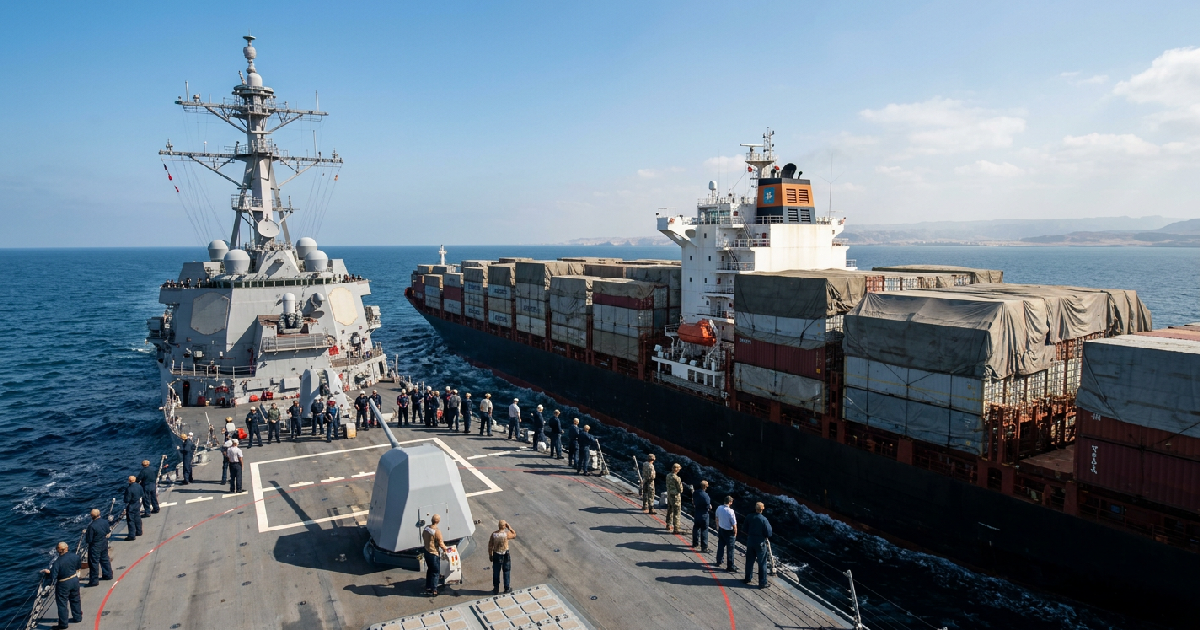
US naval forces redirect commercial vessels during maritime blockade against Iran
United States Central Command (CENTCOM) has reportedly intensified its maritime operations in the Middle East, with American naval forces moving to intercept and redirect a large number of commercial vessels near Iranian waters. According to recent reports from the region, the military operation focuses on restricting access to several major Iranian ports, marking a sharp escalation in regional tensions as the United States attempts to throttle Tehran’s maritime trade routes and disrupt its logistics network.
The redirected ships were diverted after entering designated zones established by the US Navy and its coalition partners. While Central Command has not released the specific names or flag states of every vessel involved, the volume of traffic affected highlights the intensity of the current maritime enforcement. Officials indicated that the operation aims to curb the flow of dual-use materials and illicit cargo while maintaining a tight grip on Iranian economic activity.
This blockade comes at a time of heightened regional instability and follows a period of intermittent skirmishes and diplomatic stalemates. By obstructing the primary sea lanes leading into Iran, the US government is signaling a shift toward more direct physical intervention at sea. The long-term impact on global shipping rates and oil prices remains a point of concern for international energy markets and logistics firms operating in the Middle East.
Geographic scope and enforcement of the Iranian port blockade
US naval assets have maintained a persistent presence near the Strait of Hormuz and the Gulf of Oman to facilitate these redirections. According to reports from the region, the blockade utilizes a combination of guided-missile destroyers and aerial surveillance to monitor vessel movements in real time. When a ship enters a restricted sector, it is hailed by US forces and instructed to alter its course away from Iranian waters.
The multi-week duration of this operation suggests a sustained commitment to the blockade rather than a temporary drill. While the US has previously used sanctions to discourage trade with Iran, this physical redirection of commercial traffic represents a more assertive posture. It mirrors other global shifts where major organizations face mounting pressures, such as how Meta ends Sama contract in Kenya amidst changing corporate and geopolitical priorities.
Impact on commercial shipping corridors
Industry analysts suggest that the redirection of numerous ships in a short period has forced many logistics companies to seek alternative routes. This often leads to increased fuel consumption and delayed delivery schedules for goods destined for the broader region. Captains are being advised to maintain communication with international maritime bureaus to avoid accidental entry into the contested zones.
The legal framework for these redirections remains a topic of debate among international maritime lawyers. The US maintains that the blockade is a necessary security measure to prevent the proliferation of weapons and the financing of regional proxies. However, some trading partners have expressed frustration over the disruption to non-sanctioned agricultural and medical shipments that often get caught in the dragnet.
Strategic implications for regional security and energy markets
The redirection of these vessels is not just an economic hurdle; it is a clear projection of military capability. By effectively controlling who enters and exits Iranian ports, the United States is exerting leverage over Tehran’s primary revenue streams. This pressure is expected to influence upcoming diplomatic discussions regarding regional security and nuclear non-proliferation.
Global energy markets have been reacting to the news with volatility. Because a significant portion of the world’s oil passes through the waters surrounding Iran, any disruption to shipping can cause price fluctuations. Just as The Navigator Company scales international tissue business to meet regional demands, energy firms are also diversifying their supply chains to mitigate the risks posed by this ongoing naval operation.
Responses from the Iranian government
Tehran has reportedly condemned the blockade, labeling the redirection of commercial traffic as an act of maritime piracy. Iranian state media has hinted that their own naval forces could respond with drills or similar restrictions if the US presence continues to grow. So far, the Iranian Navy has generally maintained its distance from the US carrier strike groups, but the risk of a miscalculation remains high.
The civilian population in Iran may feel the effects of this blockade through the rising cost of imported goods. While the US claims to allow humanitarian corridors, the logistical difficulty of navigating a blockade often means that essential supplies are delayed or turned back. This economic pressure is a core component of the current American strategy to bring the Iranian leadership back to the negotiating table.
Future outlook for maritime stability in the Middle East
As the blockade continues, there are no immediate signs that the US Navy will scale back its operations. Central Command officials have indicated that the mission will continue as long as it is deemed necessary to meet national security objectives. The international community is watching to see if other nations will join the blockade or if a new diplomatic channel will emerge to de-escalate the situation.
For now, the redirection of commercial traffic serves as a metric for the reach of the US maritime strategy. It demonstrates a capacity to monitor and control large swaths of international waters. Whether this pressure leads to a breakthrough in talks or further confrontation is the question currently facing policymakers in Washington and across the Middle East.
Shippers and insurers are likely to increase premiums for any cargo moving through the Persian Gulf in the coming months. This trend toward increased security and higher operational costs is becoming a standard feature of modern trade in volatile regions. As the situation evolves, these naval interceptions may represent a larger shift in how the US manages its interests in the region.