

The definitive guide to the top esports games to watch
The top esports games to watch in 2026 reflect current esports gaming trends, showcasing titles with strategic depth and intense competition. If you’re looking for the Top Esports Games to Watch in 2026, you’ll find a vibrant landscape dominated by titles known for their strategic depth and intense competition.
These aren’t just casual games; they’re organized, multiplayer video game competitions featuring professional players and teams vying for significant prizes and monetary rewards. Their appeal often mirrors traditional sports, with a crucial spectator element driving massive popularity and engagement.
Understanding the appeal of competitive esports titles
The allure of competitive gaming lies in several key factors that capture both players and viewers. Strategic depth, complex mechanics, and the demand for coordinated teamwork are central to a game’s viability in the esports world.
These elements create compelling narratives, drawing in vast audiences who keenly follow their favorite teams and players. Structured leagues and high-stakes tournaments provide consistent, thrilling competitive play for fans worldwide.
Evolving competitive ecosystems and player engagement
What began as niche competitions has blossomed into sophisticated ecosystems, complete with professional leagues, dedicated broadcasting, and substantial prize pools. This professionalisation ensures a steady stream of high-level competitive gaming.
It also fosters a strong community, allowing fans to engage deeply with the games and their stars. The continuous innovation in game design further solidifies their positions at the pinnacle of esports.
Leading multiplayer online battle arena (MOBA) games
Multiplayer Online Battle Arena (MOBA) games consistently rank among the most-watched esports titles globally. They demand intricate strategy, quick reflexes, and flawless team coordination, making for incredibly compelling viewing experiences.
These titles often feature large rosters of unique characters, each with distinct abilities. This adds significant layers of complexity to every match, where team composition and counter-picks can be decisive.
League of Legends dominates global viewership
Riot Games’ League of Legends (LoL) has long been a titan in the esports world, defining the MOBA genre for many. Two teams of five players clash on a map called Summoner’s Rift, aiming to destroy the opposing team’s “Nexus” while defending their own.
Players select unique champions with distinct abilities, requiring strategic depth and coordinated teamwork. The annual League of Legends World Championship consistently ranks as one of the most-watched esports events globally, achieving peak viewership of over 6.9 million.
Dota 2’s massive tournament prize pools
Valve Corporation’s Dota 2 presents another formidable MOBA experience, known for its high skill ceiling. Similar to LoL, two teams of five players control powerful “heroes” to destroy the enemy’s “Ancient” structure.
It’s renowned for complex mechanics, a high skill ceiling, and deep strategy, attracting a dedicated player base. Dota 2 hosts “The International,” its annual flagship tournament, which consistently boasts some of the largest prize pools in esports history.
These prize pools often exceed tens of millions of dollars; The International 10, for example, reached a staggering $40 million. This considerable sum is largely funded by in-game purchases from devoted fans, showcasing a unique community contribution model.
Tactical first-person shooters deliver intense action
Tactical First-Person Shooter (FPS) games offer adrenaline-pumping action that requires immense precision and strategic thinking. Players need sharp aim, tactical positioning, and seamless communication to secure victory in these high-stakes encounters.
These titles typically feature round-based combat with clear objectives, testing both individual skill and team cohesion under intense pressure. They remain a core pillar of competitive gaming, drawing huge audiences to their events.
Counter-Strike 2: precision, tactics, and sustained circuit
Counter-Strike 2 (CS2), developed by Valve Corporation, continues the franchise’s storied legacy in tactical FPS esports. Two teams of five players, Terrorists and Counter-Terrorists, compete in objective-based rounds across various maps.
These objectives include scenarios like bomb defusal or hostage rescue, demanding careful planning and execution. The game emphasizes precision aim, tactical gameplay, and strategic maneuvers, rewarding disciplined teams.
CS2 maintains a robust tournament circuit, including Majors and various third-party events, making it a perennial favorite for fans of high-level FPS play. The future of competitive gaming will certainly see sustained growth and deeper integration for such established franchises.
Valorant’s rapid ascent in the FPS scene
Riot Games entered the tactical FPS arena with Valorant, quickly establishing it as a major esports title. It combines precise tactical shooting with unique character abilities, setting it apart from traditional FPS games.
Players select from a roster of “Agents,” each bringing specific powers to objective-based combat scenarios. The Valorant Champions Tour (VCT) provides a structured, publisher-led competitive circuit, rapidly attracting significant viewership and professional teams globally.
Battle Royale and hero shooters broaden esports genres
Beyond the established MOBA and tactical FPS genres, other game types have carved out significant niches in the esports world. These offerings provide varied gameplay experiences, appealing to diverse fan bases and competitive styles.
They often introduce unique mechanics or distinct team compositions that differentiate them, fostering innovative competitive strategies and broad spectator appeal. This genre expansion continues to grow the overall market.
Fortnite’s unique building and battle royale mechanics
Epic Games’ Fortnite redefined the Battle Royale genre with its innovative building mechanics, setting a new standard for the category. 100 players (solo, duo, or squads) drop onto an island, scavenging for resources and weapons.
A shrinking storm circle continuously forces confrontation, leading to thrilling, unpredictable matches where the last player or team standing wins. Fortnite gained immense popularity, culminating in major events like the Fortnite World Cup.
The Fortnite World Cup in 2019 featured a prize pool exceeding $30 million, showcasing the game’s massive competitive potential and commercial success. Esports sponsorship trends continue to drive gaming industry growth, particularly for titles with such massive global reach.
Overwatch 2 thrives on team coordination
Blizzard Entertainment’s Overwatch 2 is a prominent hero shooter where two teams of five select from a roster of diverse “heroes.” Each hero possesses distinct roles and abilities, crucial for completing objectives like capturing points or escorting payloads.
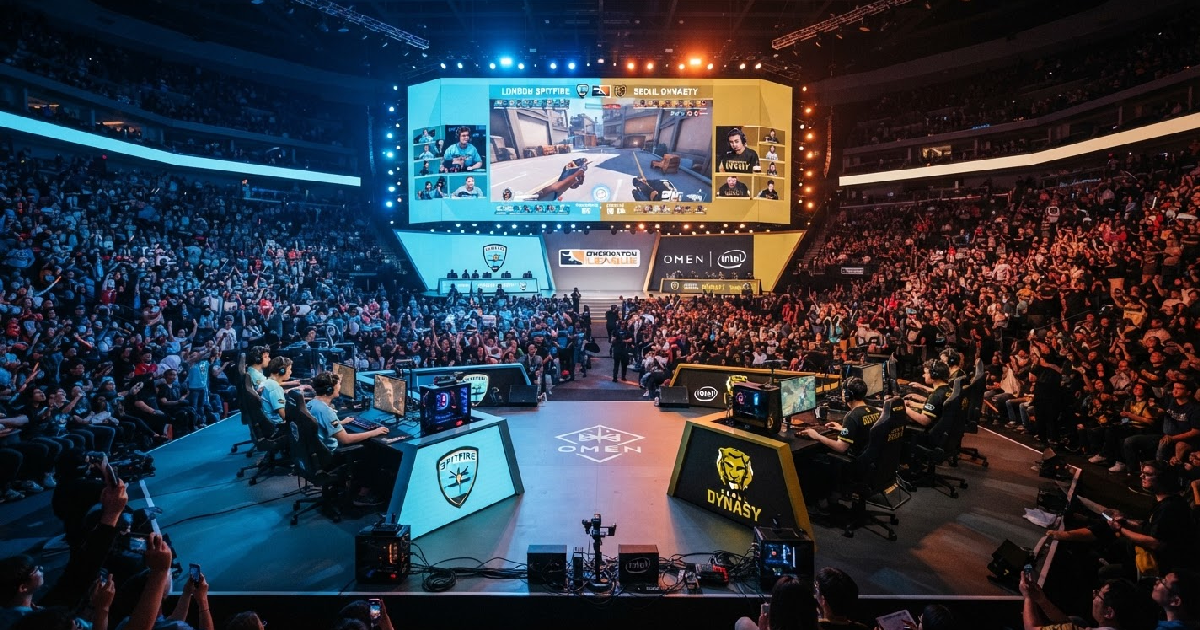
Success in Overwatch 2 hinges on sophisticated team composition and flawless coordination between players. The game features a dedicated competitive infrastructure, including the Overwatch League, which boasts city-based franchised teams, showcasing strategic depth.
The enduring draw of professional gaming
The games highlighted here represent the pinnacle of professional electronic sports today, offering a diverse array of competitive experiences. Their sustained popularity stems from deep gameplay, constant developer support, and dedicated competitive structures.
As technology evolves and new titles emerge, the landscape of esports will undoubtedly continue to shift and expand. But the core appeal of high-stakes, skill-based competition remains timeless, ensuring a vibrant future for these digital arenas. Advances like cloud gaming reshapes esports competition by offering new platforms and greater accessibility for players and viewers.