

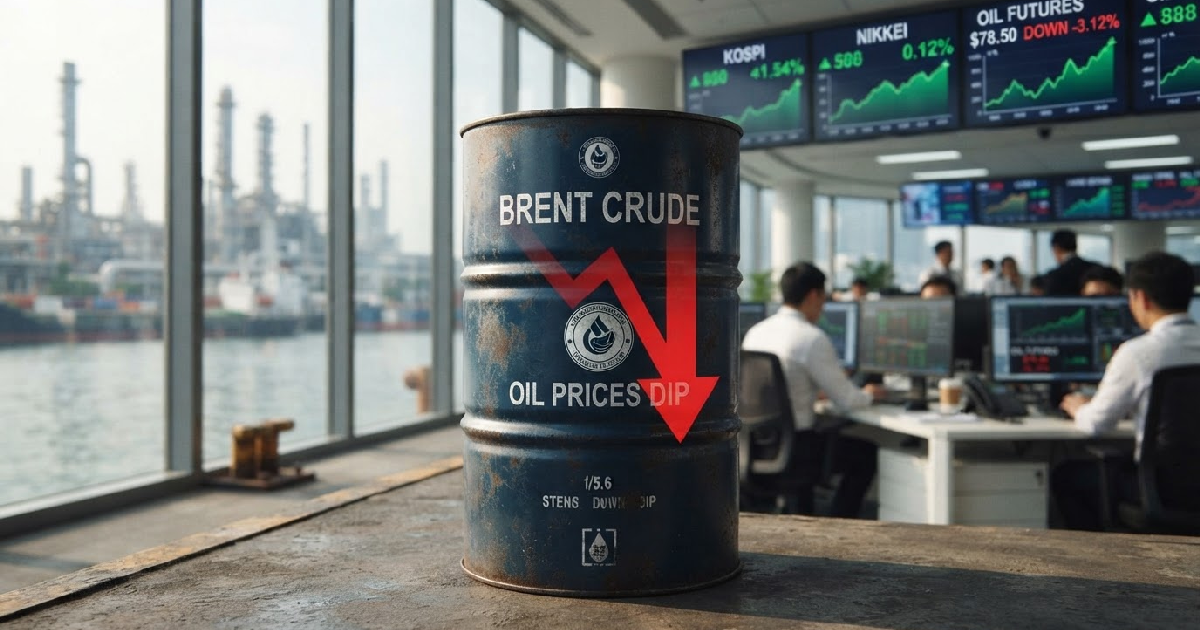
Oil Prices Dip as US-Iran Tensions Ease, Markets Rally
Global financial markets found a welcome reprieve this past weekend as both the United States and Iran refrained from further retaliatory military strikes, signaling a crucial de-escalation in their recent conflict.
This pause in hostilities caused global stocks and oil prices to react sharply, with Brent crude dropping below $90 a barrel on July 26, 2026. Asian equity markets followed suit, registering gains across the region on July 27.
Markets respond to de-escalation of US-Iran tensions
The immediate calm has eased investor worries that escalating military actions could severely disrupt vital Middle East energy supplies. This shift away from direct confrontation suggests the immediate threat of widespread supply chain issues has receded, bringing a much-needed sense of stability to trading floors worldwide.
The market’s reaction to the diplomatic thaw was swift and decisive. On July 26, the international benchmark, Brent crude, plunged by as much as 7.4%, temporarily trading below $90 a barrel before recovering some ground later in the day. This significant decline reflected a collective sigh of relief from investors.
US equity-index futures also rallied, with contracts for the Nasdaq 100 Index climbing 1.2% that same day. This upward trend extended into July 27, when Asian stocks gained across various indices. It’s a clear sign that global markets are eager to price in any reduction in geopolitical risk.
Volatile oil prices mirror geopolitical shifts
The past months have certainly been turbulent for oil prices, directly mirroring the intensity of the US-Iran conflict. For instance, on June 10, Asian stocks fell while oil prices surged after the United States launched strikes against Iran. That day, Brent futures jumped 0.9% to US$92.29 a barrel, demonstrating crude’s sensitivity to regional instability.
Another spike occurred on July 8, when President Donald Trump raised doubts about a temporary truce, triggering fresh US airstrikes and a revoked waiver for Iran’s oil sales. Brent crude climbed 2.3% to nearly US$76 a barrel in response. These rapid price fluctuations underscore the market’s constant vigilance over events in the region.
Broader market rally beyond crude
The easing of tensions didn’t just impact oil and major stock indices; it resonated across other asset classes too. On July 26, the dollar weakened against its Group-of-10 peers, indicating a reduced demand for traditional safe-haven currencies. Meanwhile, gold, another key safe-haven asset, saw a modest increase of 0.8% to about $4,085 an ounce.
Even broader crypto markets registered gains, suggesting a renewed appetite for risk among investors. This diversified market response paints a picture of a financial system heavily influenced by, and cautiously optimistic about, geopolitical developments. Analysts believe the positive sentiment will likely continue if de-escalation holds.
Diplomatic initiatives take center stage
The decision by both Washington and Tehran to hold back from further military action is the direct result of sustained diplomatic efforts. Mediators, particularly Qatar and Pakistan, have played instrumental roles in fostering dialogue and building a path toward de-escalation. Their joint efforts on June 22, 2026, led to “encouraging progress” in talks.
This progress included the establishment of a mechanism for further technical discussions between the US and Iran. Such communication channels aim to reduce misunderstandings and pave the way for more substantive negotiations. The Iranian Army’s statement on Sunday, before July 26, confirming a suspension of its military response, marked a critical development.
Mediators foster communication and progress
The quiet work of intermediaries like Qatar and Pakistan highlights the complex nature of international diplomacy in volatile regions. These nations have helped establish a much-needed communication line, specifically designed to prevent incidents from spiraling out of control. Their engagement has been crucial for transitioning from a cycle of strikes to one of dialogue.
A senior Iranian official informed Reuters on Monday before July 21 that Tehran had received a proposal for a 10-day ceasefire. This proposal was intended to create an environment conducive to a lasting agreement, aiming to end the war that began on February 28 with U.S.-Israeli attacks on Iran.
Shifting US operational stance
The market’s sensitivity to political statements has been evident throughout the conflict. On July 8, President Donald Trump raised doubts about a temporary truce in the war with Iran, briefly unsettling financial markets. But by the next day, markets had largely calmed, demonstrating their capacity to adapt to evolving political narratives.
The US decision to pause an almost two-week run of strikes against Iran, which had been ongoing since late Friday before July 26, marked a significant shift in its operational posture. This move, coupled with Iran’s reciprocal suspension, created the necessary conditions for the market rebound observed this week.
Strait of Hormuz: global oil lifeline
The ongoing tensions between the US and Iran have consistently highlighted the critical role of the Strait of Hormuz in global energy security. This narrow waterway, located between Oman and Iran, remains the world’s most vital oil transit chokepoint. It’s an essential artery for approximately 21 million barrels of oil daily, underpinning global supply chains.
Roughly 21% of global petroleum liquids consumption flows through this strategic passage each year, alongside more than 20% of the world’s oil and liquefied natural gas exports. Any disruption here has immediate and profound global economic repercussions. Earlier in the year, the U.S. Navy blocked Iran’s ports on April 17, 2026, which caused oil prices to rise.
The stakes are particularly high for Asian markets, which receive almost four-fifths of the oil transported through the Strait. Talks between Iranian and Omani officials concerning shipping through the Strait, as noted in recent reports, were crucial for avoiding further disruption. The US Navy blockade operations in the past have had significant market impact.
Outlook: from fragile peace to lasting resolution?
While the immediate de-escalation provides a much-needed breather, the path to lasting peace between the US and Iran remains fraught with challenges. The long history of their relationship, marked by decades of sanctions and proxy conflicts, suggests any resolution will be complex and require sustained diplomatic effort. This current pause could be a fragile truce or the initial step towards a broader agreement.
The impact on the global economy hinges significantly on the duration and depth of this newfound calm. Sustained peace would likely lead to further stabilization in oil prices and continued investor confidence. However, any renewed aggression could swiftly reverse these gains, quickly thrusting markets back into turmoil.
Analysts remain cautiously optimistic
Market strategists are cautiously optimistic, yet they remain wary of potential reversals. Shoji Hirakawa, Chief Global Strategist at Tokai Tokyo Intelligence Lab, noted on July 26 that “A resolution to the conflict would be a positive development.” He added that the pause in attacks raises “hopes that the two sides will enter negotiations,” capturing the prevailing sentiment.
Nick Twidale, Chief Market Strategist at ATFX Global in Sydney, echoed this caution on July 21. He observed a “strange situation” where investors are still viewing things with a “glass half full view,” having seen similar de-escalations before.
Twidale suggested that while markets want a positive outcome, it might take “one catalyst that pops things and then we are off to the races.” This implies underlying volatility could re-emerge quickly without a firm agreement.
The immediate calm has brought financial respite, but geopolitical stability in the Middle East is an elusive goal. The market’s positive reaction reflects a desire for certainty rather than a guarantee of it. Sustained dialogue and concrete agreements are what’s truly needed to secure long-term market confidence.