

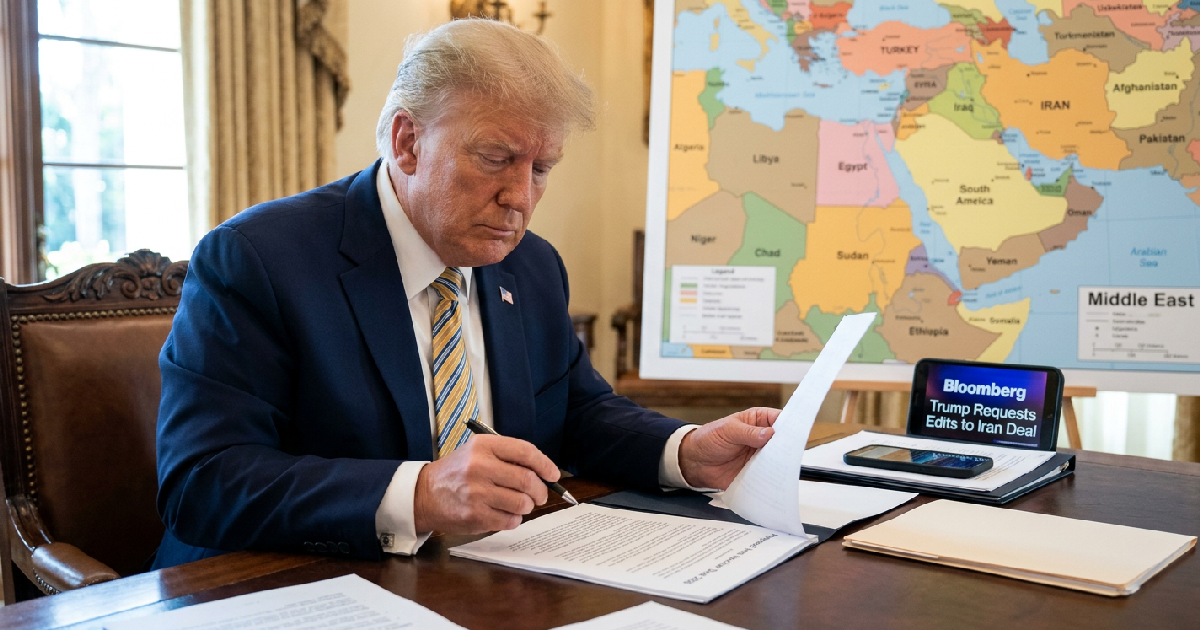
Donald J. Trump reportedly requests edits to proposed Iran deal
Donald J. Trump reportedly requested edits to a proposed Iran deal, according to a video title published by Bloomberg on May 31, 2026. The development emerges as international markets remain highly sensitive to any shift in the diplomatic framework between Washington and Tehran. While the specific nature of the edits has not been publicly detailed in the report, the timing suggests a new phase of scrutiny for the negotiation process.
The headline from Bloomberg highlights the continued influence of former President Donald J. Trump on regional policy. It follows a period where global stocks rose and oil prices fell following earlier reports of progress toward a definitive agreement. Any request for changes to the text could potentially alter the timeline for a resolution that analysts have closely monitored for weeks.
Negotiations regarding Iran’s nuclear capabilities have often involved complex discussions over enrichment protocols and monitoring standards. Although the specific technical revisions Trump may be seeking are not explicitly confirmed in the initial footage, his previous public stances have consistently focused on more stringent oversight. The current administration has yet to issue a formal response to these reported requests.
Market sensitivity to diplomatic shifts in the Middle East
Financial markets have reacted sharply to news regarding the Iran deal throughout the year. The prospect of renewed sanctions or a collapse in talks often drives volatility in energy sectors. This latest report of requested edits introduces fresh uncertainty for traders who had factored in a stable diplomatic outcome by the start of the summer.
And the regional situation remains physically tense despite the ongoing dialogue. Just recently, US naval forces redirected commercial vessels as part of maritime operations near Iran. Such military presence underscores the high stakes involved in reaching a permanent diplomatic solution that satisfies all domestic and international political factions.
Broader context for US-Iran relations in 2026
The intervention by Donald J. Trump reflects the deep political divide in Washington regarding the most effective way to manage Tehran’s nuclear ambitions. Critics of the current framework have frequently called for more permanent restrictions, while proponents argue that a return to a functional agreement is necessary for global energy security and economic stability. These competing priorities are now colliding as the deal nears a potential final draft.
So, the immediate focus turns to how the P5+1 nations and Iranian officials will interpret this demand for revisions. If the requests lead to a reopening of closed chapters in the agreement, the process could face significant delays. For now, the international community remains in a holding pattern, waiting to see if these requested edits will be formally integrated into the broader negotiation strategy.
Future outlook for the nuclear framework negotiations
Official delegations are expected to remain in contact in the coming days to assess the viability of the current text. The mention of requested edits suggests that the document may not be as final as some observers previously claimed. This fluidity in the negotiation timeline has become a hallmark of the 2026 diplomatic efforts in the Middle East.
The ultimate success of the deal depends on whether all parties can reach a consensus that survives domestic political pressure in the United States. As the Bloomberg report indicates, the role of prominent political figures remains a central factor. Whether these edits lead to a stronger agreement or a stalemate is a question that will likely be answered in the high-level meetings scheduled for the weeks ahead.