

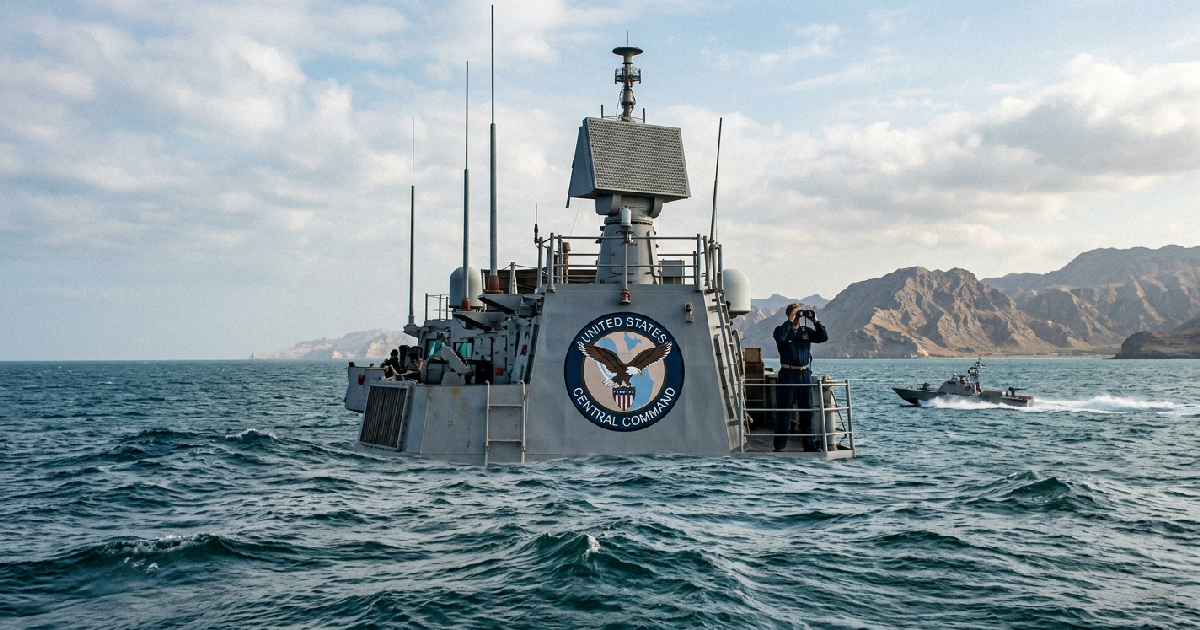
United States Central Command launches strikes against Iran targets after attacks on 3 ships
United States Central Command (CENTCOM) confirmed Tuesday that U.S. forces launched powerful strikes against Iranian targets. S. forces have launched a series of powerful strikes against multiple Iranian targets following a string of attacks on commercial vessels in the Strait of Hormuz.
The military operation, which aims to impose “heavy costs” on Tehran, comes after three cargo ships were targeted while transiting the international waterway earlier this week.
CENTCOM details retaliatory measures against Iranian aggression
The retaliatory action marks a dramatic escalation in a long-running maritime conflict that has frequently threatened to destabilize global energy markets and disrupt one of the world’s most vital shipping chokepoints.
The strikes were initiated after Iran reportedly targeted three commercial vessels crewed by civilians, an act CENTCOM described as a “clear violation” of an existing ceasefire. This development is particularly volatile as it threatens to unravel a fragile June memorandum of understanding intended to keep the Strait of Hormuz open.
President Donald Trump, currently attending a NATO summit in Ankara, Turkey, has remained firm in his stance that military pressure remains necessary to prevent Iran from acquiring nuclear weapons, a central pillar of the ongoing geopolitical friction in the Middle East.
The timing of the strikes coincides with a period of intense diplomatic and economic maneuvering. Earlier on Tuesday, Washington revoked a long-standing sanctions waiver on Iranian oil, a move designed to dry up Tehran’s primary source of foreign revenue.
This policy shift, combined with the news of the military strikes, sent oil futures climbing as traders priced in the risk of a broader regional war. The international community is watching the situation with growing concern, as previous blockades of the strait have historically stoked global inflation and caused significant supply chain disruptions.
According to an official statement released by U.S. Central Command on social media platform X, the “series of powerful strikes” began late Tuesday. The military did not immediately specify the exact locations or the nature of the assets targeted within Iran, but the language used suggests a broad and impactful response.
Military analysts suggest that such strikes typically focus on coastal defense batteries, drone launch sites, or command centres used to monitor and harass shipping in the Gulf.
The strategic intent behind these strikes is to deter further Iranian interference with the free flow of commerce. CENTCOM emphasized that the Iranian attacks on the three commercial vessels were “unwarranted and dangerous.” By hitting back with significant force, the United States is attempting to re-establish a “red line” regarding maritime security.
This is not the first time the U.S. Navy redirects vessels or takes direct action; the region has seen a pattern of maritime blockades and counter-manoeuvres throughout much of early 2026.
The use of “powerful strikes” indicates a shift away from the more limited, tit-for-tat exchanges seen in recent months. By targeting Iranian soil or high-value peripheral assets, the Trump administration is signalling that it will no longer tolerate the harassment of merchant sailors.
The human element was a key component of the CENTCOM messaging, which highlighted that the ships attacked by Iran were crewed by “innocent civilians.” This moral framing serves to justify the use of lethal force to the international community.
The breakdown of the June ceasefire agreement
The resumption of hostilities is a major blow to the memorandum of understanding (MOU) signed in June. That agreement was hailed as a breakthrough, appearing to end months of active warfare that had begun on February 28, 2026. The initial conflict saw extensive U.S.
and Israeli strikes on Iranian territory, which resulted in the death of Iran’s supreme leader, Ayatollah Ali Khamenei. The June deal was supposed to ensure the reopening of the Strait of Hormuz and set the stage for nuclear negotiations.
However, the ceasefire has proven to be incredibly fragile. Even as high-level talks were underway—including recent engagements where US-iran deal expectations briefly boosted global markets—the situation on the water remained tense.
The latest ship attacks prove that either the central leadership in Tehran has decided to abandon the MOU or that regional commanders are acting with enough autonomy to sabotage the diplomatic process. Regardless of the cause, the ceasefire is now effectively dead, replaced by a return to active kinetic engagement.
Impact on global energy markets and the Strait of Hormuz
Energy analysts are sounding the alarm over the potential closure of the Strait of Hormuz. Iran has demonstrated its ability to shut down the waterway for months at a time, as seen earlier this year.
With approximately one-fifth of the world’s daily oil consumption passing through this narrow passage, any prolonged disruption is catastrophic for global economies. Oil prices had already been rising following the revocation of the oil sanctions waiver, but the start of active bombing campaigns has injected new volatility into the market.
For months, the blockade had been the primary driver of high fuel costs in the West. When the strait reopened in June, there was a glimmer of hope that inflation might finally subside. The return to strikes suggests that the “energy war” aspect of this conflict is entering a more dangerous phase.
If Iran responds by mining the strait or using its “swarm” tactics of small, fast-attack boats against tankers, insurance premiums for shipping will skyrocket, effectively creating a de facto blockade even if the U.S. Navy keeps the lanes physically open.
The economic stakes are particularly high for the United States. President Donald Trump has tied his domestic economic agenda to lower energy costs, yet he finds himself overseeing a military campaign that naturally drives those prices up.
The administration appears to have calculated that the long-term risk of a nuclear-armed Iran outweighs the short-term economic pain of disrupted oil flows. This “maximum pressure 2.0” strategy leaves little room for middle-ground diplomacy, forcing both sides into a cycle of escalation.
Geopolitical ramifications and the NATO Summit in Ankara
The military strikes occurred while President Trump was on the ground in Ankara, Turkey, for the annual NATO summit. This choice of venue is significant, given that Turkey shares a direct border with Iran and has historically tried to maintain a delicate balancing act between its NATO obligations and its regional energy ties with Tehran.
Trump’s presence in the region during the strikes suggests a deliberate show of force and a message to allies that the U.S. is prepared to act unilaterally if necessary.
NATO leaders are reportedly divided on the best path forward. While Eastern European members are shielded from some of the direct maritime impacts, Western European nations are deeply concerned about the inflationary pressure. The summit, which was intended to discuss European defense and the potential removal of U.S.
troops from the continent, has now been overshadowed by the flares of war in the Persian Gulf. Trump is expected to use the strikes as leverage to demand that European allies take a harder line on Iran’s regional activities.
Turkey’s role in this theater cannot be overstated. As a bridge between the West and the Middle East, Ankara has often served as a backchannel for communications between Washington and Tehran. However, with the U.S.
launching “powerful strikes” from assets in the region, including the USS Abraham Lincoln (CVN 72) carrier group, Turkey’s neutral stance is being tested. The proximity of the conflict to Turkish borders raises the risk of spillover, either through refugee movements or accidental military friction.
A history of maritime conflict in 2026
To understand the severity of the current situation, one must look back at the timeline of the 2026 conflict. The war began in earnest on February 28 with a massive air campaign. Since then, the Strait of Hormuz has been the primary battlefield.
Unlike land wars, this maritime conflict is fought through drones, sea mines, and electronic warfare. The U.S. has consistently maintained that it is protecting “freedom of navigation,” while Iran views its control of the strait as its most potent strategic weapon.
The June memorandum was an attempt to transition from this kinetic phase to a diplomatic one. It included provisions for the reopening of the strait in exchange for a temporary easing of some non-oil sanctions. The fact that the U.S.
revoked the oil waiver just hours before launching these new strikes indicates a total collapse of trust. The U.S. Treasury’s move earlier on Tuesday was the economic “opening salvo” that preceded the military’s “powerful strikes.”
What follows for the U.S. and Iran next?
The immediate concern for global observers is the scale of the Iranian response. Tehran has a wide array of asymmetric options, including the use of proxy forces in Iraq, Syria, and Yemen to target U.S. bases. Furthermore, Iran’s drone program has proven capable of reaching deep into neighboring territories. If the U.S.
strikes have hit significant internal infrastructure, Iran may feel compelled to respond with more than just harassment of commercial shipping.
Diplomatic channels are not entirely closed, but they are increasingly narrow. Negotiators who were working on the details of the June MOU are now in a “wait and see” mode. The United States is unlikely to stop its strikes until it sees a verifiable cessation of attacks on shipping.
Conversely, Iran is unlikely to stop its maritime harassment as long as its oil exports are being strangled by the newly reinstated sanctions. It is a classic escalatory trap where neither side can afford to blink without losing face.
In the coming weeks, the focus will remain on the Strait of Hormuz and the movements of the USS Abraham Lincoln. If the U.S. can successfully degrade Iranian naval capabilities through these “powerful strikes,” it may be able to force a return to the negotiating table.
However, if the strikes only serve to harden Iranian resolve, the world may be looking at a prolonged and costly conflict that continues to rattle global markets and redefine Middle Eastern security for the remainder of the decade.