

U.S. oil prices surge after Trump reinstates Strait of Hormuz blockade
U.S. oil prices climbed above $75 a barrel on Monday, July 13, 2026, due to President Donald Trump’s announcement of a U.S. naval blockade targeting Iranian ships in the Strait of Hormuz. S. oil prices climbed above $75 a barrel on Monday, July 13, 2026, following President Donald Trump’s announcement that the United States would reimpose a naval blockade targeting Iranian ships in the Strait of Hormuz. This move represents a significant escalation in tensions between Washington and Tehran, effectively shattering a tenuous ceasefire agreement between the two nations.
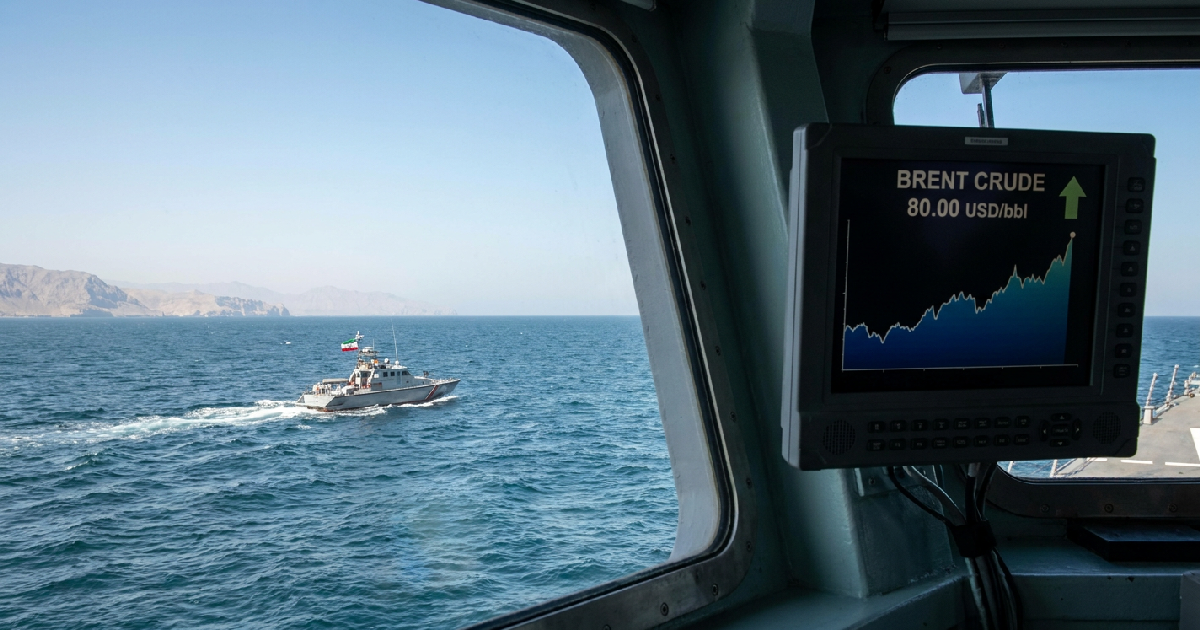
The decision sent ripples through global energy markets, with Brent crude futures, the international benchmark, advancing 5.3% to settle at $80 per barrel. West Texas Intermediate futures also saw a substantial increase, rising 5.3% to $75.18, as traders reacted to renewed uncertainty over crucial shipping lanes.
Renewed confrontation in a vital waterway
President Trump confirmed the reinstatement of what he termed “THE IRANIAN BLOCKADE” via a post on his social media platform. He clarified that the measure would specifically prevent Iran’s vessels, or ships doing business with Iran, from using the strategic waterway.
However, the President affirmed that all other countries would retain “fair and open use of the Strait.” He added that the U.S. military would ensure the protection of traffic in Hormuz, but would demand reimbursement equivalent to 20% of all cargo shipped through the area.
This development follows a weekend of intense military exchanges between the U.S. and Iran. The U.S. military launched a fresh wave of strikes on Sunday against Iranian targets, after reportedly hitting 140 targets on Saturday, according to U.S. Central Command.
These strikes were a direct response to an attack by the Islamic Revolutionary Guard Corps on a container ship transiting the Strait of Hormuz. In retaliation, Iran conducted its own strikes on U.S. military facilities located in Jordan, Kuwait, Bahrain, and Oman, as reported by the state news agency Tasnim.
Conflicting claims over strait control
Amidst the escalating hostilities, conflicting narratives emerged regarding the status of the Strait. Iranian state media indicated that the Revolutionary Guard had closed Hormuz “until further notice,” asserting Tehran’s control over the waterway.
But the U.S. military quickly disputed this claim. U.S. Central Command, known as Centcom, declared that the strait remained open to “all vessels seeking to lawfully transit.” Centcom emphasized that “U.S. forces are positioned and prepared to ensure that freedom of navigation remains available despite unwarranted Iranian aggression, harassment, threats, and arbitrary declarations.”
President Trump echoed this sentiment in an interview with NBC News’ “Meet the Press” that aired Sunday, stating unequivocally that Hormuz was open. The maritime intelligence firm Windward also reported tracking nine ships that successfully transited the strait on Saturday, suggesting continued, albeit risky, passage.
The Joint Maritime Information Center, a U.S.-led naval coalition based in Bahrain, confirmed that the southern route through Oman’s waters remained open for traffic. However, the center issued a stern warning on Sunday, advising mariners to exercise “extreme vigilance” due to the “severe” security situation in Hormuz.
The fragile peace deal and its breakdown
The current outbreak of fighting and the reimposition of the blockade stem from fundamental disagreements over an interim peace deal signed on June 17. Both the U.S. and Iran appear to hold conflicting interpretations of how the Strait of Hormuz was supposed to reopen under the terms of this agreement.
Before the U.S. and Israel attacked Iran on February 28, the Strait of Hormuz was a critical artery, seeing approximately 20% of the world’s oil supplies transit through its waters. Traffic in the strait had significantly plunged after Iran began attacking ships in early March, creating a major disruption to global energy flows.
The interim deal signed just weeks ago had offered a glimmer of hope, leading to a noticeable increase in transits as Washington and Tehran attempted to de-escalate. But now, that fragile understanding has collapsed, bringing the region back to the brink of a full-scale maritime crisis.
Broader geopolitical fallout
This renewed confrontation has profound geopolitical implications, not just for the immediate region but for global energy security. The Strait of Hormuz is a choke point, and any sustained disruption there sends immediate shockwaves through oil markets. Investors and policymakers worldwide are closely watching the situation, fearing potential impacts on supply chains and the broader economy.
The U.S. military’s latest actions mark the fourth time this week it has conducted airstrikes against Iran in response to attacks on commercial shipping. This pattern suggests a cycle of retaliation that’s proving difficult to break, despite diplomatic efforts to forge a lasting peace.
Iran, for its part, has been asserting its territorial claims by demanding that commercial vessels use a northern route through its waters. This insistence directly challenges international conventions regarding freedom of navigation through the strait, creating further friction and increasing the risk of miscalculation.
Naval operations and strategic chokepoints
The deployment of U.S. naval forces to enforce the blockade highlights the strategic importance of the Strait of Hormuz. It’s a narrow passage that connects the Persian Gulf to the Arabian Sea, making it essential for the transit of a significant portion of the world’s crude oil and natural gas. Effective control or disruption of this strait gives immense leverage in international affairs.
The immediate consequence is a dramatic increase in shipping costs and insurance premiums for vessels operating in the region. This financial burden ultimately translates to higher prices for consumers globally. U.S. naval forces have previously been involved in directing commercial traffic in these volatile waters.
But Washington’s demand for a 20% reimbursement on cargo also introduces a complex new dimension. It’s unclear how this toll would be enforced, what legal precedent it sets, or how other nations would react to what some might perceive as an unprecedented levy on international shipping.
Impact on global energy prices
The jump in U.S. oil prices above $75 a barrel is a clear indicator of market anxiety. Benchmark prices like Brent crude and West Texas Intermediate are highly sensitive to geopolitical instability, particularly in major oil-producing regions.
The potential for a prolonged disruption to oil shipments through the Strait of Hormuz could lead to sustained price increases. This isn’t just about crude oil; it affects gasoline prices, manufacturing costs, and the overall inflationary environment worldwide. Concerns are already mounting over how this will affect economic recovery efforts globally.
It’s worth noting that the world economy has been sensitive to energy shocks. Previous disruptions in key shipping routes or major oil-producing nations have historically led to significant economic downturns. This latest development adds another layer of instability to an already complex global financial picture, potentially accelerating capital outflows from riskier assets.
Strategic oil reserves and market stability
In times of acute supply threat, nations often consider tapping into their strategic oil reserves to stabilize markets and prevent runaway price increases. These reserves are meant as a buffer against major disruptions.
However, experts often caution that such releases offer only temporary relief, as suggested by analysts from Argus. They address the symptom, not the underlying cause of geopolitical tension. A long-term solution would require de-escalation and diplomatic breakthroughs, which seem increasingly distant.
The ongoing U.S.-Iran conflict continues to cast a long shadow over global energy markets, forcing countries to reconsider their energy security strategies. Diversification of supply routes and energy sources becomes even more critical in such a volatile environment.
What comes next for the Strait of Hormuz?
The immediate future for the Strait of Hormuz remains uncertain. The U.S. military maintains that traffic is flowing, while Iran claims closure, creating a dangerous discrepancy. The call for “extreme vigilance” from the Joint Maritime Information Center underscores the very real risks that commercial shipping faces daily.
The international community will be watching closely for any further military actions or diplomatic overtures. The economic stakes are incredibly high, and a prolonged standoff in the Strait of Hormuz could have severe repercussions for global trade and energy supply, prompting some entities to reassess their global valuations. Lincoln International’s recent valuation analysis shows how quickly market perceptions can shift in times of uncertainty.
Ultimately, a lasting resolution would likely require a return to negotiations and a clear, mutually agreed-upon framework for navigation through the strait. Until then, the Strait of Hormuz will remain a flashpoint, reflecting the deep-seated mistrust and rivalry between the United States and Iran.