

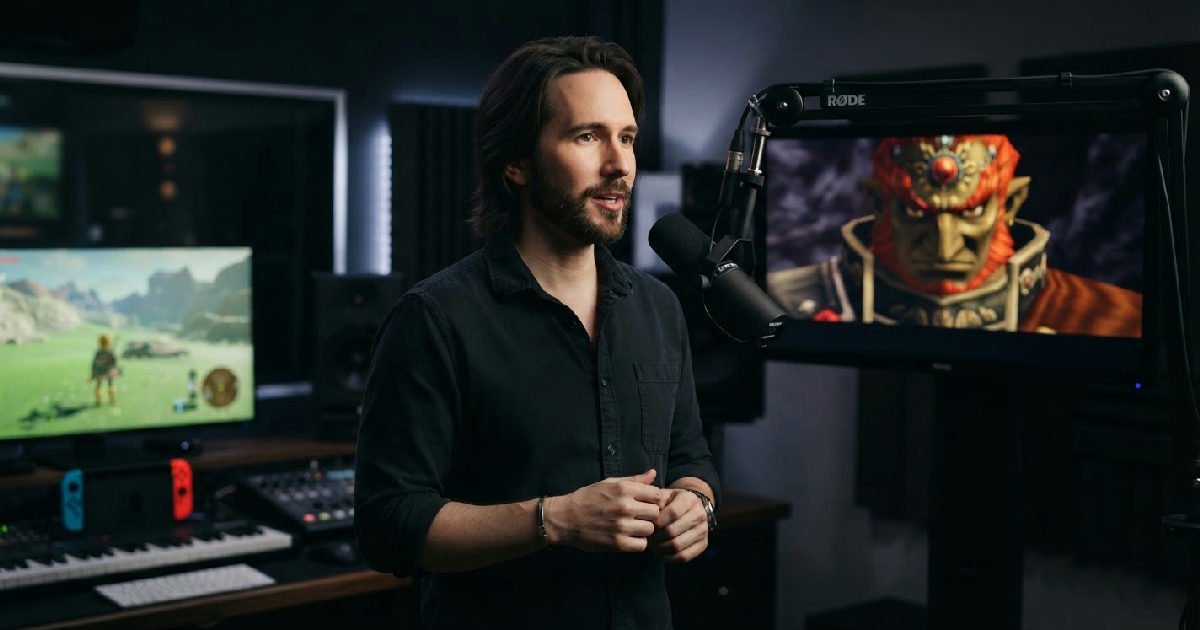
matthew mercer ocarina of time ganondorf debate
Matthew Mercer’s portrayal of Ocarina of Time Ganondorf is a popular topic of discussion among fans and critics.
This scrutiny primarily stems from his performance in 2023’s The Legend of Zelda: Tears of the Kingdom, which has in turn fueled fan debate about his suitability for a hypothetical Ganondorf role in a potential Nintendo Switch 2 remake of The Legend of Zelda: Ocarina of Time.
Fan debate over Matthew Mercer Ocarina of Time Ganondorf’s vocal portrayal
Many players on online forums like ResetEra and Reddit have labeled his interpretation a “miscast,” arguing his voice lacks the “bass” and “grit” they expect from the iconic villain.
The discussions surrounding a potential Ocarina of Time remake intensified around June-September 2026, with the earliest specific criticisms regarding Matthew Mercer’s potential casting emerging on June 11, 2026. This reaction highlights the deep connection many players have with established characters and the high expectations accompanying their modern interpretations, especially concerning the transition from minimal to full voice acting in beloved classics.
Online discussions have been particularly vocal regarding the perceived mismatch between Matthew Mercer’s vocal delivery and fans’ long-held image of Ganondorf. On ResetEra, one prominent thread labeled Mercer’s performance as “one of the biggest miscasts in gaming,” sparking a wide-ranging conversation about the nuances of character voice design.
While many acknowledge Mercer’s talent as an actor, the consensus among critics points to a fundamental issue with his voice for this specific, hypothetical role in Ocarina of Time.
Players frequently describe Mercer’s Ganondorf as “too normal” or “too human,” a departure from the “deep, guttural, wicked, but powerful” voice they associate with the King of Evil.
One Reddit user stated on June 11, 2026, that “This might be an unpopular opinion, but while Matt Mercer does an excellent BBEG, I don’t think he does a good Ganondorf.”
The same user elaborated that previous voice actors for Ganondorf gave the character a “larger than life” feeling, describing their voices as “deep, guttural, wicked, but powerful,” whereas Mercer’s voice is “too normal, too human.”
This criticism suggests that for many, Ganondorf’s power isn’t just in his actions, but also in the very sound of his voice.
Immersion and the iconic villain’s voice
The perceived vocal dissonance isn’t merely a matter of preference; for many players, it actively breaks immersion. Another Reddit user on July 23, 2026, commented, “God, no. I thought his Ganondorf was pretty terrible. Ganondorf should have a sneery, boomy, throaty kind of tone, straight from the gut.
Mercer played him like a pretty standard anime bad guy.” When a voice actor is too recognizable from other roles, it can be challenging for players to disassociate the actor from the character, leading to a feeling that they’re hearing “Matt Mercer” rather than Ganondorf.
This is a common challenge for prolific voice artists, whose unique vocal signatures can sometimes overshadow the characters they portray. For a figure as central and menacing as Ganondorf, maintaining that sense of otherworldliness and villainous grandeur is crucial for the game’s narrative impact.
The ongoing discussions about how a hypothetical remake might look or incorporate updated aesthetics underscore how deeply visual interpretations influence overall perception.
Ganondorf’s voice in an evolving Zelda landscape
In the original Ocarina of Time, Ganondorf’s vocalizations were minimal, primarily consisting of grunts, laughs, and roars, leaving much to the player’s imagination. These limited, yet impactful, sounds cultivated an impression of a “larger than life” antagonist with a certain “throatiness” that resonated deeply with players.
Subsequent appearances in titles like Wind Waker and Twilight Princess continued this tradition, often employing voices that conveyed a powerful, almost inhuman quality.
With the advent of fully voiced characters in modern Zelda games, particularly Breath of the Wild and Tears of the Kingdom, Nintendo opted for more extensive dialogue. This shift inevitably led to casting decisions that filled in the sonic gaps, sometimes clashing with established fan perceptions.
The core of the current criticism lies in this transition, where Mercer’s interpretation for Tears of the Kingdom, while technically skilled, doesn’t align with the deep, gravelly tone many players envisioned for the Demon King in a potential Ocarina of Time remake.
Examining voice direction in modern titles
The debate isn’t solely focused on Matthew Mercer’s performance; some fans are also scrutinizing Nintendo’s voice direction for its modern titles. On September 8, 2026, a GameSpot user expressed, “I like him as a voice actor but I feel that it was a miss cast to have him be Ganondorf.
Feels like its more fitting for a James Earl Jones kind of voice and all, or at least that range.” This perspective suggests that even a highly accomplished voice actor can struggle under direction that fails to capture the essence of a character or meet audience expectations.
Voice directors play a critical role in shaping a performance, guiding actors to achieve specific tones and emotions that fit the overall vision of the game. If the direction itself is perceived as flawed, it can undermine even the most skilled vocal performances, creating a disconnect with the player base and impacting overall player engagement.
Discussions about Nintendo Switch 2 pricing and sales trends show the market is always reacting to player sentiment and broader industry developments.
Remakes, re-imaginings, and fan expectations
The controversy surrounding Matthew Mercer’s Ganondorf highlights the inherent challenges developers face when remaking or re-imagining classic titles, especially those with iconic characters. Fanbases often hold strong, often deeply personal, attachments to original interpretations, even when those interpretations were based on minimal audio cues or player imagination. Introducing full voice acting to a character previously defined by grunts and laughter is a particularly risky endeavor.
Developers must navigate a fine line between updating a game for modern audiences and preserving the nostalgic elements that made the original beloved. When a remake includes significant changes, such as new voice actors for revered villains, it can be a significant departure that risks alienating a segment of the audience.
The success of a remake often hinges on how well it balances innovation with reverence for its source material, especially regarding elements as central as character voices.
The quest for Ganondorf’s ideal voice
The online discussions reveal a clear idea among fans of what Ganondorf “should” sound like. A Reddit user on September 8, 2026, noted, “He’s not BAD, but his voice is very ‘male anime dub protagonist’ which isn’t really how I’ve always envisioned Ganondorf’s voice.
In my head, Ganondorf sounds like how his laughs sound in OoT/WW/TP, he’s got a low gravel-y voice. Matt Mercer’s Ganondorf…”. Suggestions for alternative voice actors often gravitate towards those with naturally deeper, more commanding voices.
Names frequently mentioned include Ron Perlman, known for his gravelly tones, as well as TC Carson, the original voice of Kratos, and Christopher Judge, who currently voices Kratos in the modern God of War series. These suggestions reflect a desire for a voice that projects immense power, menace, and gravitas.
It emphasizes that for certain characters, voice isn’t just dialogue; it’s an integral part of their identity and how they’re perceived. The collective imagining of Ganondorf’s voice appears to lean towards a lower register, a less “human” sound that underscores his role as a formidable, ancient evil.
This desire for specific vocal qualities illustrates the nuanced expectations players bring to experiences that rely on strong characterizations and narrative depth, much like the rich character development found in other popular franchises.
Implications for future Zelda installments
The ongoing discourse around Matthew Mercer’s Ganondorf performance will undoubtedly factor into future voice casting considerations for The Legend of Zelda series. As the franchise continues to evolve with fully voiced characters, ensuring that these voices align with fan expectations for iconic figures becomes increasingly critical.
The company has already seen significant fan investment in the narrative and world-building of its modern titles, and voice acting is a crucial component of that experience.
While Mercer is an undeniably talented actor with a vast portfolio of critically acclaimed roles—including appearances in Attack on Titan, Resident Evil, and the upcoming Final Fantasy 7 Revelation as Vincent Valentine—his experience with Ganondorf highlights the unique challenges of reinterpreting an established character.
It’s a testament to the passionate nature of Zelda fans that such a debate has emerged, reinforcing the idea that even minor changes to beloved elements can generate widespread discussion and strong opinions within the gaming community. Another Reddit user on September 9, 2026, stated, “I’m with you. And it’s no fault of Matt’s either.
I think I’ve just heard him in so many roles now that I just hear ‘Matt Mercer’ and not ‘Ganondorf’ when he speaks. It doesn’t help that Ganondorf’s previous voice work (grunts and whatnot) had more of a throatiness that Matt’s lacks.”
Balancing innovation with established legacy
Ultimately, Nintendo, like any developer of long-running franchises, must balance the impulse for innovation with the preservation of its beloved legacy. This balance extends beyond gameplay mechanics and graphical updates to include subtle yet impactful elements like character voices.
The discussion around Ganondorf serves as a powerful reminder that for some characters, particularly villains who embody a game’s central conflict, their vocal presence is as important as their visual design or narrative role.
As the gaming landscape continues to feature increasingly complex narratives and immersive worlds, the role of voice acting will only grow in significance.
The “miscast” debate isn’t just about Matthew Mercer; it’s about the evolving expectations of players, the delicate art of character interpretation, and the challenge of bringing classic legends to life for new generations while honoring the indelible impressions left by their original forms.
It will be interesting to see how Nintendo responds to this feedback in future iterations of the series, potentially influencing how they approach vocal casting for characters as deeply ingrained in gaming culture as Ganondorf.