

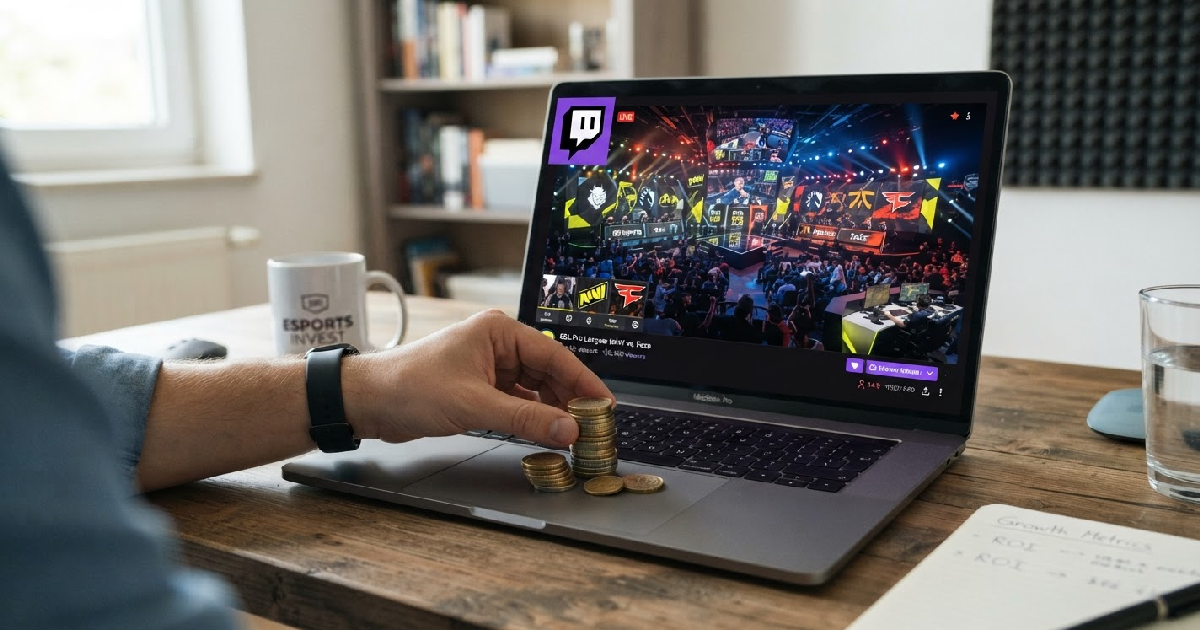
Investing in esports: market growth fuels diverse opportunities
Investing in esports offers diverse opportunities within a rapidly expanding global industry that blends competitive video gaming, cutting-edge technology, and modern media. The sector is characterized by significant growth in viewership, revenue, and professionalization, attracting interest from various types of investors looking to capitalize on this digital entertainment phenomenon.
This comprehensive guide explores the mechanics, key players, and financial landscape of esports, providing a roadmap for those considering engagement with this dynamic market.
Understanding the Esports Phenomenon
Esports, short for electronic sports, refers to organized competitive video gaming where professional players or teams compete against each other. These competitions often take place in tournaments or leagues, captivating millions of viewers worldwide.
Games can range from solo genres like fighting or shooting to complex team-based strategies found in sports simulations or multiplayer online battle arenas (MOBAs). This competitive ecosystem forms the foundation of a robust entertainment industry.
What is competitive video gaming?
Competitive video gaming has evolved far beyond casual play, now featuring professional athletes, structured leagues, and significant prize pools. Players train rigorously, often as part of salaried teams, mirroring traditional sports structures.
The professionalization includes coaching staff, analysts, and support personnel, all contributing to a high-stakes competitive environment. This organized structure underpins the entire esports economy.
Key drivers of market expansion
The global esports market’s robust growth stems from several interconnected factors. Technological advancements in gaming hardware and software continue to enhance the player and viewer experience.
Increased internet penetration worldwide, particularly in emerging markets, has broadened accessibility to online gaming. Furthermore, the proliferation of streaming platforms allows content creators and professional players to reach massive audiences.
Market Valuation and Audience Reach
The financial scale of the esports industry is expanding rapidly, drawing considerable attention from analysts and investors alike. Its growth trajectory signals a significant shift in the entertainment and sports landscape.
Understanding these figures is crucial for grasping the sector’s economic potential.
Projected market size and CAGR
The global esports market was valued at approximately $2.6 billion in 2025, according to some estimates. This figure is projected to reach an impressive $12.0 billion by 2033.
This represents a substantial Compound Annual Growth Rate (CAGR) of 20.4% from 2026 to 2033. Other analyses place the 2025 market value at $2.4 billion, growing to $10.3 billion by 2034 with a CAGR of 16.87% over that period.
A separate report estimates the market at $5.34 billion in 2026, indicating varied but consistently high growth projections. These figures highlight the global market size and its upward trend.
Global viewership and fan base
The audience supporting this growth is equally impressive. The global esports audience reached approximately 640.8 million in 2026.
This includes 318.1 million dedicated fans who actively follow the scene, alongside 322.7 million occasional viewers. This audience base is expected to swell further, potentially reaching 924.9 million by 2030.
North America currently holds a dominant market position, capturing over 36.3% share with $0.83 billion in revenue in 2023. Asia-Pacific is also emerging as a rapidly growing market, fueled by its large youth population and increasing internet accessibility, showcasing the latest esports trends.
Diverse Revenue Streams Powering Growth
Esports generates revenue through a sophisticated mix of traditional and digital channels. These diverse streams create multiple entry points for investors and underpin the industry’s financial stability.
Understanding where the money comes from is essential for evaluating potential investment opportunities.
Sponsorships and advertising dominance
Sponsorship and advertising remain the primary revenue drivers for the esports industry. This segment accounted for over 40% of global revenue in 2025, contributing $1.2 billion in 2026 alone.
Major global brands invested an estimated $1.4 billion in esports sponsorship during 2025, demonstrating confidence in the sector’s marketing reach. These partnerships are critical for team and league sustainability.
Media rights and live events
Media rights are experiencing significant growth, projected to expand at a CAGR of over 25.0%. This surge is driven by strong demand for exclusive broadcasting deals and strategic partnerships with streaming platforms like Twitch and YouTube Gaming.
Live events, while historically smaller contributors, are now seeing a resurgence, generating revenue through ticket sales, merchandise, and hospitality. These events enhance fan engagement and provide direct monetization opportunities.
Merchandising and in-game purchases
Merchandising includes branded apparel, peripherals, and other physical products that connect fans with their favorite teams and games. This stream leverages fan loyalty and team identity.
In-game purchases, encompassing virtual items like skins, emotes, and other digital enhancements, also represent a substantial and growing revenue source. These digital assets often allow players to personalize their experience.
Key Avenues for Esports Investment
Investors can gain exposure to the esports industry through various channels, ranging from publicly traded companies to direct stakes in private entities. Each avenue offers a distinct risk-reward profile and level of involvement.
Exploring these options provides a clear picture of how capital flows into this burgeoning sector.
Publicly traded companies in gaming
Investing in publicly traded companies offers a relatively liquid way to engage with the esports market. These include game developers and publishers who create the titles that form the backbone of competitive gaming.
Examples include Activision Blizzard (ATVI), Electronic Arts (EA), and Take-Two Interactive Software (TTWO). Companies like Tencent Holdings (TCEHY) and NetEase (NTES) are also significant players, particularly in the Asian market.
Beyond publishers, hardware and software manufacturers such as NVIDIA (NVDA) and Logitech (LOGI) produce essential gaming equipment. Streaming platforms like Amazon (owner of Twitch) and Alphabet (Google, owner of YouTube) provide critical infrastructure for content consumption.
Esports-focused exchange-traded funds
Exchange-Traded Funds (ETFs) provide a diversified approach, allowing investors to buy into a basket of companies involved in the video gaming and esports industry. This mitigates individual company risk.
Notable examples include the VanEck Video Gaming and eSports ETF (ESPO), Global X Video Games & Esports ETF (HERO), and Roundhill Video Games ETF (NERD). These ETFs typically invest across game developers, hardware manufacturers, streaming platforms, and esports organizations, offering broad sector exposure.
Direct investments in teams and organizations
Accredited investors can pursue direct investments in esports teams or organizations through private markets. This often involves acquiring pre-IPO shares from existing shareholders or through specialized venture capital funds.
Esports teams primarily generate revenue from sponsorship deals, which can account for up to 95% of their income. They also earn from prize money, player salaries (often supplemented by streaming revenue), and merchandise sales. Organizations like Team Liquid boast significant valuations, reflecting their brand strength and competitive success.
Venture capital and private equity landscape
Venture Capital (VC) firms are increasingly active, channeling funds into gaming, esports, and interactive media startups at various stages. This includes seed funding through Series A and B rounds, fueling innovation and expansion.
Prominent esports-focused funds like BITKRAFT Ventures, along with Hiro Capital, The Games Fund, Powerhouse Capital, and Transcend Fund, lead this charge. Their investments often target game studios, interactive platforms, immersive technology, and companies developing advanced AI-driven mobile games or augmented reality experiences, influencing the future of esports.
Navigating Risks and Future Challenges
Despite its impressive growth, investing in esports isn’t without its complexities and risks. The industry’s relative youth and rapid evolution present unique challenges that investors must consider.
Awareness of these hurdles is crucial for making informed investment decisions in this dynamic sector.
Profitability hurdles for organizations
Esports-specific organizations, particularly tournament organizers and professional teams, often struggle with profitability. This is despite significant growth in viewership and participation across the industry.
High operating costs, including substantial player salaries, coaching staff, extensive travel, and state-of-the-art training facilities, contribute to these financial challenges. Teams often rely heavily on external funding and sponsorship to cover expenses.
Evolving nature of game popularity
The esports industry is characterized by its inherent volatility and constant evolution. The popularity of specific games can shift rapidly, impacting the viewership and competitive relevance of associated teams and leagues.
New titles frequently emerge, challenging established games for market share and audience attention. This dynamic environment requires adaptability and a keen understanding of gaming trends to sustain long-term investment success.