

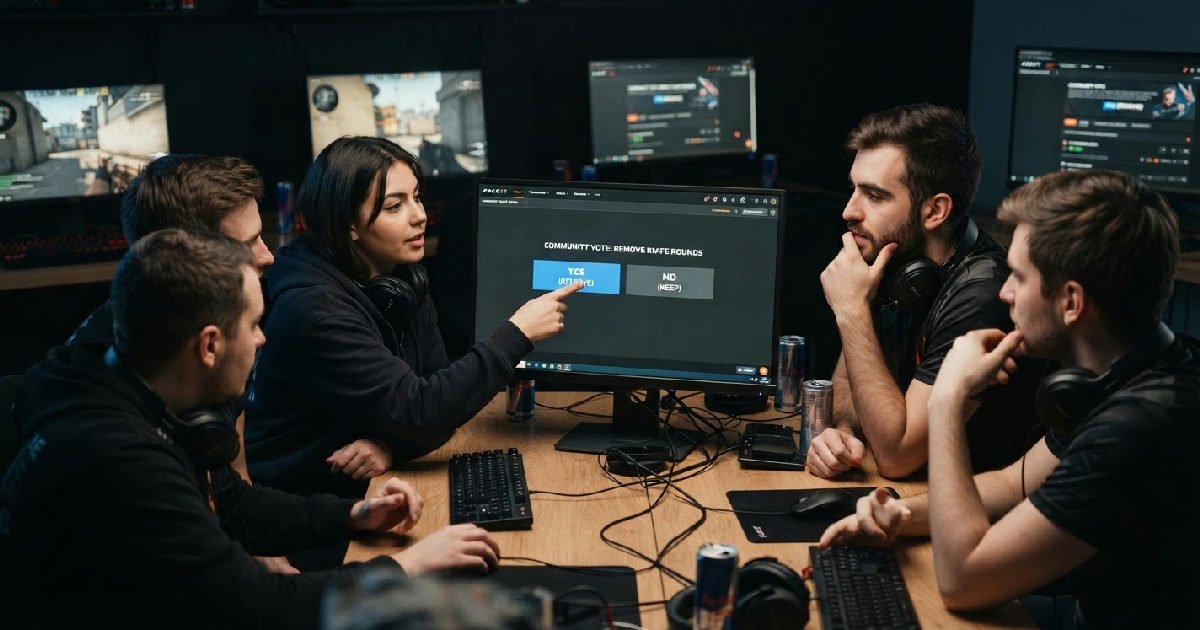
faceit players vote to remove knife rounds
On 2019-02-13, FACEIT, a prominent online competitive gaming platform, put a pivotal decision to its player base: whether to retain or abolish the traditional “knife rounds” in its Counter-Strike: Global Offensive (CS:GO) matchmaking service. The community responded decisively. An overwhelming 60% of the 105,000 participating players voted to remove knife rounds, signaling a significant shift in how competitive matches will begin on the platform.
This player-driven change means that instead of a brief, knife-only skirmish to determine starting sides, games will now assign teams to either Terrorist (T) or Counter-Terrorist (CT) roles randomly. The move, which was officially announced on 2019-02-15 following the vote, aims to streamline the matchmaking experience and align FACEIT’s competitive environment more closely with current professional tournament standards.
The end of FACEIT knife rounds
FACEIT has consistently shown a willingness to engage its extensive user base in key platform decisions. This isn’t the first time the company has leveraged community polls to refine its competitive offerings. Previous votes successfully introduced optional maps, like Cache and Vertigo, into the map pool, and even influenced communication features such as the implementation of halftime all-chat for Season 9.
The decision to hold a vote on knife rounds stemmed from prolonged debate within the CS:GO community. Many players viewed the knife round as an iconic tradition, a quick, tactical prelude to the main event that added a layer of strategy by allowing the winning team to pick a preferred starting side.
Others, however, considered it an unnecessary delay, arguing it contributed to longer match starts and offered little genuine competitive value.
The enduring debate around knife rounds
Knife rounds have been an integral, if sometimes contentious, part of Counter-Strike’s competitive history. Dating back to early versions of the game like CS 1.6, these initial engagements typically saw players restricted to knives, battling it out to secure the advantage of choosing their starting side.
This choice is often crucial, as many maps in CS:GO are considered to have a naturally favored side, whether for attacking or defending.
The mechanics of a knife round demand precise movement and close-quarters combat, with players often spawning with reduced health to make each knife hit impactful.
While some pro players and casual enthusiasts alike appreciated the brief moment of high-stakes, low-lethality combat, critics highlighted issues such as players deliberately prolonging the round by running away, or simply going AFK, thereby wasting valuable time before the actual game began.
This “dead time,” as some called it, became a primary driver for the desire to remove them.
Implications for competitive integrity and player experience
The outcome of the FACEIT knife rounds vote carries significant implications for competitive integrity and the overall player experience on the platform. By removing the knife round, FACEIT shifts the initial side selection from a skill-based mini-game to a purely random assignment.
This change largely mirrors practices in many top-tier professional CS:GO tournaments, where side selection is frequently determined by a coin toss or pre-match agreements, prioritizing immediate game start over the traditional knife skirmish.
For players, this means faster queue-to-game times and the elimination of a potentially frustrating element of competitive play. The randomness of starting sides can also test a team’s adaptability, requiring them to perform effectively on both Terrorist and Counter-Terrorist roles without a guaranteed advantage. But it also means losing a strategic element, however minor, that some teams used to gain an early psychological edge.
FACEIT’s commitment to a dynamic ruleset
FACEIT has consistently demonstrated a willingness to adapt its ruleset based on community feedback, fostering an environment where player voices can directly influence gameplay. This approach distinguishes it from some other platforms and highlights a responsive development philosophy. The platform’s commitment to player input mirrors broader trends in the gaming world, where debates surrounding beloved characters and narrative choices highlight the power of community sentiment.
The decision to test the winning option at the kickoff of Season 10 on December 9th underscores FACEIT’s iterative approach to platform development. This allows for real-world data collection and further fine-tuning, ensuring that any major change truly benefits the community. It’s a pragmatic stance that blends democratic player input with careful implementation and evaluation.
Looking ahead: the future of player agency in esports
The success of the FACEIT knife rounds vote sets a precedent for how competitive platforms can empower their communities. In an increasingly player-centric industry, giving users a direct say in gameplay mechanics and rules can boost engagement and satisfaction.
While some might view the removal of a traditional element as a loss, the overwhelming vote suggests that a significant portion of the player base prioritizes efficiency and a more standardized competitive format.
This move positions FACEIT as a platform that actively listens and responds to the evolving needs and preferences of its vast user base, which as of September 2026, includes over 13 million users.
While direct player votes typically focus on gameplay mechanics, other factors like console pricing and market performance heavily influence the broader esports ecosystem, affecting player access and platform viability. The success of such initiatives on FACEIT could encourage other gaming platforms and tournament organizers to adopt similar player-driven governance models.
It also highlights the ongoing divergence in competitive rulesets across different leagues and platforms. While FACEIT has moved to remove knife rounds in its primary matchmaking, ESEA League matches, known for their more rigorous competitive structure, will retain the standard knife round. This creates a fascinating split within the Counter-Strike competitive landscape, where players might encounter different starting procedures depending on where they play.
Broader impact on the Counter-Strike community
The removal of knife rounds in FACEIT’s matchmaking service could have a subtle yet significant impact on the Counter-Strike community. For casual players, it simplifies the match-start process, potentially making the initial moments of a game less intimidating.
For aspiring professionals, it further standardizes the competitive environment, bringing it closer to the no-knife-round format often seen in high-stakes tournaments. This standardization can help players practice and develop skills relevant to the highest levels of play.
Moreover, the change underscores the community’s growing focus on pure strategic gameplay over ancillary traditions. This isn’t merely about removing a small feature; it reflects a collective desire for a more focused and efficient competitive experience.
The decision to remove knife rounds, while impactful for competitive integrity, avoids scenarios that can sometimes lead to unintended viral gaming moments, keeping the spotlight firmly on skill and strategy.
Ultimately, FACEIT’s proactive engagement with its community through this vote reinforces its role as a responsive and player-centric platform. As the esports industry continues to mature, the willingness of platforms to adapt and evolve based on direct player feedback will be crucial for maintaining a vibrant and engaged user base.