

Garlinghouse: Pro-crypto candidates won US midterm elections
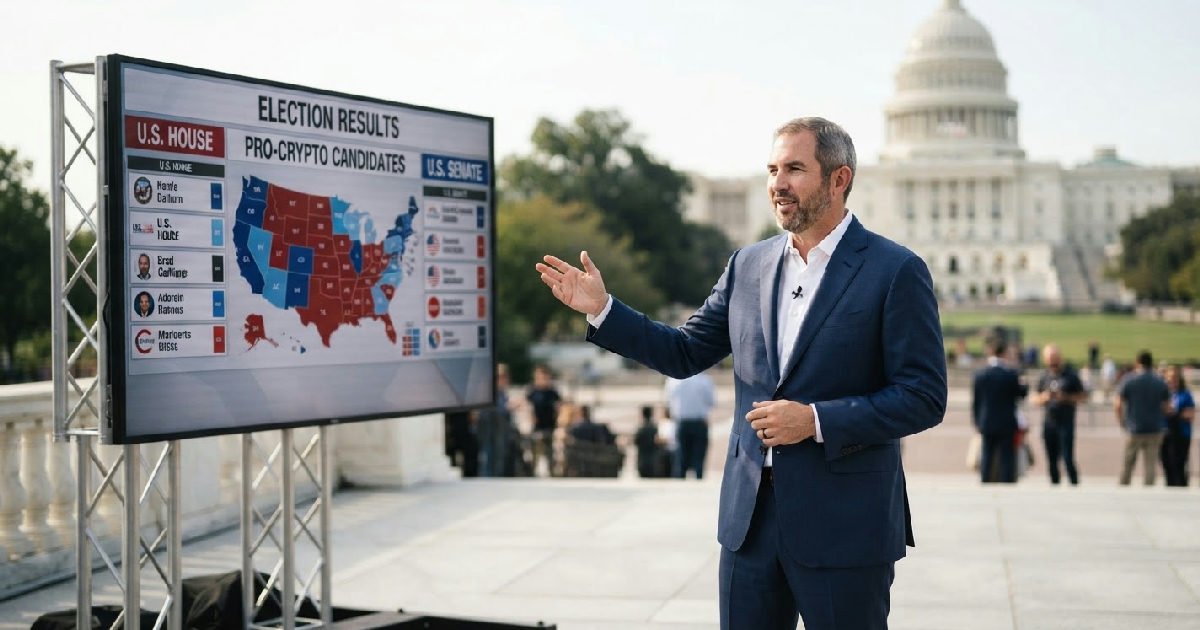
Ripple CEO Brad Garlinghouse and Chief Legal Officer Stuart Alderoty maintain that pro-cryptocurrency candidates achieved significant wins in the 2026 US midterm elections. This assessment comes despite Democrats securing control of both the House of Representatives and the Senate. Both executives emphasized a nuanced view of the election results, arguing that headlines often oversimplified the outcome for the digital asset industry.
On November 5, 2026, Garlinghouse took to X to highlight that lawmakers supporting digital assets had won seats across the political spectrum. He reiterated the industry’s unwavering mission under the new Congress: to establish “clear rules, built in America.” This sentiment underscores the ongoing push for regulatory certainty for the estimated 67 million cryptocurrency users in the United States.
Ripple Executives Navigate US Midterm Elections Fallout
Following the November 3, 2026, midterm elections, which saw Democrats regain legislative control, Ripple Chief Legal Officer Stuart Alderoty offered a more detailed perspective. He acknowledged that many observers might view the election as a setback for the crypto sector. But he argued the reality was considerably more complex and favorable than such initial interpretations suggested.
Alderoty specifically pointed to the successes of Fairshake, a prominent crypto-backed political action committee (PAC), which is significantly supported by major industry players like Ripple, Coinbase, and Andreessen Horowitz. He noted Fairshake’s meaningful achievements in both primary and general elections. Early data from advocacy group Stand With Crypto also indicated a substantial number of crypto-friendly lawmakers secured seats from both major parties.
The Ripple executive credited years of persistent political engagement by grassroots advocates and industry organizations. These efforts, he explained, were instrumental in building crucial relationships with lawmakers. These newly elected representatives are now positioned as vital partners in ongoing congressional and administrative discussions surrounding digital asset regulations and technology policy.
Fairshake’s Strategic Spending Yields Mixed Results
The 2026 election cycle saw an unprecedented commitment of funds from cryptocurrency companies to congressional races. The industry collectively spent approximately $176 million across more than 100 races by late October. This mirrored broader midterm election risks that impacted various sectors. Fairshake and its affiliated PACs accounted for the vast majority of this spending, pouring about $150.8 million into the midterms.
This substantial investment produced mixed outcomes for the industry. Fairshake reportedly celebrated victories in 29 of the 34 decided races it actively supported. These included several contests involving lawmakers who align with the industry’s legislative goals. For example, Republican Senator Pete Ricketts secured a win in Nebraska after Fairshake and its affiliates spent at least $13.5 million against his independent challenger, Dan Osborn.
Similarly, Republican Andy Barr won a US Senate seat in Kentucky with industry backing. Democrat James Talarico also emerged victorious in the US Senate race in Texas, known for his support of “clear, fair rules for cryptocurrency” and rated “strongly supports crypto” by Stand With Crypto. However, the election was not without significant disappointments, reflecting broader crypto market anxiety surrounding regulatory uncertainty.
The most notable setback for crypto PACs occurred in Ohio. Democratic Senator Sherrod Brown, a longtime and vocal critic of the industry, successfully retained his seat.
This victory came despite more than $60 million in spending by crypto-backed political committees specifically aimed at preventing his return to the Senate. Furthermore, several pro-crypto representatives, including Bryan Steil, Zach Nunn, and Ann Wagner, lost their reelection bids.
Fairshake’s House campaign had initially targeted 32 incumbents, a bipartisan group comprising 19 Republicans and 13 Democrats. These lawmakers had previously supported the CLARITY Act, a key piece of digital asset legislation. The mixed results underscore the challenges faced by the industry in directly influencing electoral outcomes, even with significant financial contributions.
The CLARITY Act’s Stalled Path in a Divided Congress
A central legislative priority for the cryptocurrency industry has been the CLARITY Act. This proposed legislation aims to establish comprehensive federal rules for cryptocurrency markets. It also seeks to clarify the often-overlapping regulatory responsibilities between the Securities and Exchange Commission (SEC) and the Commodity Futures Trading Commission (CFTC).
The House of Representatives passed its version of the CLARITY Act in July 2025, with a notable vote of 294 to 134, demonstrating bipartisan support in that chamber. The bill then progressed to the Senate, where a revised version cleared the Senate Banking Committee in May 2026 with a 15-9 vote. This progress offered a glimmer of hope for a more defined regulatory environment.
However, the bill encountered a significant roadblock in September 2026. A crucial procedural vote in the Senate to advance the CLARITY Act failed, with 49 votes in favor and 50 against. This outcome fell short of the 60 votes required to move the legislation forward, effectively stalling it before the midterm elections. The failure highlighted the deep divisions within Congress regarding digital asset regulation.
With Democrats now preparing to assume control of both chambers of Congress, the path for the CLARITY Act becomes considerably steeper. Future negotiations will likely involve lawmakers who have previously voiced concerns about consumer protection, financial oversight, and the broader political influence of the crypto industry.
This shift in congressional power could lead to increased oversight hearings and potentially different legislative approaches, setting a new tone for regulatory discussions.
This contrasts with the successful passage of the GENIUS Act (Guiding and Establishing National Innovation for US Stablecoins) in July 2025. That legislation established a regulatory framework specifically for payment stablecoins, clarifying they are not securities or commodities.
While a step forward, the GENIUS Act represents only one piece of the broader regulatory puzzle the crypto industry seeks to solve.
Despite these legislative challenges, Alderoty highlighted continued cryptocurrency adoption across the United States. He noted over 67 million Americans are now using digital assets for personal finance, business activities, and payments. Banks and businesses are also increasingly embracing cryptocurrency services, indicating a growing mainstream integration.
Looking ahead, the industry’s political organizations plan to remain active. Fairshake, for instance, reportedly has about $56 million available for the 2028 election cycle. This suggests an ongoing commitment to influence policy.
They’ll continue to push for clear federal rules governing digital assets, even as other corporate leadership changes unfold, like the recent Anheuser-Busch CEO exits.