

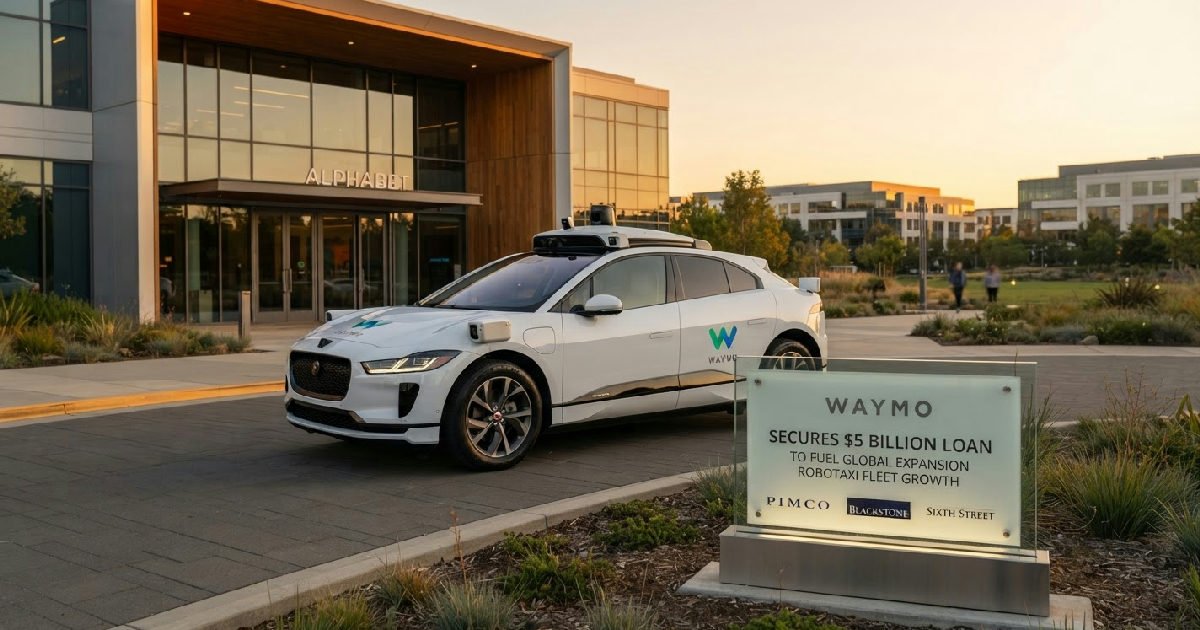
Waymo secures $5 billion loan for global robotaxi fleet
Alphabet’s autonomous driving technology company, Waymo, secured its inaugural $5 billion term loan on May 9, 2024, with the funding publicly announced on October 8, 2026. This significant venture into debt financing marks a strategic shift for the robotaxi pioneer, aiming to accelerate the expansion of its fleet across both domestic and international markets.
Until this point, Waymo had primarily relied on equity funding, including substantial investment from its parent company Alphabet and a colossal $16 billion equity raise earlier in 2026. That equity round valued the firm at $126 billion. This latest move leverages debt markets to fuel growth as Waymo transitions into a more expansive commercial enterprise.
The Impact of the Waymo $5 billion loan
The $5 billion term loan represents a crucial evolution in Waymo’s funding model. Shifting from an almost exclusive reliance on equity to incorporating debt financing provides the company with greater flexibility and a diversified capital structure. This approach is typical for technology firms moving beyond initial research and development into widespread commercial deployment.
Steve Fieler, Waymo’s Chief Financial Officer, emphasized the importance of this new financing. He stated that the capital would “accelerate the continued expansion of our fully autonomous ride-hailing service across the United States and internationally.” This funding helps maintain Waymo’s agility and ability to scale operations thoughtfully while leading the autonomous vehicle industry.
This financial milestone comes as Waymo continues to push its boundaries. The company launched its ride-hailing service in its 15th U.S. city last month, showcasing its commitment to increasing its presence within the domestic market. Such rapid growth demands substantial and flexible financial resources.
Fueling Ambitious Global Expansion
The newly secured capital is specifically earmarked to propel Waymo’s aggressive expansion. The company isn’t just looking to broaden its footprint within the United States; it’s also setting its sights on major international hubs. Plans are already in motion to expand into key overseas markets.
London and Tokyo are among the primary international targets for Waymo’s robotaxi services, signaling a bold step into highly complex urban environments. These cities present unique regulatory and logistical challenges, but also massive potential markets for autonomous ride-hailing. The successful integration into these global centers could set a precedent for future international growth.
Reaching New Markets
Expanding into diverse geographies like London and Tokyo requires significant upfront investment in mapping, regulatory compliance, and fleet deployment. The $5 billion loan provides the necessary liquidity to navigate these intricate processes effectively. It underpins the company’s strategy to become a dominant global player in autonomous transportation.
Waymo’s ability to attract such a substantial loan from a consortium of prominent lenders underscores market confidence in its technology and business model. This commitment from major financial institutions reflects a belief in the long-term viability and profitability of autonomous ride-hailing services. The broader financial landscape continues to see major capital movements, including recent significant government moves bitcoin from various sources.
Key Lenders and Financial Backing
The $5 billion term loan was arranged by a formidable consortium of leading financial institutions. This broad participation highlights the widespread interest and belief in Waymo’s future prospects. Such a diverse group of lenders also distributes the risk, making the deal more palatable for all parties involved.
PIMCO, Blackstone, and Sixth Street spearheaded the group of lenders. Their involvement brings significant financial clout and expertise to the arrangement. These firms are renowned for their strategic investments across various sectors, including high-growth technology companies.
Leading Financial Institutions Collaborate
Additional participants in the lending syndicate include Capital Group, Loomis Sayles, T. Rowe Price, Apollo, Blue Owl, Diameter Capital Partners, Franklin Templeton, Fidelity Management & Research Company, HPS Investment Partners, and Oaktree. Goldman Sachs served as the sole lead bookrunner, orchestrating the complex financial transaction.
This impressive roster of financial heavyweights provides a strong vote of confidence in Waymo’s operational capabilities and strategic vision. It also indicates a shift in how institutional investors are viewing the autonomous vehicle market, increasingly willing to back companies with debt rather than just equity. This influx of capital positions Waymo strongly amidst broader economic indicators and capital flows.
Challenges and Competitive Landscape
While the $5 billion loan offers a significant boost, Waymo operates in a fiercely competitive and technologically demanding environment. The self-driving sector faces continuous challenges, ranging from regulatory hurdles and public acceptance to technological advancements and infrastructure development. Scaling operations globally only amplifies these complexities.
The company must navigate varying local regulations, adapt to different driving cultures, and ensure the reliability and safety of its autonomous vehicles in diverse conditions. Maintaining a leadership position requires constant innovation and significant investment. These global operational challenges can be further complicated by factors like shipping cost increases and geopolitical shifts impacting supply chains.
Other players, both established automotive giants and nimble startups, are also vying for market share.
Navigating Regulatory and Operational Hurdles
Building trust with consumers and policymakers remains paramount for Waymo. Incidents involving autonomous vehicles, regardless of fault, often draw intense scrutiny and can impact public perception. The company’s commitment to “leading the autonomous vehicle industry responsibly” underscores this awareness.
The sheer operational challenge of managing a rapidly expanding robotaxi fleet across multiple cities, both domestically and internationally, is immense. It requires sophisticated logistics, maintenance, and customer support systems to ensure seamless service. This loan provides the financial runway to address these operational complexities effectively.
Outlook for Autonomous Vehicle Development
Waymo’s ability to secure this substantial debt financing suggests a positive outlook for the broader autonomous vehicle industry. It indicates that the sector is moving beyond speculative investment and attracting more traditional forms of capital. This could pave the way for other players to access similar funding avenues.