

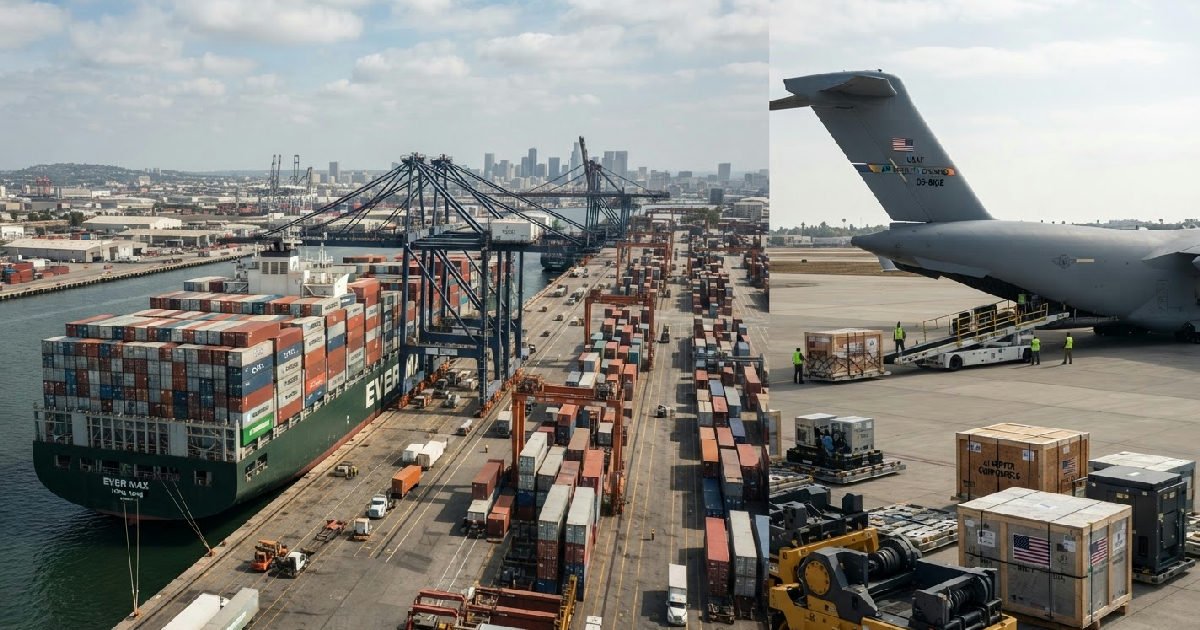
US trade deficit widens to $105.6 billion in August
The United States saw its trade deficit expand significantly in August 2026, reaching $105.6 billion. This marks the widest gap since March 2025, according to data released on Tuesday, October 6, 2026, by the U.S. Bureau of Economic Analysis (BEA) and the U.S. Census Bureau.
The substantial increase reflects a 13.7% jump from July’s revised figure of $92.8 billion. The widening deficit was primarily driven by a robust surge in imports, which outpaced export growth.
Understanding the US Trade Deficit in August 2026
Imports for August 2026 climbed by 4.3% over the month, totaling an all-time high of $420.8 billion. This increase, amounting to $17.2 billion from July, pushed the overall trade imbalance beyond market expectations. Economists polled by Reuters had forecast a deficit of $102.0 billion.
Goods imports saw a particularly sharp rise, increasing by 5.3% to $342.2 billion. A significant portion of this growth came from industrial supplies and materials, which surged by $9.1 billion, partly attributed to the ongoing artificial intelligence (AI) buildout.
The data suggests that strong domestic demand continues to draw in foreign goods and services. This demand includes not just AI infrastructure components but also broader consumer needs across the country.
Economic Context and Historical Comparison
This $105.6 billion deficit represents the steepest imbalance the U.S. has experienced since March 2025. That earlier period predated the “liberation day” announcement of reciprocal tariffs by then-President Donald Trump against various U.S. trading partners.
While the monthly figures show a widening gap, the year-to-date deficit tells a different story. The cumulative deficit of $138.2 billion is nearly 20% lower than the same period a year ago. This suggests that despite recent monthly fluctuations, the overall trend over the past year has been towards a narrower trade gap.
Examining these trends is crucial for understanding the nation’s economic health. A persistent trade deficit can indicate strong consumer spending, but also a reliance on foreign production. G20 trade ministers have previously struggled to reach consensus on issues like overcapacity and forced labor, highlighting the complexities of global trade relationships.
Impact of AI Buildout on Trade Flows
The report explicitly links a portion of the import swell to the “artificial intelligence buildout.” This highlights a significant economic shift, as companies invest heavily in computing power, specialized chips, and other hardware necessary for AI development and deployment. Such investments often require imports of advanced technological components not readily available domestically.
The demand for these specialized goods can exert considerable pressure on the trade balance. As the global AI race intensifies, nations like the U.S. with leading tech sectors will likely continue to import cutting-edge components to maintain their competitive edge. This dynamic could keep import figures elevated in the coming months.
The Role of Tariffs and Trade Policy
The report also noted the “vagaries of import tariffs” as a contributing factor to the widening deficit. While specific details weren’t provided, shifts in tariff policies or their enforcement can significantly alter trade flows. Tariffs aim to reduce imports by making them more expensive, but their real-world impact can be complex and sometimes lead to unintended consequences.
The reference to President Trump’s past tariff announcements serves as a reminder of how quickly trade policy can shift. Such policy changes inevitably create uncertainty for businesses involved in international trade. Future administrations may continue to evaluate credit facilities and trade agreements in response to evolving economic landscapes.
Policymakers often weigh the benefits of protecting domestic industries against the costs of higher prices for consumers and businesses reliant on imports. Balancing these factors remains a perpetual challenge in international economics.
Forward Outlook for the US Trade Balance
With imports reaching an all-time high, economists will be closely watching whether this trend continues. The strength of domestic demand, particularly in high-growth sectors like AI, will be a key determinant. If U.S. economic growth continues to outpace that of its trading partners, the demand for imports could remain robust.
Conversely, global economic slowdowns or shifts in consumer spending could lead to a rebalancing of trade figures. The interplay between domestic consumption, industrial investment, and international trade agreements will shape the trade deficit’s trajectory in the coming quarters. It’s a complex equation with many moving parts.
The persistent demand for advanced technologies, including components for AI infrastructure, underscores a broader global economic trend. Nations are vying for technological supremacy, and this competition inevitably influences trade patterns. A closer look at the components driving these import surges offers valuable insights into the evolving global economy.
For instance, the burgeoning crypto sector also impacts financial flows, as seen with Stellar DeFi TVL hitting record highs, indicating areas of rapid growth and investment that can draw in capital and resources internationally.
Understanding the Economic Implications
A widening trade deficit can spark debates about national economic strategy. On one hand, it indicates robust domestic consumption and investment, often a sign of a healthy economy. Consumers and businesses are confident enough to purchase goods and services from abroad.
On the other hand, a sustained large deficit can raise concerns about job displacement in domestic industries, currency valuation, and national debt. It implies that a country is consuming more than it produces, relying on foreign capital to finance the difference. This balance is critical for long-term economic stability.
The specifics of the goods being imported also matter. If imports are primarily capital goods or raw materials that contribute to future productivity, the deficit might be viewed differently than if it