

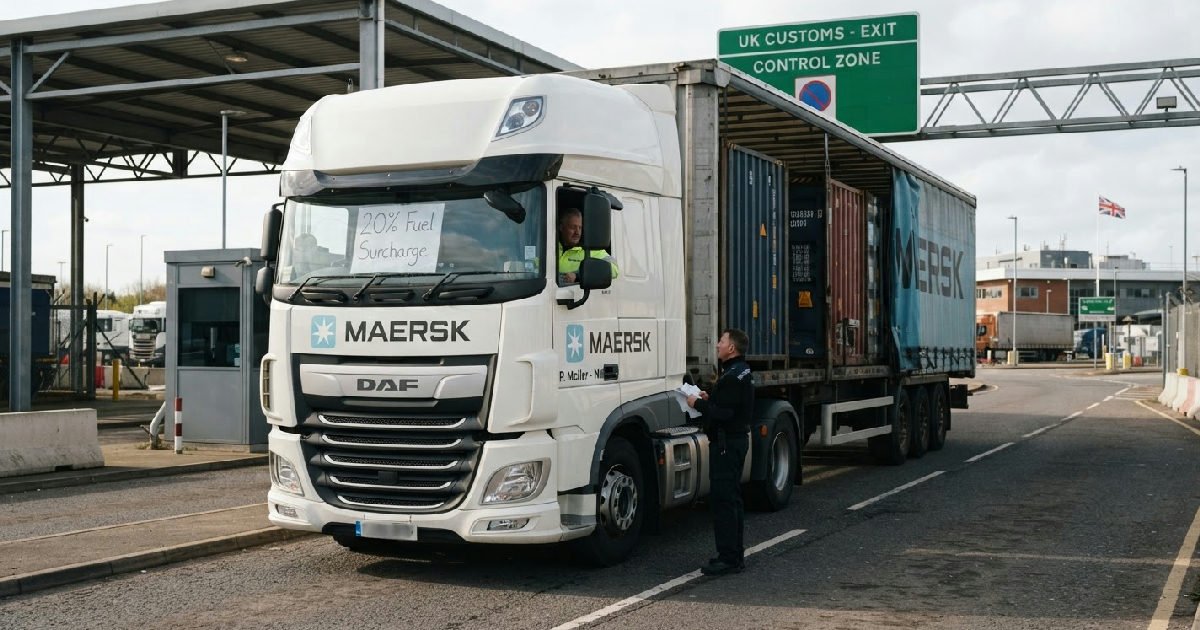
P. Moller – Maersk hikes UK Maersk fuel surcharge to 20%
Maersk will increase its emergency fuel surcharge for UK and Ireland inland transport by 20% starting October 12, 2026, due to rising fuel costs. P. Moller – Maersk has announced it will hike its emergency Maersk fuel surcharge (EFS) for inland transportation in the UK and Ireland to 20%, effective October 12, 2026.
The company cites soaring fuel prices, directly linked to escalating conflict in the Middle East, as the primary reason for the sharp increase.
The move, announced on October 8, signals intensifying pressure on global supply chains. It directly affects the cost of all import deliveries and export collections via truck and rail, with the financial burden set to ripple through to businesses and consumers already grappling with inflation.
Understanding the Maersk fuel surcharge spike for British and Irish trade
For companies relying on Maersk’s extensive inland network, the surcharge increase represents a significant and sudden jump in operational costs. The emergency fee was previously set at 10.6% as recently as October 1, 2026, meaning costs for ground transportation have nearly doubled in less than two weeks. This rapid escalation creates a volatile environment for businesses trying to forecast expenses.
In a statement, Maersk indicated that operating at previous price levels had become unsustainable. The surcharge is designed to cushion the company against unpredictable fuel market fluctuations.
This decision underscores the vulnerability of logistics networks to geopolitical events. Distant conflicts are turning into tangible costs for local economies, adding pressure on global energy markets and contributing to broader market uncertainty.
This surcharge specifically targets the ‘last mile’ of the supply chain—the movement of goods from ports to warehouses and final destinations. While ocean freight has its own set of surcharges, this inland fee directly hits the domestic logistics that underpin the British and Irish economies.
The immediate effect will be higher invoices for importers and exporters, forcing them into difficult decisions about absorbing the cost or passing it on.
Global conflicts fuel worldwide logistics costs
Maersk’s decision is not happening in a vacuum. The company directly attributes the fuel price surge to growing instability in the Middle East, including the ongoing U.S-Iran war and an increase in attacks on shipping vessels in the Gulf and the strategically critical Strait of Hormuz. This narrow waterway is a chokepoint for global energy, handling approximately one-fifth of the world’s oil and gas supply.
Disruptions in this region have an immediate and outsized impact on global energy prices. The pressure is further compounded by the protracted Russia-Ukraine conflict, which continues to strain worldwide fuel availability and reroute energy flows. Maersk explicitly noted that these combined pressures have made its previous cost structure unfeasible, forcing its hand.
The surcharge increase is not limited to the UK and Ireland. Maersk has implemented similar emergency measures across Northern Europe, reflecting the widespread nature of the energy price crisis. Inland surcharges have also been raised to 14% in Denmark, 10% in Sweden, and a matching 20% in Estonia for certain shipments, painting a picture of continent-wide cost adjustments.
The Strait of Hormuz as a critical chokepoint
The repeated mention of the Strait of Hormuz highlights its critical role in global economic stability. Any threat to the free passage of oil tankers through this strait triggers alarm bells in energy markets and corporate boardrooms.
The recent increase in attacks on shipping in the Gulf and the Strait of Hormuz has raised the risk premium for all operations in the region. This heightened risk affects fuel transportation costs. Even without a direct impact on supply, the perception of risk alone is enough to send prices climbing, with Maersk’s surcharge reflecting this new geopolitical reality.
Maersk’s position and the economics of surcharges
From the perspective of a logistics carrier like Maersk, fuel surcharges are a necessary tool to manage extreme volatility. Fuel is one of the largest and most variable operating expenses in transportation. Unlike fixed costs such as vessel leases or port fees, the price of bunker fuel for ships and diesel for trucks can fluctuate dramatically based on global events.
The company has stated that it will review the EFS regularly and may revise it if fuel prices fluctuate. This provides a degree of flexibility but also introduces a layer of persistent uncertainty for its customers. Businesses can no longer budget their logistics costs with long-term certainty.
Instead, they must account for potential monthly or even weekly adjustments, complicating financial planning and eroding profit margins. While often unpopular, surcharges allow carriers to maintain service levels without operating at a loss during periods of market shock.
The alternative would be to either absorb the losses, which is not sustainable for any business, or to halt services on less profitable routes, which would cause even greater disruption to supply chains. The surcharge acts as a dynamic pricing mechanism to keep goods moving, albeit at a higher cost.
Broader economic implications and the road ahead
The most significant consequence of rising logistics costs is the threat of renewed inflation. Transportation is a fundamental cost component for nearly every physical product. When the price of moving goods increases, that cost is inevitably passed down the line, from the manufacturer to the wholesaler, the retailer, and finally, the consumer.
This latest hike comes at a sensitive time for the UK and Irish economies, as central banks work to keep inflation under control. An external shock of this nature can easily undo months of progress. This forces policymakers to confront the reality that global events can upend domestic economic strategy.
For consumers, it means the price of imported electronics, clothing, food, and other goods is likely to rise in the coming months.
The instability is already affecting corporate confidence and investment. With such a volatile cost base, companies may delay expansion plans or investments in new inventory. The current climate of geopolitical and economic uncertainty, along with instances of government actions, creates a challenging environment for growth.
Looking ahead, businesses are faced with a difficult set of choices. They can attempt to absorb the higher costs, renegotiate contracts with suppliers, or seek out alternative logistics partners. With surcharges rising across the board, few cheaper options may exist.
The key takeaway is that as long as geopolitical tensions and shifts in the financial sector remain high, supply chain volatility and its associated costs are here to stay.