

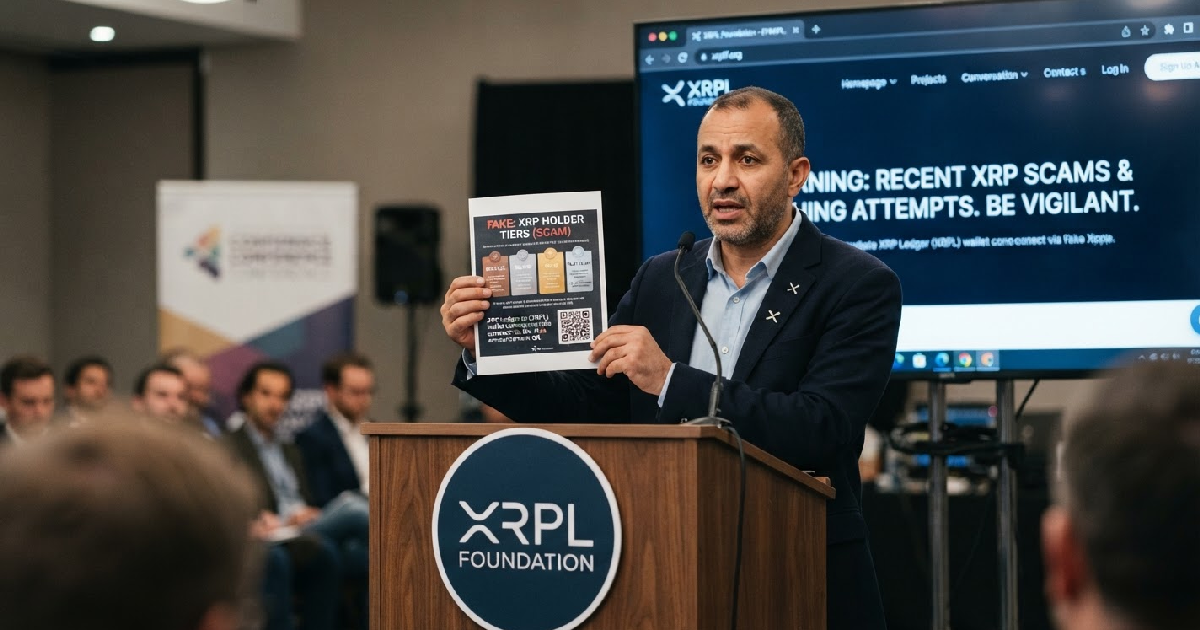
XRPL Foundation Director warns against elaborate Ripple announcement scam
Hussein Zangana, Director of Community at the XRP Ledger Foundation, known online as “Vet,” issued an urgent warning on July 31, 2026, about a new Ripple announcement scam. This fraudulent scheme, initially flagged by the XRP-focused X account ‘BankXRP’, attempts to trick users with fake “XRP Holder Tiers.”
Scammers are directing victims to malicious websites to claim imaginary “XRP badges” in an effort to steal their digital assets.
Fake Ripple holder tiers scheme uncovered
The warning from Zangana highlights a persistent and evolving threat in the cryptocurrency space. It underscores the critical need for vigilance among XRP holders and the broader crypto community to combat increasingly sophisticated phishing tactics and impersonation attempts.
The recent scam involves a counterfeit Ripple X account distributing a false announcement. It claimed Ripple was introducing “XRP Holder Tiers” designed to unlock exclusive perks for participants. This tactic, promising special benefits, aims to lure unsuspecting individuals into its trap.
Users were then instructed to visit a fraudulent website to claim their supposed “XRP badge.” BankXRP quickly identified this as a phishing scam, clarifying that Ripple has never posted such an announcement. The objective is to coax users into clicking malicious links, connecting their wallets, or entering their seed phrases, which would lead to their XRP tokens being stolen.
Persistent threat of crypto impersonation scams
This incident is not an isolated event; it represents a broader, disturbing trend where bad actors impersonate major blockchain organizations. Scammers frequently create elaborate fake announcements to mislead users, often putting their valuable digital assets at severe risk. Some even go as far as launching entirely counterfeit tokens, complicating the security landscape for investors.
Ripple has consistently advised its users to verify all information through official channels and to steer clear of unsolicited links or unknown sources. The company explicitly states it will “never ask you to send XRP,” a crucial safeguard that users must remember. The increasing frequency and sophistication of these attacks demand constant awareness from the entire community.
Leading voices warn against increasing threats
The XRP community has received numerous warnings from its most prominent figures about these escalating threats. David Schwartz, Chief Technology Officer Emeritus at Ripple, known as “JoelKatz” online, issued a stark warning to his more than 700,000 followers on X on May 14, 2026. He highlighted a “huge escalation” in airdrop and giveaway scams specifically targeting XRP Ledger users.
Schwartz unequivocally stated that “Any such posts you see are likely scams” and cautioned that anyone claiming to be him on platforms like Instagram or Telegram is “likely a scammer.” The XRP Ledger Foundation amplified Schwartz’s message, noting a dramatic increase in scams targeting the XRP community in recent weeks leading up to May 2026.
They urged users to avoid all unsolicited airdrops, giveaways, and fake customer support offers on X.
Xaman wallet and Flare Network impersonations
Wietse Wind, a key XRP Ledger developer and founder of the Xaman wallet, also renewed his warnings to XRP users around May 23, 2026. Wind reported a concerning daily trend: more than 20 scam X accounts and over 10 fake domain names impersonating Xaman Wallet emerge. He specifically debunked the existence of a “FAKE!!!
Desktop Wallet” and any “NO AIRDROP!” for Xaman, confirming these products simply do not exist.
Beyond individual projects, liquid staking protocols built on the Flare Network have become targets. Firelight, for example, issued its own warning about fake accounts impersonating its project. They clarified that only one official Firelight X account, one official Discord, and one official website exist, urging users to avoid engaging with any others.
This constant need for verification underscores the pervasive nature of these digital threats in the crypto space.
Evolving scam tactics and financial impact
Scammers are deploying an increasingly diverse array of sophisticated tactics to defraud users. One prevalent method involves fake giveaways and airdrops, promising to “double your XRP” or offer free tokens in exchange for users first sending their own cryptocurrency. This is a critical red flag, as Ripple has never conducted such initiatives.
Impersonation remains a cornerstone of these illicit schemes. Criminals create fake social media profiles that meticulously copy the logos, profile pictures, and display names of legitimate entities or executives. This advanced replication makes it incredibly difficult for the average user to distinguish genuine accounts from fraudulent ones, adding another layer of complexity to online interactions.
Deepfakes and phishing websites drain funds
Perhaps one of the most alarming developments is the use of AI-generated deepfake videos. Scammers now create highly convincing deepfakes of Ripple CEO Brad Garlinghouse to promote fake giveaways and airdrops.
This advanced deception has proven remarkably effective, with reports indicating over $5 million was stolen through deepfake video campaigns between March 2024 and January 2025 alone. This represents a significant escalation in the tools available to cybercriminals.
Phishing websites and emails are also rampant. These scams direct users to fraudulent sites that cleverly mimic official Ripple communications, aiming to steal wallet credentials or vital seed phrases. Even seemingly innocuous links can lead to malicious NFTs that contain hidden “Buy Offers” or approval requests, which can silently drain connected wallets once approved. These sophisticated attacks highlight the ongoing need for extreme caution.
Staying vigilant in a risky environment
Scammers skillfully exploit major cryptocurrency events, such as Ripple Swell conferences or positive developments like discussions around XRP exchange-traded funds (ETFs), to maximize their impact. During periods of heightened market activity and excitement, users might let their guard down, making them more susceptible to urgent-sounding scam tactics. Phrases like “Act now!”
or “Only 100 spots left!” are designed to pressure users into making hasty decisions without proper research or verification.
This exploitation of market sentiment is a consistent pattern in the crypto world. When interest in digital assets peaks, so too does the activity of those looking to exploit that interest for illicit gains. Users must prioritize verifying information through official channels and remain suspicious of any offers that seem too good to be true.
Ripple’s ongoing anti-fraud commitment
Ripple is actively combating crypto scams by implementing several robust anti-fraud measures. The company proactively scans the web with third-party specialists to detect fraudulent activity and alerts web hosting services, search engines, and social media platforms. They also collaborate with law enforcement and partner with other blockchain companies to share intelligence and strategies.
Users can protect themselves by never clicking links from suspicious announcements, avoiding connecting wallets to unverified sites, and never entering seed phrases on unofficial platforms. Verifying all information directly from Ripple’s official website, blog, or verified social media accounts is paramount. Staying informed and exercising caution remains the best defense against these evolving threats.