

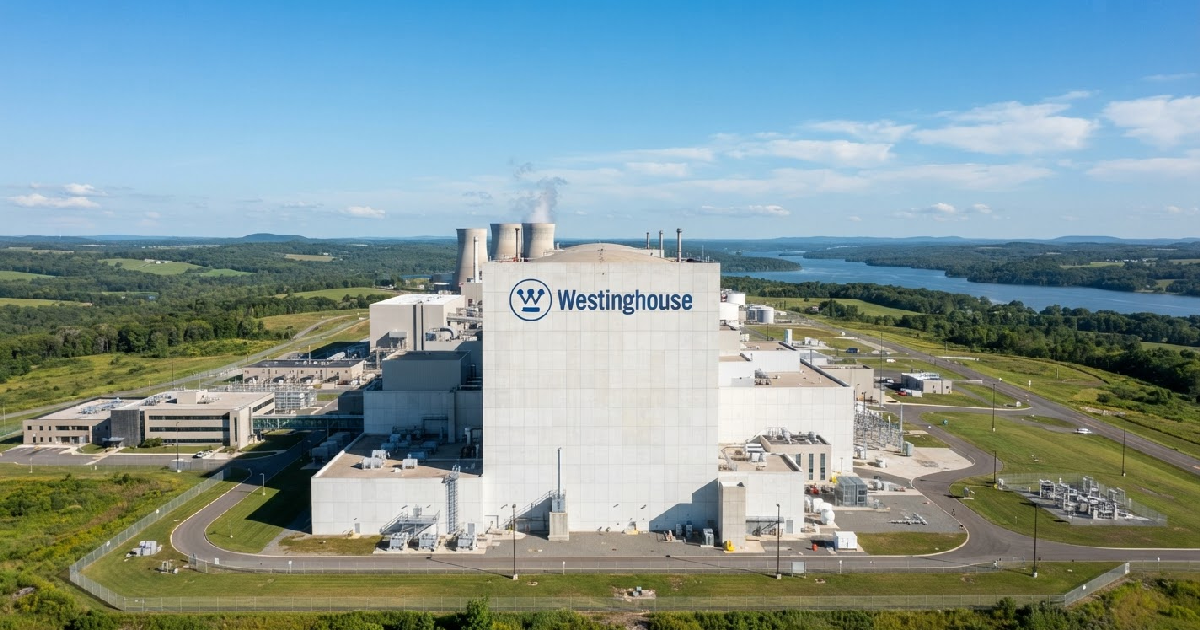
Westinghouse Electric Company confidentially files
US nuclear reactor firm Westinghouse Electric Company filed confidentially for an Initial Public Offering (IPO) with the Securities and Exchange Commission (SEC) on Friday, July 31, 2026. This Pennsylvania-based company aims to capitalize on a global resurgence in nuclear power.
It’s a move largely driven by the massive electricity demands of the artificial intelligence (AI) boom. The firm also enjoys substantial backing from the US government, helping it access new capital.
A strategic move amidst renewed nuclear interest
Westinghouse’s decision to go public marks a pivotal moment for the nuclear energy sector. The confidential filing, submitted as a draft registration statement on Form S-1, allows the company to prepare for its market debut away from immediate public scrutiny.
This approach gives them flexibility in navigating market conditions ahead of a full listing. Many analysts see the timing as opportunistic, given the renewed global focus on reliable, carbon-free energy sources.
Powering the artificial intelligence boom
The burgeoning artificial intelligence industry is proving to be an unexpected catalyst for nuclear power. Data centers, essential for training and running complex AI models, consume enormous amounts of electricity.
Traditional energy grids are struggling to keep pace with this rapidly expanding demand. Nuclear power offers a consistent, high-output solution that fits the critical needs of AI infrastructure, positioning companies like Westinghouse favorably.
Government backing fuels sector growth
The US government has become a key partner in this nuclear renaissance. It’s committed to arranging financing and facilitating approvals for at least $80 billion in new Westinghouse nuclear reactors within the US.
This robust support aims to rebuild the nation’s nuclear supply chain, which suffered decades of decline. Former President Donald Trump’s pledge to slash regulations and invest billions in new reactors further bolsters this outlook.
Unpacking Westinghouse’s ownership and valuation clause
Westinghouse isn’t a standalone entity; it’s currently under the joint ownership of two major players. Brookfield Renewable Partners holds a 51% stake, while Cameco controls the remaining 49%.
These companies acquired Westinghouse in late 2023 for approximately $7.9 billion. Their investment reflects a long-term bet on nuclear technology’s comeback, a bet that seems to be paying off.
Brookfield and Cameco’s significant stake
The initial acquisition by Brookfield and Cameco was a significant financial undertaking. Now, an IPO offers them a potential avenue to realise returns on that investment or to further fund Westinghouse’s expansion.
Their continued involvement suggests confidence in the company’s growth trajectory. The public offering allows for broader capital infusion to accelerate their strategic objectives.
US government’s potential equity interest
A unique clause in Westinghouse’s agreement with the US government could see Washington gain a direct stake. If the government makes a final investment decision on the $80 billion projects and enters definitive agreements, it will receive a “participation interest.”
This interest entitles the US government to 20% of any cash distributions exceeding $17.5 billion made by Westinghouse once the interest vests. Such a provision highlights the strategic importance Washington places on the company’s success.
There’s also an IPO requirement clause: if this participation interest vests by January 2029, and Westinghouse’s valuation is projected to hit $30 billion or more, the US government can mandate an IPO. Upon such an event, the participation interest would convert into a five-year warrant to purchase equity equivalent to 20% of the public value, after deducting $17.5 billion.
A changing landscape for nuclear energy companies
Westinghouse is far from the only nuclear energy firm sensing an opportunity in the public markets. The company is the latest in a series of US nuclear players making moves toward public flotation.
This trend suggests a broader industry shift towards growth and expansion. Investors seem keen to back energy solutions that offer both stability and environmental benefits.
Other players seeking public capital
Several other nuclear firms have recently pursued public listings. Holtec International, for instance, filed for its own IPO this month to finance a $10 billion plan for small modular reactors.
X-Energy also successfully raised $1 billion in a Nasdaq flotation back in April. Similarly, Standard Nuclear filed its intention to go public this month, signaling robust activity across the sector.
This wave of companies seeking listings indicates a strong appetite for nuclear-related investments. It’s a stark contrast to the industry’s fortunes just a few years ago.
Historical challenges and future prospects
It wasn’t long ago that Westinghouse faced significant hurdles. The company filed for Chapter 11 bankruptcy in 2017 following colossal cost overruns at nuclear plant projects in Georgia.
This difficult period forced a major restructuring and prompted a re-evaluation of nuclear development strategies. But the current climate, spurred by energy security concerns and AI demand, has revitalized its prospects.
Looking ahead: what the IPO means for the energy sector
Westinghouse’s IPO filing represents more than just a single company’s financial strategy; it’s a bellwether for the broader energy sector. Nuclear power, once a controversial and often sidelined energy source, is clearly back in vogue.
The influx of capital through public markets could dramatically accelerate the deployment of new nuclear technologies. This includes advanced reactors and small modular reactors (SMRs), which are easier and faster to build.
The renewed investor interest also reflects a growing recognition of nuclear power’s role in achieving climate goals. With more than half of the world’s nuclear reactors utilizing Westinghouse technology, their success could ripple globally.
A successful public offering and valuation for Westinghouse could inspire even more investment. It signals that private capital is increasingly willing to take on the long-term, high-capital demands of nuclear energy development.
This could reshape energy markets by providing a stable, low-carbon power source to complement renewables. The move could also mean fierce competition among nuclear technology providers. These firms are all vying for government contracts and private sector investment. It’s a crucial period for the future of global energy supplies.
As the need for clean, reliable power intensifies, especially with the AI revolution, companies like Westinghouse will be under the spotlight. Their ability to deliver on promises of cost-effective, safe, and scalable nuclear solutions will dictate not only their own success but also the future trajectory of global energy policy and infrastructure.
The SEC filing is just the first step in what could be a transformative journey for the company and the industry.