

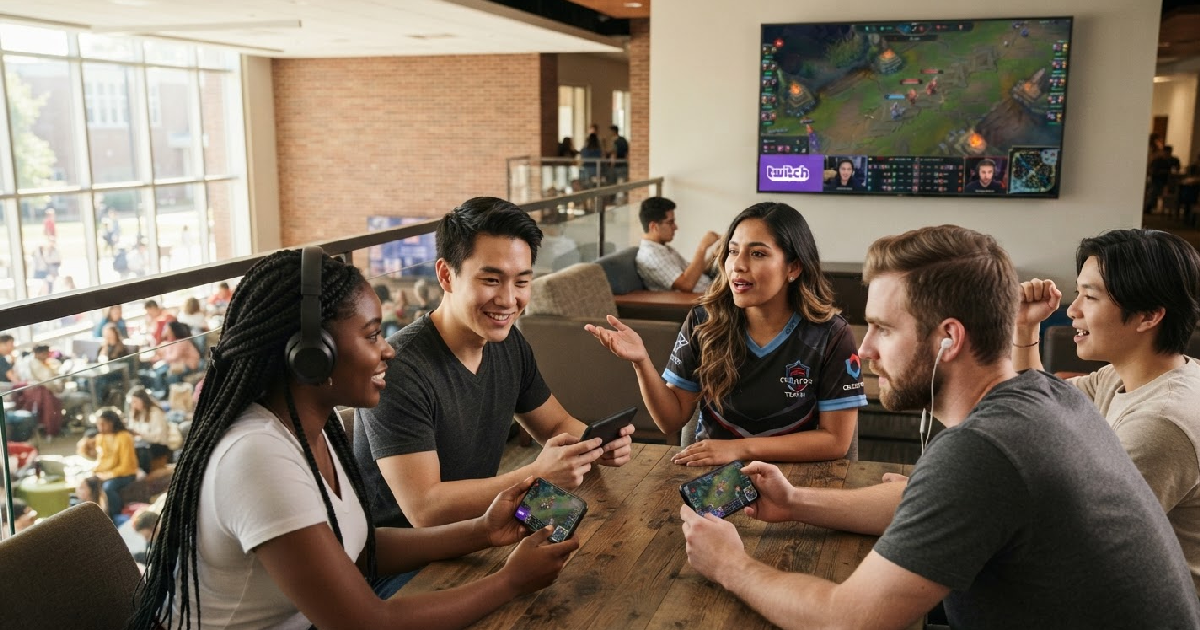
Esports streaming trends: evolving audiences and interactive live experiences
Esports streaming trends reveal a dynamic and rapidly expanding landscape, driven by diversifying global audiences, the continued dominance of interactive live-streaming platforms, and the significant ascent of mobile esports. The industry also sees increasing influence from content creators and a strong emphasis on immersive viewer engagement.
This evolution highlights a shift towards more personalized and interactive digital experiences, moving beyond traditional broadcasts to create vibrant, community-driven ecosystems.
Understanding esports streaming trends
Esports streaming involves broadcasting competitive video gaming events live to an online audience through specialized platforms. It delivers real-time gameplay, professional commentary, and interactive features to fans across the globe, distinguishing itself from conventional sports broadcasts.
Whether it’s a major spectacle like the League of Legends World Championship or a more intimate session from an emerging gamer, this format connects players and viewers in unprecedented ways.
The mechanics of live broadcasts
The process of esports streaming centers on live video content delivery over the internet. Streamers broadcast their gameplay, often enhancing it with custom graphics, overlays, and live commentary, sometimes from home setups or dedicated studios.
A fundamental element is the interactive viewer experience, where audiences can chat directly with streamers and fellow viewers. They participate in live polls and, on some platforms, even influence the game in real-time through specific features.
Key platforms driving engagement
Dedicated streaming platforms form the backbone of the esports ecosystem, providing the infrastructure for these live broadcasts. These platforms offer essential tools like chat functionalities, subscription models, and content management systems for streamers.
After live sessions, content creators frequently save recordings or clips, later uploading them to video-sharing sites for on-demand viewing.
Growth and demographics of the global esports audience
The global esports audience is experiencing significant expansion, reaching 640.8 million viewers in 2026, a number projected to surge to 924.9 million by 2030. This growth is bifurcated into 318.1 million dedicated core enthusiasts and 322.7 million casual viewers.
Overall, global esports viewership hours hit 5.46 billion in 2023, marking a 6% increase from the previous year. Twitch alone accounted for 2.3 billion hours of global esports live viewership in the same period.
Mobile esports: a market leader
Mobile esports has emerged as a dominant force within the gaming industry, capturing 52% of global gaming revenue, which exceeds $107 billion. This segment is projected for sustained growth, with a Compound Annual Growth Rate (CAGR) of 27.6% through 2035.
Significantly, 79% of esports fans engage with content via mobile devices, highlighting a fundamental shift in consumption habits. Games like Mobile Legends: Bang Bang demonstrate this trend, attracting peak viewerships of 5.68 million.
The rise of mobile esports trends reflects broader accessibility and changing player preferences worldwide. This makes mobile devices a critical interface for both competitive play and audience engagement.
Revenue streams and popular titles
The global esports industry is on track to generate $5.34 billion in revenue by 2026, with sponsorships contributing an estimated $1.2 billion to this total. This financial influx underscores the commercial viability and mainstream appeal of competitive gaming.
Beyond Mobile Legends: Bang Bang, other titles continue to draw massive audiences. League of Legends saw 1.1 million peak viewers, while Counter-Strike attracted 796,345, Valorant 482,819, and Apex Legends reached 420,378 peak viewers, showcasing diverse interests within the community.
Dominant platforms and their influence
Several platforms play pivotal roles in shaping the esports streaming landscape. Twitch remains the undisputed leader for live streams, boasting one trillion minutes of viewed content in a recent year—a substantial 78% increase since 2019.
YouTube Gaming is also rapidly gaining traction as a significant platform for both live streams and on-demand esports content, recording 100 billion hours watched in a recent period. Meanwhile, TikTok has emerged as a growing hub for short-form esports highlights, news, and discussions, capturing 12% of the global esports viewership share through TikTok Live.
For more on the broader context, consider how latest esports trends are redefining the gaming industry at large.
The evolving role of content creators and teams
Influencers and streamers are central figures in cultivating vibrant gaming communities and shaping industry trends. Personalities such as Pokimane (Imane Anys), known for her League of Legends gameplay and “Just Chatting” streams, exemplify this influence as the most-followed female streamer on Twitch.
A newer development involves creator-backed esports teams, where prominent influencers and professional players launch their own competitive organizations. These teams merge competitive gaming with lifestyle content, entertainment, and direct community building, creating unique brand identities rooted in personality and fan connection.
Creator-backed teams reshape competition
This trend blurs the lines between professional competition and content creation, offering fans deeper engagement through behind-the-scenes access and personalized narratives. Such teams are not just about winning; they’re about fostering a strong, loyal fanbase around distinct personalities.
Their approach to branding and community interaction sets them apart from traditional esports organizations, pushing the boundaries of what competitive gaming can be. This shift underlines the importance of personality in the modern esports era.
Addressing common misconceptions about esports fans
A common misconception posits that esports fans are exclusively young, male teenagers. While the audience does lean young and predominantly male, this perception overlooks significant demographic shifts. The average age of a US esports viewer is 29, with 52% of US fans aged 18-34, and Gen Z making up 43% of the global audience.
Furthermore, there’s a steadily growing segment of older adults aged 35-44 engaging with esports content. Though still predominantly male (72% in the US), female viewership is increasing, now representing 28% of the North American esports audience. Esports organizations are actively working to create more inclusive environments to attract an even broader demographic.
The outlook for esports streaming
The future of esports streaming points towards continued expansion, driven by innovative interactive experiences and diverse content offerings. Mobile platforms will only solidify their critical role in viewership and revenue generation, making esports accessible to an ever-wider global audience.
Content creators and their affiliated teams are set to remain at the forefront of this evolution, continuously innovating how fans connect with competitive gaming. Their ability to blend top-tier play with engaging lifestyle content ensures the esports industry growth trajectory remains steep.