

Esports sponsorship trends drive gaming industry growth
Esports sponsorship trends show brands investing capital or in-kind support into esports gaming trends, reflecting a pivotal and expanding aspect of competitive video gaming. These strategic partnerships are not just marketing tools; they’re crucial for connecting with a highly engaged, tech-savvy, and younger audience often missed by traditional advertising, reflecting key esports sponsorship trends.
Current esports sponsorship trends show a dynamic sector reshaping how companies approach engagement.
Understanding esports sponsorships mechanisms
This evolving landscape is driving significant financial contributions, with sponsorships standing as the primary revenue stream for the industry. It’s a clear indicator of how digital entertainment is increasingly becoming a core focus for global brands.
Esports, or electronic sports, describes organized competitive video gaming, often featuring professional players or teams in multiplayer titles. These events typically follow structured rules, with official referees and large spectator bases, both online and in person. The International Olympic Committee recognized esports as an official sport in 2022, solidifying its place in the global sporting arena.
Sponsorship within esports acts as a company’s financial or in-kind commitment to an activity, event, team, or player. This investment grants the brand access to commercial potential and significant visibility. Brands gain direct engagement with a massive audience, part of a global esports market projected to hit $1.62 billion in 2024.
These partnerships are fundamentally important to the industry’s economic health. Sponsorships are the primary revenue stream, contributing $1.2 billion in 2026. Back in 2022, sponsorships alone accounted for over 60% of esports revenue, bringing in $800 million from a mix of sources.
Endemic and non-endemic brands shaping the gaming industry
The esports sponsorship ecosystem is generally categorized by two types of brands: endemic and non-endemic. Both are essential for fueling the sector’s expansion and reaching its diverse viewership.
Endemic brands continue strong involvement
Endemic brands provide products or services directly used in, or related to, playing or producing esports. This group includes industry heavyweights like peripheral and hardware manufacturers Intel, HyperX, Logitech G, ASUS ROG, and Samsung. Energy drink companies such as Red Bull, Monster Energy, and Mountain Dew also fall into this crucial category.
These brands benefit from a natural product fit, often integrating their offerings directly into the competitive gaming experience. Intel, for instance, has been an endemic sponsor since 2006, notably through its Intel Extreme Masters (IEM) tournament series. Red Bull also pioneered esports sponsorship from 2006, supporting teams like OG, G2, T1, Team Falcons, Sentinels, and Fnatic, while also championing athlete well-being.
Non-endemic partners broaden reach
Non-endemic sponsors, whose products aren’t inherently tied to esports or gaming, have significantly increased their involvement. This expansion highlights their strategic goal of reaching esports’ distinct audience demographics. These brands aim to connect with a highly engaged, tech-savvy, and younger demographic, which traditional advertising often finds challenging to access effectively.
Major financial institutions like Mastercard, Ally Financial Group, and HSBC UK have notably entered this space. Mastercard partners with Riot Games to back significant events like the League of Legends World Championship. HSBC UK acts as the official financial services partner for organizations such as GIANTX, often focusing on financial literacy for younger audiences.
Automotive manufacturers like BMW, Mercedes-Benz, and Porsche have also sponsored prominent esports teams, including Cloud9, G2, and Fnatic. Apparel and footwear giants are making their mark; Nike has secured endorsement deals with esports players like Jian ‘Uzi’ Zihao and organizations such as Cloud9. Louis Vuitton famously collaborated with League of Legends for apparel and designed the trophy case for the League of Legends World Championship.
Even telecommunications providers are getting in on the action. Cisco, for example, is the official enterprise networking and security partner for League of Legends’ global esports events. Amazon Ads has partnered with the Esports World Cup Foundation to boost fan engagement via Twitch and Prime Video, showcasing the diverse appeal of these partnerships and affecting the latest esports trends.
Diverse avenues for brand engagement
Esports sponsorships operate through various channels, each offering distinct opportunities for brands to connect with the competitive gaming community. These diverse avenues allow for customized approaches, aligning with a brand’s specific marketing goals and target audience.
Leagues and tournament collaborations
Many brands choose to partner directly with specific esports leagues or major tournaments, such as the League of Legends World Championship. These collaborations typically ensure high-level engagement and extensive media coverage, providing significant visibility during live performances and broadcasts. Companies like Riot Games, developer of popular titles such as League of Legends and Valorant, actively manage their esports scenes and secure strategic partnerships.
ESL FACEIT Group, a prominent esports tournament organizer, has also secured significant partnerships with tech giants like Intel and Acer. These relationships underline the importance of high-profile events in attracting substantial investment, forming a critical part of the overall esports financial model.
Team and player partnerships
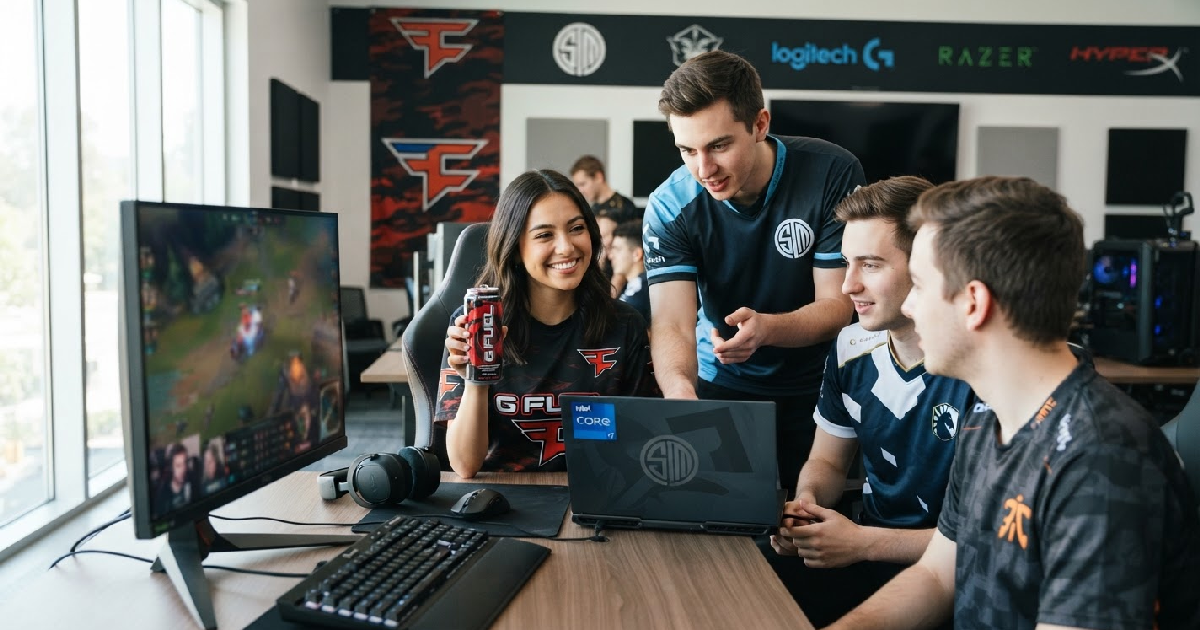
Sponsoring an esports team remains an exceptionally popular choice, echoing models found in traditional sports. Brands prominently display their logos on team jerseys, websites, and social media profiles. A significant benefit here is that a single team can compete across multiple games, offering a broader audience reach for the sponsoring brand.
Beyond teams, individual professional esports players and streamers often secure personal sponsorships. This frequently involves promoting products or services during live streams on platforms like Twitch and YouTube, utilizing affiliate codes, banner ads, or product giveaways. These direct engagements provide immediate consumer touchpoints, building trust and familiarity.
Strategic activation and audience connection
The success of esports sponsorships largely depends on well-executed activation strategies, designed to maximize brand exposure and audience engagement. Simply placing a logo on a broadcast is no longer sufficient; brands must actively embed themselves into the esports experience to truly resonate.
Common placements include prominent logo and branding on team jerseys, in-game overlays during competitions, and digital panels visible during live streams. Naming rights for events or specific broadcast segments, like the Ally Women’s Open, offer even deeper brand integration. Additionally, sponsored digital content, such as promotional videos featuring players and influencers, or dedicated stream sessions, further drives engagement and brand recall.
Product integration is another powerful technique, where players visibly use sponsored items like computer components, peripherals, or energy drinks during gameplay or streams. Exclusive activations at gaming events, fan zones, co-created challenges, and community tournaments provide immersive, interactive experiences for fans. Giveaways and contests involving sponsored products further boost audience interaction.
Streamers also leverage affiliate codes, providing viewers with discounts and earning commissions on sales, thereby creating a direct link between engagement and commercial outcomes. These activation methods are critical for reaching the vast and growing esports audience. The total global esports audience hit approximately 640.8 million in 2026, comprising 318.1 million core enthusiasts and 322.7 million casual viewers.
Projections suggest this global audience will expand significantly, expected to reach 924.9 million by 2030. This consistent growth underscores the importance of tailored and authentic brand engagement strategies within the esports community.
The trajectory of esports market growth
The financial outlook for esports sponsorship remains exceptionally robust, signaling continued upward momentum and deeper integration into global marketing strategies. Industry forecasts indicate the global esports sponsorship market, valued at $1.8 billion in 2024, is set to surge to approximately $16.76 billion by 2034.
This projected growth translates to a remarkable compound annual growth rate (CAGR) of 25% during the forecast period from 2025 to 2034. Such exponential expansion underscores the critical and increasingly dominant role sponsorships play in the esports industry’s economic health. They consistently account for the lion’s share of total esports revenue.
In 2020, sponsorships and media rights together made up 74.8% of total esports revenues, with sponsorships being the single largest contributor. As the global esports audience continues to expand and deepen its engagement with competitive gaming, brands are diversifying their investment and refining their activation strategies, cementing the future of esports for the coming decade.