

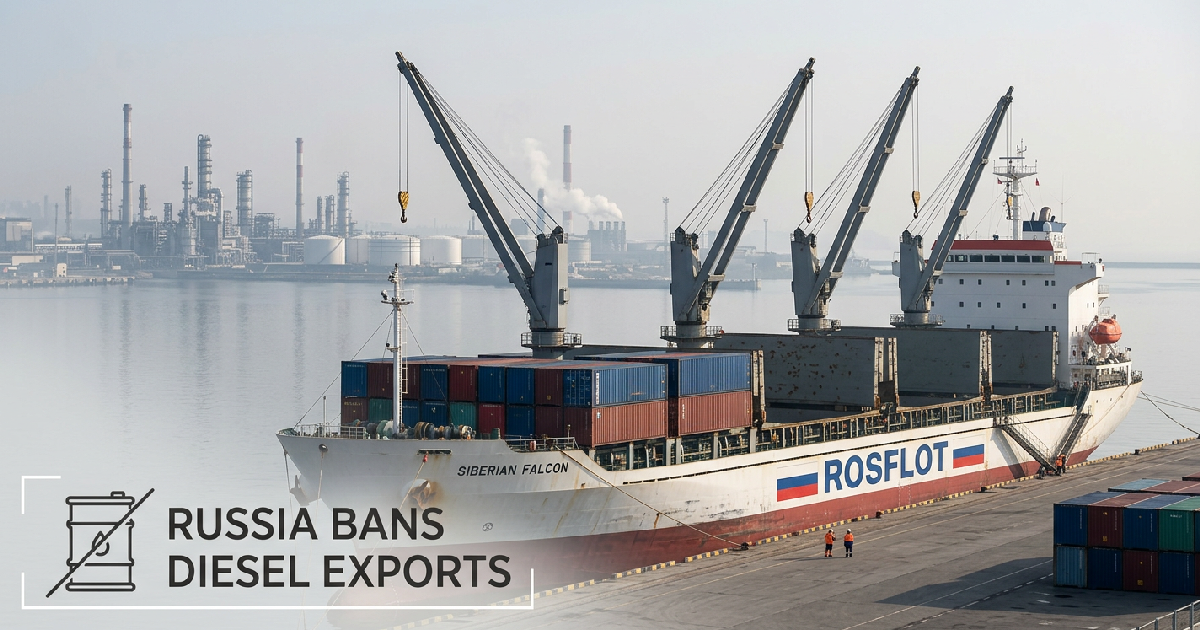
Russian government bans diesel exports after strikes disable 42.7% of refining capacity
The Russian government officially prohibited diesel exports on July 8, 2026, following a relentless wave of Ukrainian drone strikes that have crippled the nation’s energy infrastructure.
The decision comes after a coordinated campaign by Ukraine’s Unmanned Systems Forces (USF) targeted at least three more refineries in Tatarstan on Wednesday, including the TANECO and TAIF-NK facilities in Nizhnekamsk.
Widespread damage to Russia’s top-tier refining assets
As of early July 2026, these systematic aerial attacks have successfully disabled 42.7% of Russia’s total designed oil refining capacity, forcing the Kremlin to prioritize domestic supply over international trade.
Moscow’s shift to a defensive energy posture follows months of escalating damage to its processing hubs. Commander Robert “Madyar” Brovdy, who heads Ukraine’s USF, reported that ten major refineries were hit in May alone, with six forced to halt operations entirely.
The strategy aims to starve the Russian military of fuel while simultaneously eroding the financial foundations that support the ongoing invasion. By late June and early July, the geographical reach of these strikes expanded significantly, proving that distance is no longer a reliable shield for Russian industrial assets.
The export ban is intended to stabilize internal fuel prices and prevent shortages during the critical summer months. While Moscow seeks to protect its domestic economy, the sudden withdrawal of one of the world’s largest diesel suppliers is expected to ripple through global energy markets.
Traders monitoring global stocks and oil prices are closely watching how this reduction in middle-distillate supply affects transportation and logistics costs across Eurasia and beyond.
The cumulative impact of the Ukrainian campaign reached a new milestone on July 6, when FP-1 drones struck the Omsk Oil Refinery. Located more than 2,500 kilometers (1,550 miles) from the Ukrainian border, Omsk is Russia’s largest refinery with an annual capacity of 22 million metric tons.
This successful strike meant that every one of Russia’s 11 largest refineries has now been hit at least once, highlighting a total vulnerability in the country’s energy security network.
Other vital facilities have suffered similar or worse fates. The Gazprom Neft Moscow Refinery, which typically provides 60% of the fuel required by the capital region, was struck twice in mid-June. Current estimates suggest that the facility will remain offline for repairs until early 2027.
Further east, the Kstovo Oil Refinery reportedly lost over half of its production capability following a strike on July 2, creating a logistics nightmare for regional fuel distribution.
The pace of the attacks has left Russian engineers struggling to maintain output. In the Krasnodar region, the Slavyansk oil refinery was hit on June 28, following an attack on the Orenburg gas processing plant on June 24.
This rapid succession of strikes across different oblasts has prevented the Russian Ministry of Energy from effectively redirecting resources to cover production gaps, making a nationwide export ban the only viable tool left to prevent a domestic fuel crisis.
Refinery repair timelines and technical challenges
Restoring these facilities is not a simple task. Many of the struck refineries, including the Yaroslavl and Ryazan plants, house sophisticated processing units that are difficult to replace. The persistent nature of the drone campaign means that even as teams begin repairs, facilities remain at risk of follow-up attacks.
For instance, the Ufa oil refinery was struck for the second time in a single week on July 1, disrupting recovery efforts and further tightening the domestic supply of refined products.
Economic implications for the Russian energy sector
The suspension of diesel exports represents a significant loss of foreign currency revenue for the Russian state and its energy giants, such as Gazprom Neft and Rosneft. While the government is focused on containing inflation at home, the long-term health of the sector is under threat.
Reduced export volumes limit the capital available for modernizing aging infrastructure and repairing the specific distillation units targeted by Ukrainian drones.
This development has also cast a shadow over international valuations of companies tied to the regional supply chain. Analysts often look at how market price corrections reflect geopolitical risks, and the physical destruction of energy assets is a primary driver of current volatility.
If the outages persist through the end of the year, Russia may find its historical role as a dominant energy exporter permanently diminished by the high cost of defending its borders.
Beyond the borders of Russia, the ban forces traditional buyers to seek alternative sources. This shift often leads to higher operational costs for logistics firms. Similar to how a rise in adjusted earnings can signal corporate resilience, the ability of global markets to absorb the loss of Russian diesel will test the flexibility of the international refining network during a period of high demand.
Chronology of the July drone strikes
The first week of July saw a dramatic intensification of the campaign, leading directly to the July 8 export ban. The following facilities were targeted in the days leading up to the announcement:
- July 1: Ufa oil refinery (second strike in seven days).
- July 2: Kstovo Oil Refinery (lost 50% of production capacity).
- July 6: Omsk Oil Refinery (Russia’s largest, hit by FP-1 drones).
- July 6: Yaroslavl oil refinery.
- July 8: TANECO and TAIF-NK refineries in Nizhnekamsk, Tatarstan.
Strategic objectives of the Unmanned Systems Forces
The Ukrainian USF has been surgical in its choice of targets, focusing on the refined products that power the Russian military’s heavy machinery. Diesel is the primary fuel for the trucks and armored vehicles used to transport personnel and ammunition to the front lines.
By disabling refineries like those in Samara, Perm, and Kirishi, the USF is forcing the Russian military to compete with the domestic agricultural and industrial sectors for a shrinking pool of available fuel.
By hitting facilities deep in the interior, such as those in Bashkortostan and Tatarstan, Ukraine has also forced a reallocation of Russian air defense systems. Equipment like the Pantsir-S1, which could be used to protect frontline troops, must now be stationed around industrial sites far from the combat zone.
Despite these defenses, the recent success of drones in Nizhnekamsk suggests that Russia’s vast energy complex remains too large to fully protect from persistent, low-cost drone incursions.
The ban on diesel exports is the most concrete evidence to date that the refinery campaign is achieving its goal of creating internal friction within the Russian economy. As long as 42.7% of the nation’s refining capacity remains disabled or under threat, the Kremlin’s ability to balance the needs of its military with the requirements of a stable domestic market will remain under extreme pressure.