

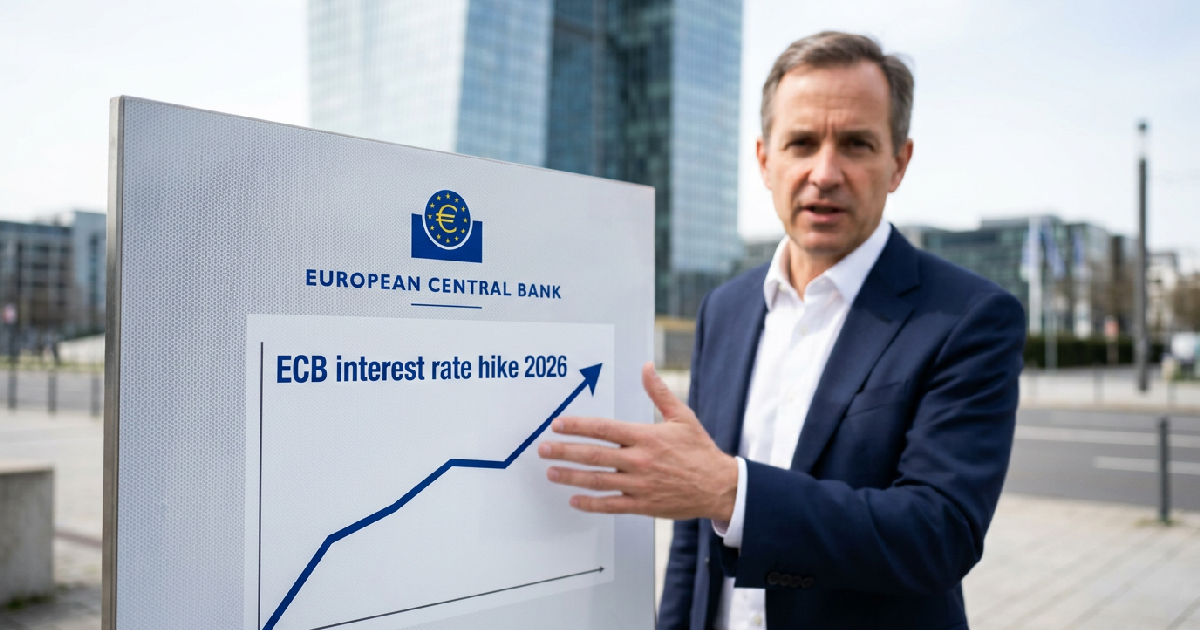
International Monetary Fund urges European Central Bank to raise rates another 25 basis points
The International Monetary Fund (IMF) stated on Thursday, June 11, 2026, that the European Central Bank (ECB) will likely need to keep raising interest rates despite the bank delivering a 25-basis-point hike earlier in the day.
Alfred Kammer, Director of the IMF’s European Department, had previously outlined expectations for a cumulative increase of 50 basis points in 2026. This outlook suggests at least one more increase is necessary this year, with a third hike also remain possible if price pressures persist.
The ECB’s Governing Council, meeting in Frankfurt, raised the benchmark deposit rate to 2.25%, effective June 17, 2026. This move comes as euro area headline inflation reached 3.2% in May, up from 3% in April and 2.6% in March. Persistent inflation remains a primary concern for policymakers, as the supply chain resiliency increasingly prioritised by global firms adds structural complexity to the inflation-targeting mission.
The IMF’s statement arrived just hours after the ECB’s latest decision. The fund’s outlook assumes that both headline and core inflation will remain above the ECB’s 2% target until 2028. The ECB cited the war in the Middle East as a key factor generating these inflation pressures.
For the full year of 2026, the ECB now forecasts headline inflation at 3.0%, a revision upward from projections made in March.
IMF projects 50-basis-point cumulative rise for 2026
The recommendation for further tightening is based on a reference scenario that anticipates a total increase of 50 basis points throughout 2026. Alfred Kammer explained the logic behind these moves during the IMF and World Bank spring meetings in Washington. He noted that raising the nominal policy rate is necessary “in order to maintain a neutral monetary stance.”
By increasing these rates, the IMF believes central banks can keep real policy interest rates constant as price expectations shift. According to Alfred Kammer, rates could potentially come down again in 2027 if inflation trends favorably. However, the current priority is anchoring prices as the bank navigates a period where AI impact analysis suggests major shifts are coming to the banking and labor sectors.
The new interest rate regime, effective June 17, sets the main refinancing operations rate at 2.40%, up from 2.15%. Additionally, the marginal lending facility will rise to 2.65% from 2.40%. These adjustments reflect the ECB’s efforts to tackle core inflation, which was 2.5% in May. The ECB expects core inflation to remain at 2.5% through both 2026 and 2027 before dipping to 2.2% in 2028.
Economic growth forecasts face downward revisions
Tightening monetary policy coincides with a cooling outlook for the euro area economy. The ECB has revised its economic growth forecast for 2026 down to 0.8%, with 2027 growth now projected at 1.2%. The IMF is slightly more optimistic on growth, forecasting 0.9% for 2026, though this is a downgrade from the 1.1% it predicted in April.
Geopolitical risks are driving much of this volatility. The ongoing Iran War is expected to shave 0.5% off the euro area’s GDP growth over the next two years under the IMF’s reference scenario. In a more severe scenario, the IMF warns the conflict could shave off 1.7 percentage points from GDP growth.
These figures highlight the precarious balance the ECB must strike between fighting inflation and supporting a slowing economy.
Market sentiment remains sensitive to these geopolitical developments. While global stocks rise and oil prices fall on specific news of potential diplomatic progress, the underlying inflationary pressures from the Middle East remain a core concern for the ECB. The bank has signaled that its future decisions will depend on how these risks evolve and impact the medium-term inflation outlook.
Future inflation and rate trajectories into 2028
The divergence in 2026 forecasts shows the IMF predicting headline inflation at 2.8%, while the ECB projects 3.0%. For 2027, the ECB expects headline inflation to cool slightly to 2.3% before finally reaching the 2.0% target in 2028. This slow descent toward the target explains why the IMF believes high borrowing costs will be a feature of the economy for the foreseeable future.
If core inflation remains stubborn, the IMF stands by its projection that a third rate hike could be on the table for 2026. The ECB’s revised 2028 forecast of 2.0% provides the ultimate goal for this tightening cycle. Until that target is within reach, the pressure from international monitors like the IMF to keep rates elevated is unlikely to subside.