

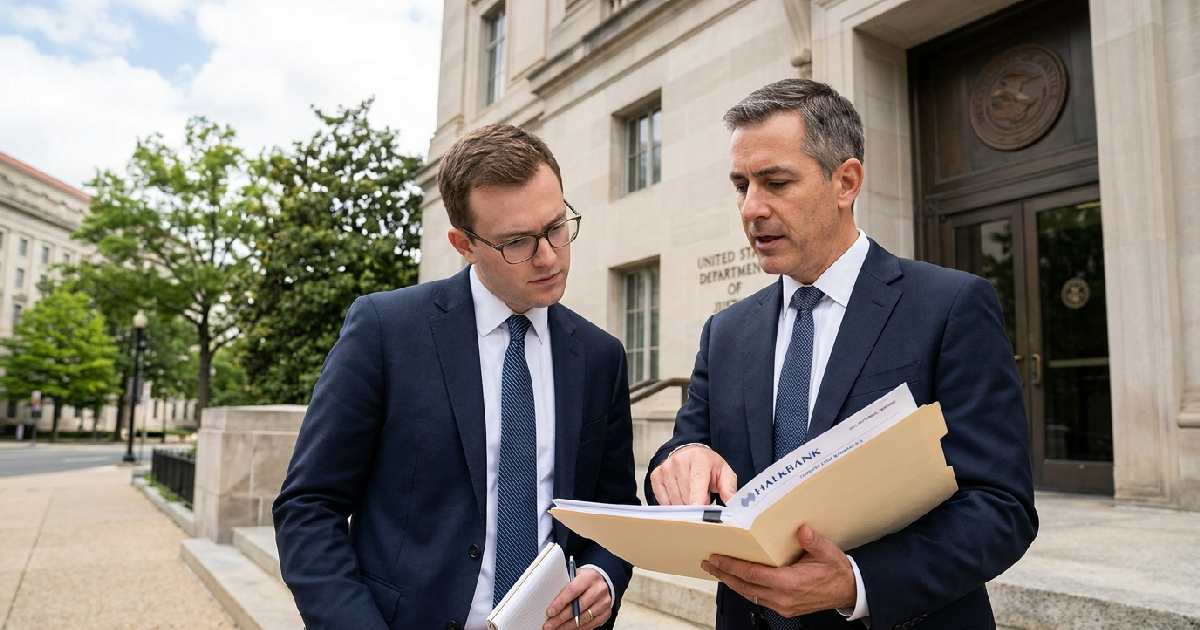
United States Department of Justice reportedly moves in Halkbank Iran sanctions case
The United States Department of Justice (DOJ) has reportedly moved to address the ongoing legal proceedings involving Turkiye Halk Bankasi AS, the Turkish state-owned lender widely known as Halkbank. While specific details of the filing remain emerging, the development follows years of litigation surrounding allegations of Iran sanctions evasion.
The case has historically been a significant point of contention in diplomatic relations between Washington and Ankara.
The legal trajectory of Halkbank has often intersected with broader geopolitical shifts. Recent reports suggest that Donald J. Trump reportedly requests edits to proposed international agreements, highlighting the sensitive nature of regional security and financial compliance. Any movement in the Halkbank case carries weight for international markets, particularly as authorities weigh legal accountability against strategic interests.
Legal background and diplomatic friction
The case against Halkbank has faced multiple delays and procedural challenges over several years. Initially centered on allegations regarding the movement of funds in violation of U.S. sanctions, the matter eventually reached the highest levels of the American judiciary. The bank’s defense has frequently raised questions of sovereign immunity, arguing that as a state-owned entity, it should be protected from criminal prosecution in U.S. courts.
This legal battle has occurred during a period where financial institutions are navigating profound technological shifts. Some executives, such as UBS Asia President Iqbal Khan views AI as a transformative force for banking, but for Halkbank, the primary challenge remains the legacy of traditional regulatory compliance. The outcome of these proceedings is expected to influence how international banks interact with jurisdictions under U.S. oversight.
Market reactions and economic implications
Financial analysts have closely monitored the Halkbank case due to its potential impact on the Turkish financial system. Previous developments in the case have often correlated with fluctuations in regional assets. Uncertainty regarding potential penalties has historically influenced investor sentiment toward Turkish state-controlled institutions. Clearer direction from the DOJ could provide a different outlook for the bank’s operational future.
The broader economic environment also plays a role in how these legal movements are perceived. As global stocks rise and oil prices fall on shifting expectations for regional stability, the resolution of long-standing legal disputes becomes a focal point for market participants. Analysts suggest that the conclusion of such cases is often necessary to restore long-term confidence in international banking corridors.
Future of U.S.-Turkey financial relations
The reported request regarding the Halkbank case comes as the U.S. evaluates its enforcement strategies across several fronts. While the Department of Justice has previously pursued strict adherence to sanctions, diplomatic priorities can lead to a re-evaluation of specific cases. The status of the current motion will likely define the next chapter of cooperation between the two NATO allies.
Observers of international law are waiting to see how the court in the Southern District of New York responds to any new filings. A dismissal or stay of the case would represent a major pivot in a saga that has spanned two U.S. administrations.
For now, the Turkish banking sector remains focused on the official confirmation of these legal steps and their subsequent impact on international credit access.