

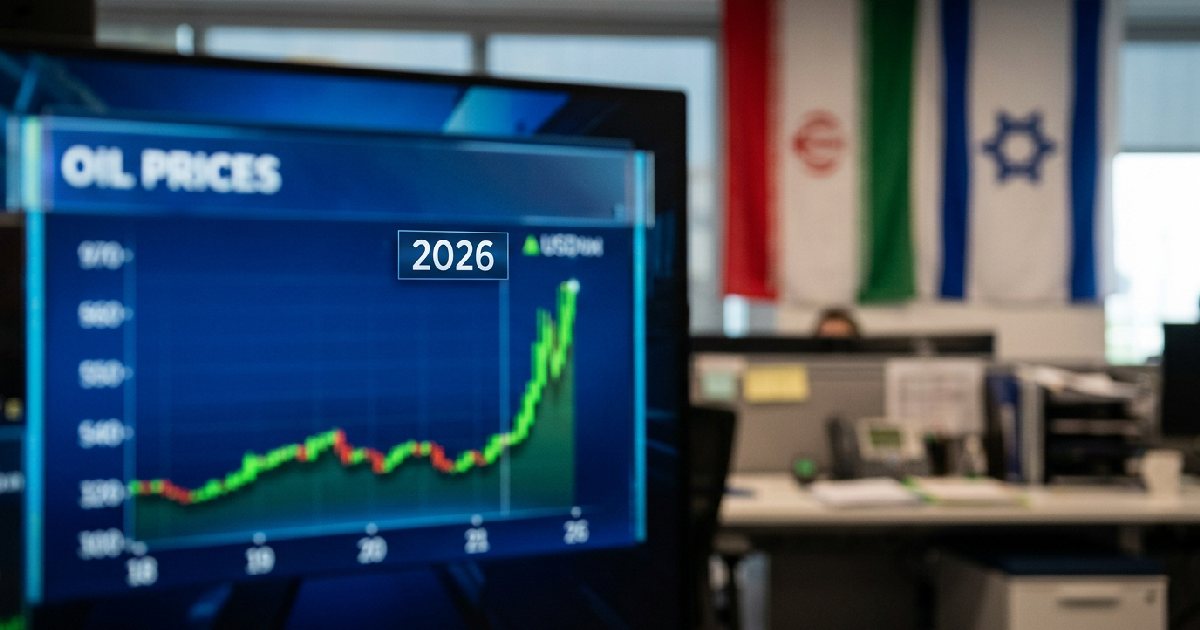
Iran launches missile attacks, sending global oil costs up 3% on June 8
Global oil prices surged by more than 3% on June 8, 2026, after Iran launched a series of missile strikes against Israel, significantly heightening fears of a wider Middle East conflict.
The escalation triggered an immediate reaction in energy markets as traders weighed the potential for supply disruptions in one of the world’s most critical production hubs. U.S. President Donald Trump has been briefed on the situation as Washington monitors the renewed hostilities and their impact on global economic stability.
Brent crude and West Texas Intermediate (WTI) both saw sharp upward movements during Sunday evening trading hours in New York. The jump reflects a sudden reversal in market sentiment, coming just weeks after some analysts had predicted a cooling of geopolitical premiums.
This volatility arrives as the 2026 energy market continues to grapple with shifting alliances and the ongoing influence of the OPEC+ coalition on production quotas.
The strikes mark a dangerous shift in the shadow war between the two nations, moving from proxy skirmishes to direct state-on-state military action. While the full extent of the damage in Israel remains under assessment, the psychological impact on the commodities market was instantaneous.
Investors are particularly concerned about the safety of shipping lanes and the potential for a wider maritime blockade that could stifle the flow of millions of barrels of crude daily.
Market reactions to the Iran-Israel missile exchange
Traders responded to the news with aggressive buying, pushing prices past recent resistance levels as the risk of a regional war became a tangible reality. The 3% spike represents one of the largest single-day moves in 2026, catching many market participants off guard.
This sudden surge complicates the outlook for central banks worldwide, which have been struggling to keep inflation within target ranges amid fluctuating energy costs.
The timing of the escalation is particularly sensitive for the United States, given the current administration’s focus on maintaining domestic fuel price stability. President Donald Trump’s briefing suggests the White House is preparing for various scenarios, including potential interventions to prevent a sustained price rally.
Market analysts suggest that if the conflict continues to broaden, the “war premium” on a barrel of oil could increase further in the coming days.
Shipping and logistics firms are already altering routes to avoid high-risk zones in the Persian Gulf and the Gulf of Oman. We have previously seen how US naval forces redirect commercial vessels during periods of heightened tension to ensure the safety of global trade. These logistical detours often add significant costs to transport, which are eventually passed down to consumers at the pump.
Assessing the impact on global supply chains
The primary concern for energy analysts isn’t just the current strikes, but the potential for retaliatory measures against oil infrastructure. If either side targets refineries, storage terminals, or export facilities, the 3% rise seen today could be just the beginning of a much steeper climb.
OPEC+, led by Saudi Arabia and Russia, has yet to issue an official statement regarding whether they will adjust production to compensate for any eventual supply gaps.
Investment banks are now revising their Q3 2026 forecasts to account for the increased geopolitical risk. While some traders were previously moving capital into high-growth sectors, this event has triggered a flight to safety. Interestingly, this shift occurs as other assets face their own challenges, such as when the com/crypto-news/bitcoin-btc-price-drops-ai-quantum-capital-outflows-2026-update/”>Bitcoin (BTC) price drops due to capital being diverted toward tech or traditional defensive hedges like gold and oil.
US involvement and the diplomatic outlook
The White House has signaled a “watchful wait” approach, though military assets in the region are reportedly on high alert. The diplomatic challenge for the United States is twofold: supporting its primary ally in the region, Israel, while preventing a full-scale closure of the Strait of Hormuz.
Approximately 20% of the world’s total oil consumption passes through that narrow waterway, making it a critical choke point for the global economy.
If the U.S. decides to implement further sanctions or move toward a more active military posture, the response from the Kremlin and Beijing will be crucial. Both nations have significant interests in Middle Eastern energy and have often acted as a counterbalance to Western policy in the region.
For now, the focus remains on the immediate tactical responses of the two primary combatants and whether a de-escalation path is still viable.
Previous diplomatic efforts had actually led to a period where oil prices fell on US-Iran deal expectations, but those hopes appear to have evaporated with the latest missile exchange. The return to open hostility suggests that any previous agreements or understandings are now effectively void, leaving the market in a state of high uncertainty.
Second-order effects on the global economy
A sustained spike in oil prices could trigger a slowdown in travel, manufacturing, and consumer spending. Airlines and shipping companies are likely to implement fuel surcharges if prices remain at these elevated levels for more than a week. Furthermore, the volatility in energy markets often spills over into the valuations of international logistics firms and industrial conglomerates.
For the average consumer, this geopolitical flare-up means higher costs for essential goods. Energy is a foundational input for almost every sector of the modern economy, and a 3% jump in crude often leads to a measurable increase in food and transport indices.
Economists will be watching the next round of data releases to see if this “energy shock” dampens the global recovery projected for the latter half of the year.
What to watch in the coming weeks
Industry experts will closely monitor the daily reports from the International Energy Agency (IEA) and the weekly inventory data from the U.S. Energy Information Administration (EIA).
These figures will provide a clearer picture of whether the market is facing a genuine physical shortage or if the current price action is purely driven by speculative fear. Any move by the U.S.
to release oil from the Strategic Petroleum Reserve (SPR) would be a clear signal that the administration views the current price levels as a threat to national interests.
As of late Monday morning, the situation remains fluid. While missile strikes have paused momentarily, the rhetoric from both Tehran and Jerusalem suggests that a formal ceasefire is not currently on the table. Until a clear diplomatic off-ramp is established, the energy markets will remain on a war footing, reacting sharply to every report emerging from the region.