

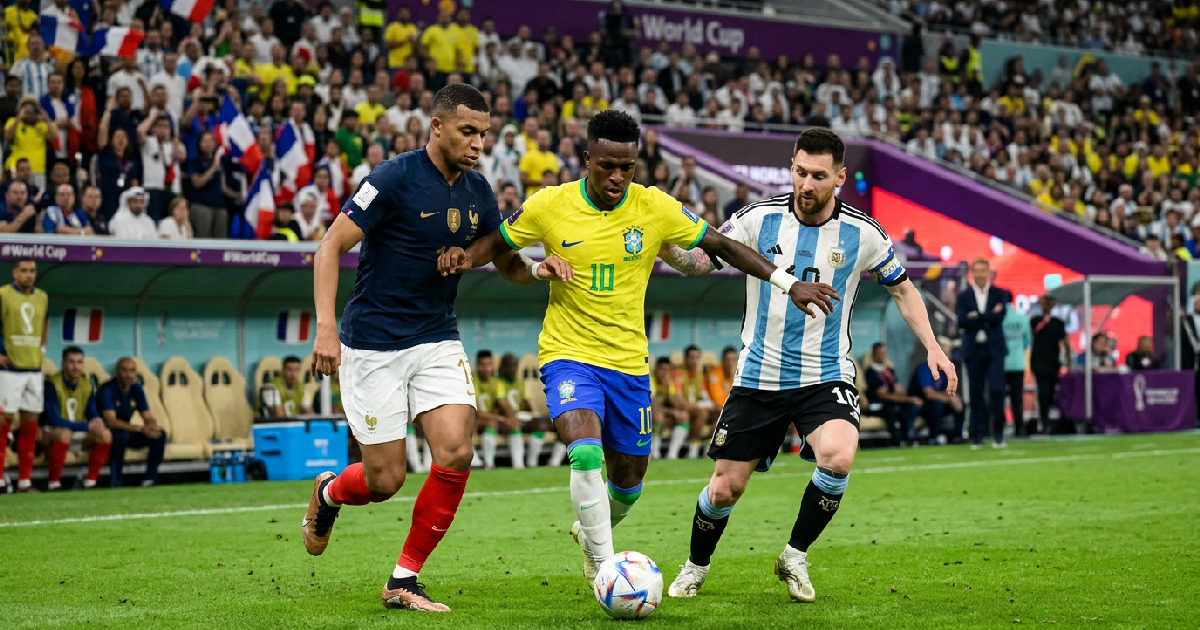
Brazil, France, Argentina lead 16 nations into World Cup knockout stage
The 2026 World Cup knockout rounds are approaching, with 16 nations set to contend for the trophy. Following a group stage marked by tactical diversity, analysts are reassessing the competitive hierarchy to identify the teams with the strongest path to the final, including top contenders Brazil, France, and Argentina.
Scouts and international observers suggest the divide between established contenders and those navigating the opening rounds has become a central talking point. While tournament favorites have generally managed to progress, factors such as physical fatigue and the management of yellow cards are tipped to become critical variables in the coming fixtures.
Assessing the leading contenders in the 2026 World Cup assessment
The shift to a single-elimination format typically forces teams to prioritize defensive structure over the expansive play seen earlier in the competition.
Brazil is widely viewed as a major threat in the knockout bracket, with many analysts pointing toward their depth in the final third as a decisive factor. The squad’s ability to maintain tactical cohesion while utilizing different player combinations reportedly makes them a difficult opponent to prepare for.
Similarly, the French national team is expected to rely on its experienced core to handle the specific pressures that arise when the margin for error disappears.
Argentina continues to be classified among the top tier, largely due to a veteran group that has shown resilience during difficult moments on the world stage. Their ability to manage high-stakes environments remains a key asset as the competition intensifies.
Key details
Fans of high-pressure sports often see this trend elsewhere, such as in the Novak Djokovic match against Giovanni Mpetshi Perricard, where veteran composure is frequently tested by rising competitors during opening rounds.
Key details
Teams such as South Korea and Switzerland often enter this stage reliant on standout individual performances or exceptional displays from their goalkeepers. While these squads are considered tactically sound, reports indicate they may face challenges if forced to rely on bench depth to alter the course of a game.
Historical trends suggest that the margin for error for these nations is virtually non-existent when facing top-tier opposition.
For these squads, the strategy often involves extending the match to neutralize technical gaps, a necessity seen across various high-stakes sports. This was recently illustrated by the Toto Wolff reaction to the Mercedes contact in Montreal, which served as a reminder of how minor internal errors can significantly impact an overall result.
In a knockout environment, a single lapse in concentration often determines which team progresses and which exits the tournament.
Trends influencing the current competitive outlook
A notable shift in this tournament involves a move toward pragmatic, hybrid systems that prioritize defensive solidity over purely possession-based styles. Teams that appear most capable of success are those that can effectively control the game even without the ball. Coaches are reportedly becoming more cautious regarding the high press, sometimes opting to bypass the midfield to avoid turnovers in dangerous areas.
Goalkeeping performance has also been a major talking point, with several nations relying on their number ones to navigate difficult moments in earlier matches. While some defense-related errors were noted in previous rounds, the elite forwards from teams like Brazil and France are expected to find more rhythm as the tournament progresses.
This evolution in play often puts immense pressure on defensive units that may be experiencing physical decline.
Key details
The role of medical and conditioning staff is expected to be as vital as tactical planning in the coming days. Several key players are reportedly managing minor physical issues that could impact their ability to perform over 90 or 120 minutes.
Managing these long-term physical concerns is a recurring theme in professional sport, as noted by Gleyber Torres discussing his injury frustration; similarly, World Cup participants often face the challenge of performing through discomfort.
Squad depth is likely to be a deciding factor in which nations reach the final four. Teams with the ability to introduce fresh, high-level talent late in matches reportedly hold a significant advantage, particularly during the summer conditions in North America.
This physical demand is one reason why squads with larger talent pools, such as Portugal or France, are often favored to maintain their form as the competition reaches its conclusion.
Looking toward the final tournament path
The structure of the knockout bracket suggests that several highly regarded teams may face one another before the semi-final stage. This possibility means that some favorites are expected to exit earlier than many predicted at the start of the summer. Consequently, any ranking of the remaining teams serves as a reflection of current form rather than a definitive projection of the eventual winner.
As the first matches of the next round approach, the pressure on coaching staff is expected to intensify significantly. Tactics are likely to become more conservative, with a heightened focus on set-piece execution. While the traditional heavyweights are often favored, many observers believe the competitive gap between different regions is narrowing, leaving the door open for unexpected developments in the weeks ahead.