

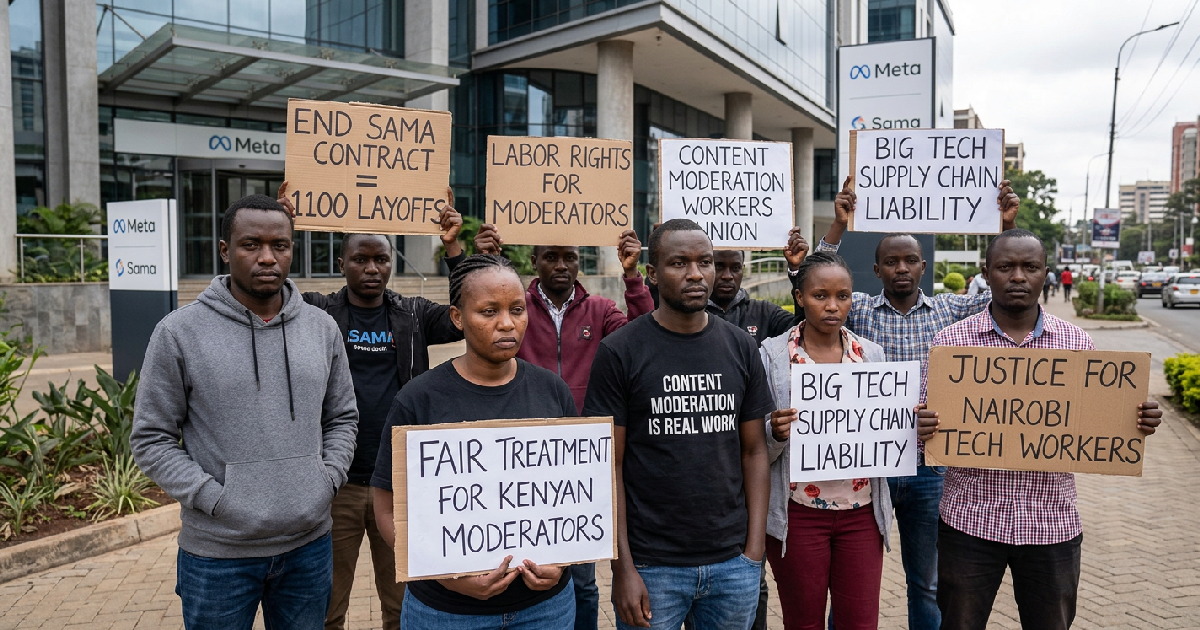
Meta ends Sama contract in Kenya leading to 1,100 layoffs in Nairobi
Meta has ended its outsourcing arrangement with the content moderation contractor Sama in Kenya, leading to the layoffs of more than 1,100 workers in Nairobi. News of the contract termination broke on April 16, 2026, following a prolonged period of legal tension between the social media giant and its regional workforce. For eighteen months, Kenyan content moderators engaged in organized labor actions and litigation to challenge working conditions within the tech supply chain.
The dispute reached a critical point when Kenyan courts began to acknowledge that Meta itself could be held legally accountable for labor rights violations. Previously, liability was often restricted to intermediary contractors like Sama. Rather than addressing these claims within the Kenyan jurisdiction, Meta chose to withdraw from its arrangement with the firm. This strategic exit highlights the significant cross-border mobility of tech capital when faced with local legal accountability.
The impact of this withdrawal extends beyond the immediate job losses. Reports suggest that Meta is now lobbying to shape legislative responses in Kenya, aiming to limit future liability for similar supply chain issues. This development mirrors volatility seen in other digital sectors. For instance, as market sentiment shifts in the crypto sector, centralized corporate decisions can often leave workers in vulnerable positions without warning.
Monopsony power and the suppression of digital labor
A small group of dominant corporations, including Amazon, Meta, OpenAI, and Anthropic, currently exert significant control over AI infrastructure and labor markets. This concentration of power creates a monopsony where firms have disproportionate influence over wages and conditions. This dynamic affects everyone from content moderators in Kenya to entry-level engineers in India who have few alternative employment options.
These firms frequently displace risk and legal liability downward through layers of subcontracting while keeping profit accumulation centralized. This structure leaves workers vulnerable to psychological harm and intense production pressures. When labor movements gain traction, the cross-border nature of these businesses allows them to relocate operations quickly. This mobility effectively punishes workers who organize for better protections or legal recognition.
The tech industry’s ability to shift strategies rapidly is a hallmark of the modern digital economy. We see similar patterns when Epic Games adjusts its mobile platform strategy, impacting developers across different regional markets. The centralized control of these platforms allows for swift changes that can bypass the momentum of local labor movements or regulatory efforts.
Geopolitical ties and the limits of national regulation
Many dominant AI firms are headquartered in the United States and maintain close ties to American strategic and technological interests. These geopolitical connections can complicate the efforts of national governments in the Global South to impose strict regulations. There is often a fear that aggressive enforcement could lead to a total withdrawal of investment by these tech giants.
In Nairobi, the legal victory for moderators was met with a corporate retreat rather than reform. By influencing the laws intended to govern them, tech firms can create a regulatory environment that prioritizes capital over human rights. This makes it difficult for individual nations to provide effective oversight without an international framework to prevent companies from playing jurisdictions against one another.
The intersection of tech leadership and government policy is becoming increasingly transparent. As seen with David Sacks joining the PCAST, the bond between Silicon Valley and national executive policy is strengthening. For workers thousands of miles away, these domestic political alignments in the U.S. have direct consequences on their job security and legal standing.
International response to address tech capital predation
Writing in Jacobin on May 15, 2026, Nandita Shivakumar and Shikha Silliman Bhattacharjee argued that these “cross-border abuses” require a coordinated international response. Because these firms operate globally, local court rulings are easily circumvented by moving contracts to other nations. An international framework could establish labor standards tailored for the digital age, preventing subcontracting from being used as a shield.
Without such protections, the cycle of exploitative hiring followed by abrupt contractual withdrawals is likely to continue as global AI demand grows. The Meta-Sama incident serves as a significant case study in how global firms manage legal risk by exiting markets. Future labor rights movements may need to build coalitions across borders to ensure that capital flight is no longer an effective tool for evading accountability.