

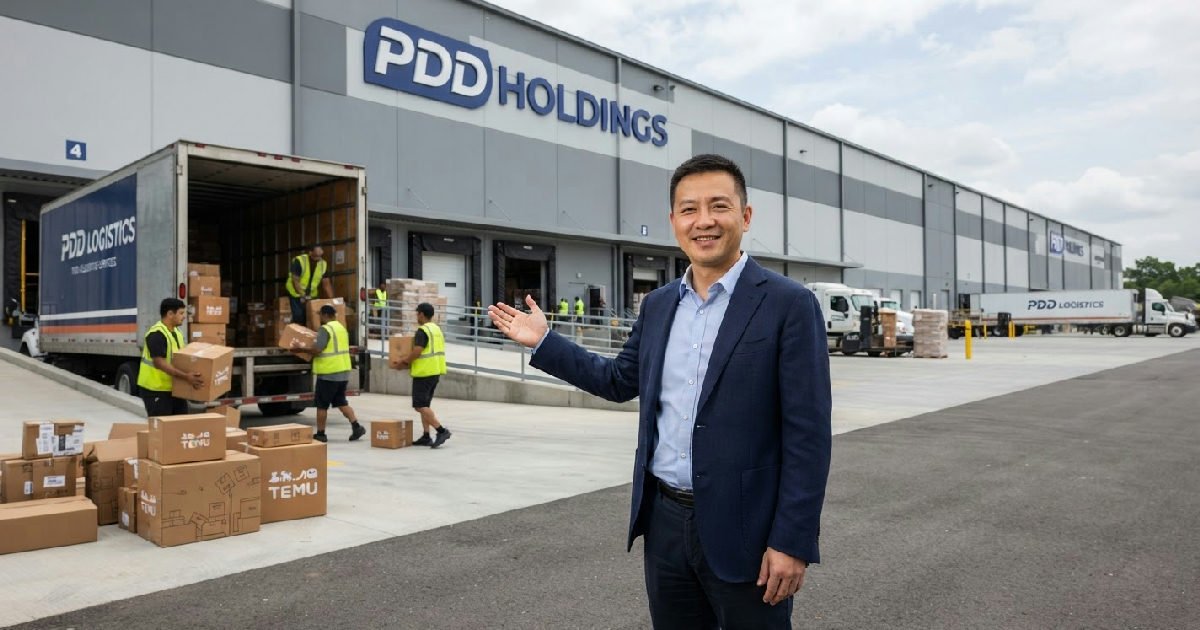
Temu owner PDD Holdings builds local warehouses to counter new tariffs
Temu owner PDD Holdings, the parent company of e-commerce giant Temu, is aggressively overhauling its supply chain by investing in local fulfillment centers across the United States and Europe.
The move, confirmed by co-CEO Lei Chen on an August 24 earnings call, is a direct response to new tariffs and the dismantling of long-standing ‘de minimis’ import rules that were central to Temu’s low-cost business model.
This strategic pivot involves building out a network of local warehouses and onboarding more domestic sellers in its key international markets. The goal is to shorten delivery times and mitigate the financial sting of new import duties, which threaten to raise prices for consumers and disrupt the flow of affordable goods from China.
Temu owner PDD faces an end to the de minimis advantage
For years, Temu and other cross-border e-commerce platforms thrived by leveraging the de minimis loophole. This rule allowed them to ship individual packages directly to consumers from China without incurring import duties, as long as the value fell below a certain threshold. But that advantage has evaporated.
The U.S. previously ended duty-free treatment for lower-value imports. The European Union has also begun applying customs duties on lower-value goods. As governments seek to level the playing field for domestic retailers, many are re-evaluating policies and stricter import controls. For PDD, this regulatory shift presents a significant challenge.
During the company’s second-quarter earnings call on August 24, 2026, Lei Chen, co-chairman and co-CEO, discussed these supply chain adjustments. He noted that orders inbound to affected markets would see reduced fulfillment efficiency and higher costs, which could have a considerable impact on parts of PDD’s business. This burden ultimately risks being passed on to consumers or absorbed by the company’s network of merchants.
The company anticipates that higher duties could lead to increased prices for shoppers, a potential decrease in order volumes, and reduced merchant participation on the platform. PDD’s current strategy is a direct attempt to preempt that outcome.
A global pivot to local infrastructure
PDD Holdings is pursuing a two-pronged strategy to build a more resilient supply chain and enhance its Temu fulfillment operations. Lei Chen has indicated the company’s priorities include ensuring a strong supply of quality products and building the necessary infrastructure for efficient delivery. This marks a fundamental shift from its traditional “fully managed” consignment model, where inventory was primarily held in China.
The new focus is on a “semi-managed” or “local warehouse” model, where sellers hold inventory within the destination market. To support this, Temu has opened its Local Seller Program to businesses of all sizes in over 35 countries, encouraging them to store goods closer to customers. This requires a massive investment in physical infrastructure.
In the United States, Temu has established warehouses and is working with logistics partners across the country. Confirmed locations include a site at 18501 Arenth Ave in Rowland Heights, California, along with facilities in the Dallas Fort Worth, Texas, and Newark, New Jersey, metropolitan areas. A newer facility has also been opened in Georgia.
The company’s confirmed logistics partners in the U.S. include WINIT America, which operates a 158,000-square-foot facility in City of Industry, California, as well as Easy Export, Lecangs, GOODCANG, ShipSage, Buske, and Armlogi. This network is designed to create a robust and redundant fulfillment backbone.
Expanding the warehouse footprint worldwide
The build-out extends far beyond the U.S. Of the 13 self-owned warehouses Temu operates globally, the majority are now in Europe. Key hubs have been established near Frankfurt and Hamburg in Germany, with additional options in France and the Netherlands to serve the wider EU bloc.
Partnerships are a crucial element of this European expansion. Temu has forged alliances with organizations like the Danish Startup Group, Cross-Border Commerce Europe, and Portugal’s APDC. A notable agreement with Posta Romana aims to onboard sellers in Romania, demonstrating a granular, country-by-country approach.
The expansion also covers Canada, with warehouse options in Ontario, British Columbia, and Quebec. In the Asia-Pacific region, facilities are available in Australia (New South Wales, Victoria), New Zealand, Singapore, Thailand, South Korea, and Japan. This global footprint signals a long-term strategic commitment.
Navigating a new era of e-commerce
This strategic shift is about more than just dodging tariffs; it’s about survival in a new regulatory environment. The previous model of relying on point-to-point shipping from a single country was efficient but fragile. The company acknowledges that these methods often led to higher fulfillment costs in some cases, leaving certain consumer demands unsatisfied.
By investing in local infrastructure, PDD Holdings gains greater control over its logistics, reduces its dependence on volatile international shipping lanes, and improves delivery reliability. This makes Temu’s supply chain more resilient to geopolitical shocks and regulatory whims.
However, this pivot is not without risk. It is a capital-intensive undertaking that pushes Temu into more direct competition with established players like Amazon, which have spent decades perfecting local fulfillment. This strategic realignment is seen as an essential adaptation for PDD Holdings.
The road ahead for Temu
The central question is whether these investments will be enough to preserve Temu’s core value proposition: rock-bottom prices. Building and staffing warehouses, managing local inventory, and partnering with domestic delivery services all add costs that its previous model avoided. The company is betting that the efficiencies gained will offset these new expenses.
For consumers, the most immediate impact will likely be faster shipping times for a growing number of products. The long-term effect on pricing remains to be seen. If Temu can successfully integrate its new local infrastructure with its vast network of low-cost suppliers, it may be able to absorb the new tariffs and maintain its competitive edge.
Ultimately, this investment represents a fundamental maturation of Temu’s business model. It’s moving from a cross-border disruptor to a more integrated, global e-commerce platform with a significant physical presence in the markets it serves. The coming months will reveal how effectively it can manage this complex and costly transition.