

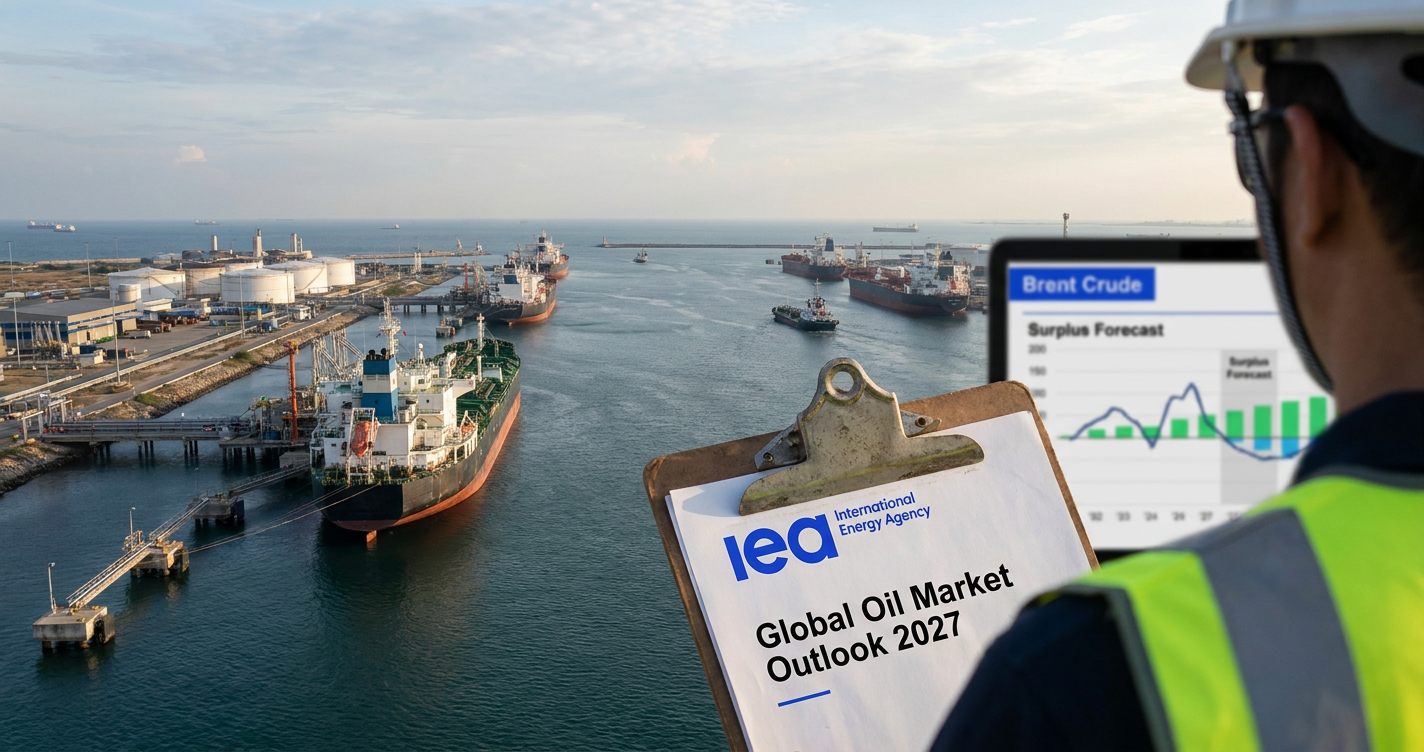
International Energy Agency forecasts 5.05 million bpd oil glut by 2027
The International Energy Agency (IEA) has predicted a significant oil glut for 2027 as the United States and Iran prepare to sign a landmark interim peace deal this Friday, June 19, 2026.
According to the IEA’s monthly oil market report released on Wednesday, the cessation of hostilities in the Middle East is expected to trigger a massive surge in global crude production, potentially creating a surplus of 5.05 million barrels per day (bpd) within the next twelve months.
Fatih Birol, the IEA Executive Director, previously described the supply shock resulting from the regional conflict as “the biggest energy crisis in history.” He noted on Wednesday that the “single most important solution” to the crisis is the full reopening of the Strait of Hormuz to international shipping.
This corridor, which saw flows drop from 20 million bpd to a mere trickle during the height of the war, is central to the new diplomatic framework.
The interim peace deal includes a 60-day extension of the current ceasefire and the adoption of a 14-point memorandum. Under these terms, Iran will reopen the Strait of Hormuz while the United States lifts its naval blockade. Both nations have committed to a 30-day timeline to restore traffic through the strait to its full capacity.
This agreement marks a turning point after a period where supply chain resiliency was increasingly prioritised over cost as nations scrambled for energy security.
Projected surplus and the 2027 supply surge
By 2027, the IEA forecasts that global oil supply will rise by 8 million bpd, reaching a total production level of 110 million bpd. Conversely, global demand is expected to grow by a “relatively modest” 2 million bpd. This sharp imbalance will result in a 5.05 million bpd overhang, offering a reprieve to global markets that have struggled with scarcity for years.
The agency suggests this surplus could be a “welcome respite” for the global economy. It provides an opportunity for countries to replenish depleted inventories or build new strategic reserves. Currently, oil stocks in OECD countries have fallen to their lowest levels since 1990. While a surplus may pressure producer revenues, it offers a path toward price stability after months of extreme volatility.
For 2026, the energy outlook remains tighter. The IEA revised its demand forecast downward, expecting a fall of 1.1 million bpd this year, while global supply is projected to drop by 3.9 million bpd. These figures reflect the cooling effect of the conflict, which at one point pushed benchmark Brent crude to a peak of $126 a barrel in April.
Market reaction and benchmark price movements
Energy markets have already begun reacting to the news of the Friday signing. On June 17, benchmark Brent crude stood at approximately $79.47 a barrel, up slightly by 0.7% on the day but well below the $87 recorded at the end of last week. The cooling prices suggest traders are already factoring in the eventual return of Middle Eastern crude to global hubs.
Data from the five-day trading window ending June 17 shows a significant retreat in prices across both major benchmarks. Brent crude fell from $93.10 to $78.90 during the period, while West Texas Intermediate (WTI) dropped from $90.03 to $76.16. This downward trend is a stark contrast to the April highs and reflects growing confidence in the diplomatic resolution between Washington and Tehran.
Institutional shifts in other sectors are also mirroring this period of transition. Just as energy markets adapt to new diplomatic realities, UBS Asia President Iqbal Khan views AI as the biggest transformation for the banking sector, potentially aiding how firms model these complex commodity shifts. As the blockade ends, financial tools will be critical in navigating the move from extreme scarcity to a forecasted glut.
Nations poised to expand production capacity
The projected 8 million bpd supply increase will be driven by several key producers ready to ramp up operations. Saudi Arabia has stated it can return to pre-war production levels within just three weeks of the deal being finalised. The United Arab Emirates (UAE), which exited OPEC during the height of the crisis, is also expected to expand its output significantly.
In addition to Gulf producers, the United States, Brazil, and Venezuela are poised for expansion. Iran will also regain its export capacity once the naval blockade is fully dismantled. However, normalization may face hurdles. Iranian officials have reportedly suggested that “service fees” or tolls could be imposed on ships passing through the Strait of Hormuz, which could impact the final cost of transit.
Demining shipping lanes and resolving complex transit arrangements remain “downside risks” to the IEA’s outlook. The recovery in exports is likely to be gradual, as supply chains will take time to normalize after the largest oil supply disruption in history.
The agency maintains that while the surplus is coming, the transition toward a balanced market will depend heavily on the 14-point memorandum being executed without delay.