

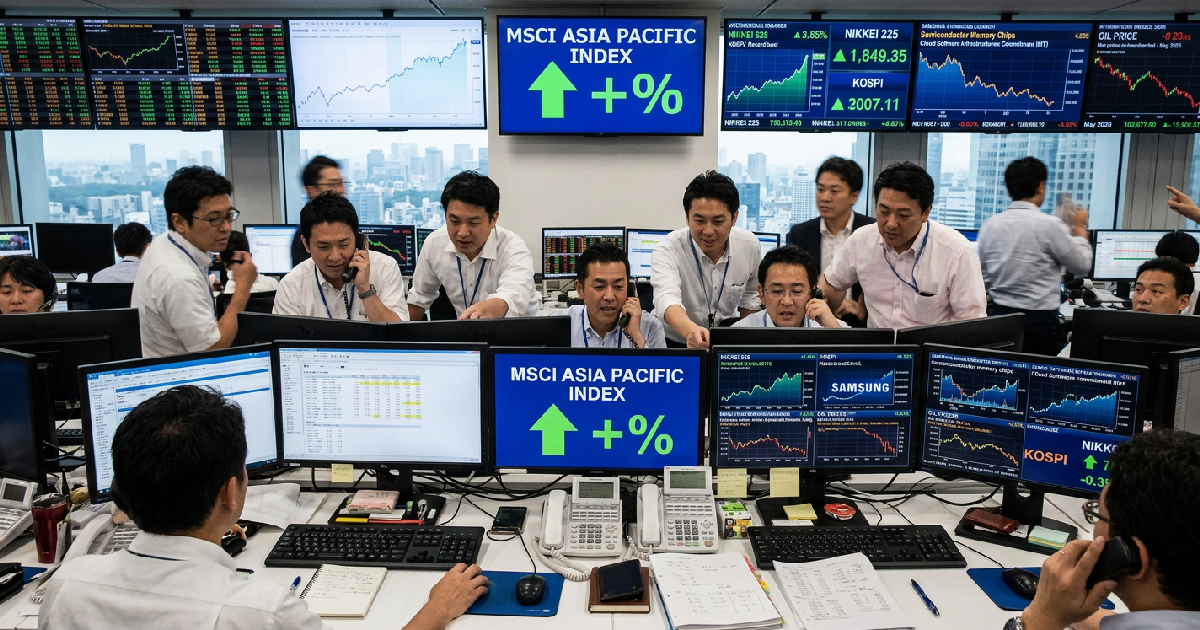
MSCI Asia Pacific Index gains 1% as US and Iran near conflict pause
Asian equities advanced on Friday, May 29, 2026, as investors navigated a complex mix of renewed military friction in the Middle East and reports that a temporary diplomatic breakthrough between Washington and Tehran may be imminent. The MSCI Asia Pacific Index rose almost 1% during the session, nearing a record level. This positive movement follows a volatile week where markets such as the South Korea KOSPI and the Taiwan Weighted index hit record highs before facing sharp pullbacks on Thursday due to fresh military clashes.
The fluctuating market sentiment stems from a three-month conflict that has frequently disrupted global energy flows. On Thursday, May 28, a White House official confirmed an Axios report that the U.S. and Iran have “mostly agreed” on terms for a deal to temporarily halt the conflict. This optimism has been counterbalanced by ongoing kinetic activity, including reports of Iranian missiles being fired at unspecified targets late Thursday. Investors are increasingly focused on the possibility that a deal could lead to the US navy redirects vessels through a reopened Strait of Hormuz.
S. averages finished at new closing records on Thursday, May 28. 47.
5% following a beat on both top and bottom lines and a commitment to spend $6 billion on Amazon Web Services over the next five years. com/international-news/global-stocks-rise-and-oil-prices-fall-uS-iran-deal-expectations-2026-wrap/”>global stocks rise and oil prices fall amid the shifting geopolitical landscape.
Asia market performance amid Iran tensions
Market performance across the region has been characterized by extreme volatility throughout late May. Japan’s Nikkei 225 led a significant rally earlier in the week, surging 5.28% on May 26 to open at 65,247.24. By Thursday, however, the index struggled for direction as tensions escalated. Similarly, South Korea’s KOSPI has seen drastic swings; it surged 5.61% on May 26 and hit a new record of 8,228.7 on May 28, only to fall as much as 4% from that peak later the same day before recouping most losses.
On the corporate front, Samsung Electronics has been a major driver of regional sentiment. The company’s shares jumped as much as 6.51% after it announced it had started shipping samples of its latest high-bandwidth memory chips to global customers. This progress in the semiconductor space has acted as a counterbalance to the drag caused by regional instability. While some indices like the MSCI index of EM Asia equities dropped more than 2% on Thursday in their worst session in over a week, the Friday session saw a broad return to risk-on behavior.
Military skirmishes in the Strait of Hormuz
The physical security of energy corridors remains at the forefront of investor concerns. Iranian forces reportedly fired at four vessels attempting to cross the Strait of Hormuz around 12:35 a.m. local time on Thursday (2105 GMT Wednesday). The vessels reportedly ignored warnings and were forced to return after warning shots were fired. This followed a Pentagon announcement that Tehran had fired a ballistic missile toward Kuwait and deployed attack drones in and around the Strait of Hormuz.
U.S. defensive strikes and ground targets
In response to these activities, the U.S. military conducted its second defensive strike of the week on Wednesday, May 27. U.S. forces shot down four Iranian drones and struck a base that was preparing to launch a fifth drone, determining it posed a direct threat to maritime traffic. On Thursday, May 28, the U.S. launched further strikes against a ground control station in the southern port area of Bandar Abbas after Iran fired drones at ships in the Strait.
The Iranian Revolutionary Guard reportedly targeted an American base on Thursday morning local time. Despite these exchanges, oil prices have trended downward as traders bet on the “mostly agreed” ceasefire terms. Brent crude settled below $94 a barrel on Friday, May 29, falling from the $95.02 level seen earlier in the week. Currency markets have stayed relatively stable, with the yen holding steady around 159.30 per dollar on Friday.
AI optimism and corporate growth
Beyond the geopolitical theater, the “AI trade” continues to dominate market narratives. Dell Technologies Inc. saw its shares surge almost 40% in extended trading on May 29 following a strong sales outlook. This tech-heavy momentum is visible in the Taiwan Weighted index, which scaled a lifetime high on May 28 before reversing course to end that day 1.4% lower. The persistent demand for high-performance hardware for AI applications has helped delink some equity sectors from the volatile energy market.
The interplay between energy security and technological growth will likely define the coming weeks. If the temporary U.S.-Iran agreement move from “mostly agreed” to fully implemented, the easing of maritime blockades could further lower shipping costs and inflation expectations. For now, the Asia-Pacific markets remain in a holding pattern, sensitive to every update from the Pentagon and state media outlets like Fars as they weigh the cost of conflict against the promise of a diplomatic reprieve.