

ai server prices skyrocket as suppliers add post-deal hikes
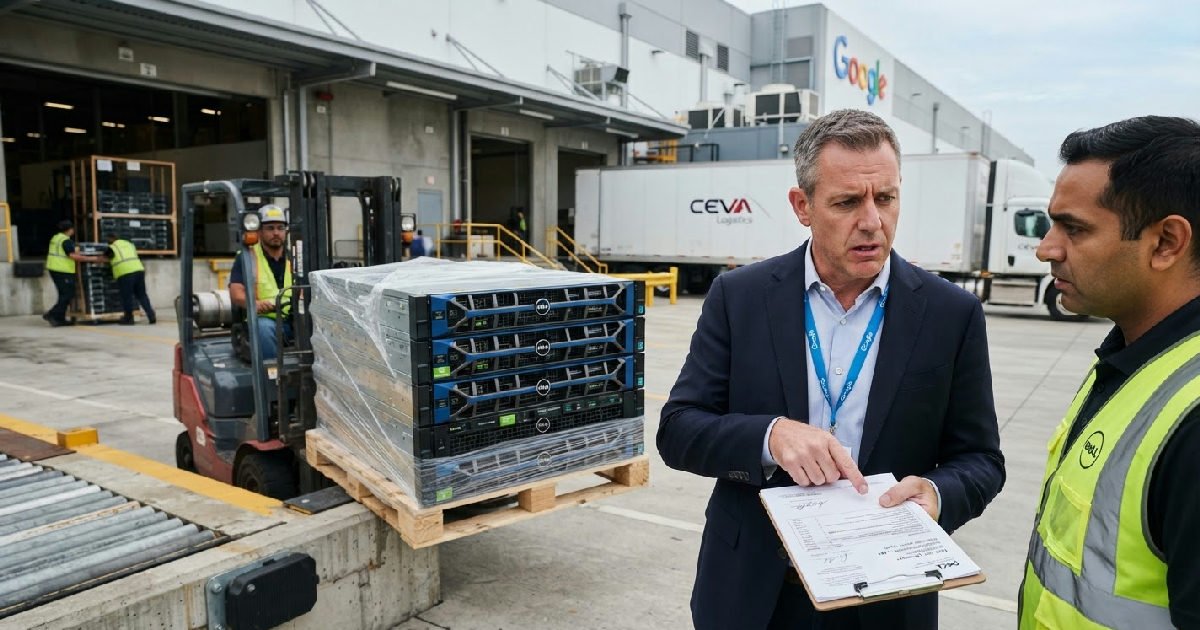
Companies racing to build out artificial intelligence infrastructure are facing a sudden and costly obstacle: post-contract price hikes of up to 45% on essential AI servers. Major tech suppliers including Dell, HPE, Lenovo, and Supermicro are demanding substantially higher payments upon delivery, months after initial purchase agreements were signed at lower prices.
The unexpected surcharges are sending shockwaves through the budgets of some of the world’s largest technology users. The list of affected customers includes hyperscale cloud providers like Microsoft Corp, Alphabet Inc’s Google, and Oracle Corp, as well as major financial trading firms that rely on high-performance computing.
The ripple effect of AI server prices on major tech and finance buyers
The price adjustments aren’t just affecting future orders; they’re being applied to hardware that was already negotiated and scheduled for delivery. This practice has caught many buyers off guard, forcing them to re-evaluate project costs and creating significant financial uncertainty. These broader AI trade uncertainties are adding a new layer of risk to multi-billion dollar infrastructure investments.
High-frequency trading firms, which compete on processing speed, are among the hardest hit. Companies such as Jane Street, Optiver, and Hudson River Trading have all reportedly faced these retroactive price increases.
In one of the most public examples of the conflict, the trading firm XTX sued Dell after the supplier allegedly tried to increase the price of a server deal from an agreed $62 million to as much as $70 million.
For the largest cloud companies, which order tens of thousands of servers at a time, even a modest percentage increase can translate into hundreds of millions of dollars in unplanned expenditure. According to reports, Nvidia has notified its largest customers of price increases exceeding 15% for systems containing its flagship chips that are scheduled to ship in early 2027.
Memory costs identified as the primary driver
The main culprit behind the sudden inflation is the exploding cost of memory, which is essential for modern AI processors. The price for components like High-Bandwidth Memory (HBM) and server DRAM has surged by over 400% since early 2024, according to market analysis. This has fundamentally altered the economics of building an AI server.
Memory, which once accounted for roughly 5-10% of a server rack’s total cost, now makes up between 25% and 30% of the bill. For a next-generation Nvidia Vera Rubin-based rack, that means memory components alone can cost around $2 million.
This is a direct consequence of memory manufacturers like Samsung Electronics Co, SK Hynix Inc, and Micron Technology Inc being unable to scale production fast enough to meet the insatiable demand from the AI sector.
The price increases are stark. For example, a single Samsung 32GB DDR5 memory module climbed from $149 in September 2025 to $239 by August 2026, a 60% increase in less than a year. With DRAM contract prices forecasted to rise another 20% in the fourth quarter of 2026, the pressure on server manufacturers is only intensifying.
Compounding shortages in the supply chain
While memory is the lead story, it’s not the only component bottleneck. A growing shortage of advanced Printed Circuit Boards (PCBs) is adding another layer of cost and delay. The Global Electronics Association (formerly IPC) recently issued an alert, warning that AI servers are consuming board capacity and materials at an alarming rate.
Unlike a typical server motherboard with around 12 layers, the boards required for Nvidia’s Grace Blackwell and Vera Rubin systems can have 40 to 60 layers. This complexity consumes far more raw material and requires specialized manufacturing capabilities that are in short supply. As a result, motherboard prices have jumped by 15% to 50%.
Lead times for these high-layer boards have stretched to between 16 and 20 weeks, with some analysts expecting the shortage to persist through the first half of 2027. This means server vendors are placing their own component orders with incomplete pricing information, forcing them to pass the volatility on to the end customer.
The staggering cost of next-generation AI infrastructure
These component-level issues translate into shocking final price tags for the hardware that powers the AI boom. A single rack of Nvidia’s current-generation Blackwell servers, the NVL72 GB200, costs between $2.8 million and $3.4 million. Pre-shipment inquiries for the next-generation Vera Rubin VR200 systems are coming in at $5 million to $7 million per unit.
To put the surcharges in perspective, a 15% price hike on a previously-agreed price for a Blackwell rack could add over $800,000 to the bill. For a company building a new 1-gigawatt AI data center, these increases could inflate the total cost by at least $5 billion.
This new pricing reality is forcing a recalculation of the return on investment for AI projects across the board.
The soaring valuation of AI companies is predicated on access to immense computing power, and the rising cost of that power presents a headwind. According to analysis by TrendForce, capital expenditure on AI infrastructure is projected to grow 98% year-on-year in 2026 and another 50% in 2027.
Memory spending alone is expected to swell from 47% of a cloud provider’s capex in 2026 to 68% in 2027.
Outlook for 2027 and beyond: no relief in sight
Buyers hoping for a rapid return to stable pricing are likely to be disappointed. Most industry forecasts predict that demand for AI hardware will continue to outstrip supply for the foreseeable future. While HBM bit shipments are projected to grow 50-60% year-over-year in 2027, this will still fall short of matching the explosive demand from data centers.
Suppliers are indicating that contracts with indicative or variable pricing clauses will become the norm, shifting the risk of component inflation entirely to the customer. Buyers are reluctantly accepting these terms because the strategic need to secure computing capacity outweighs the pricing risk. In this seller’s market, those who hesitate risk being left behind in the AI arms race.
Nvidia, which controls over 70% of the data center AI chip market, is in an exceptionally powerful position. Some analysts, including those at JPMorgan, suggest the company may increasingly move to sell entire, fully-integrated servers rather than just individual GPUs and components.
This strategy would allow Nvidia to capture more profit from the AI boom and exert even greater control over the hardware ecosystem, ensuring that high prices are here to stay.