

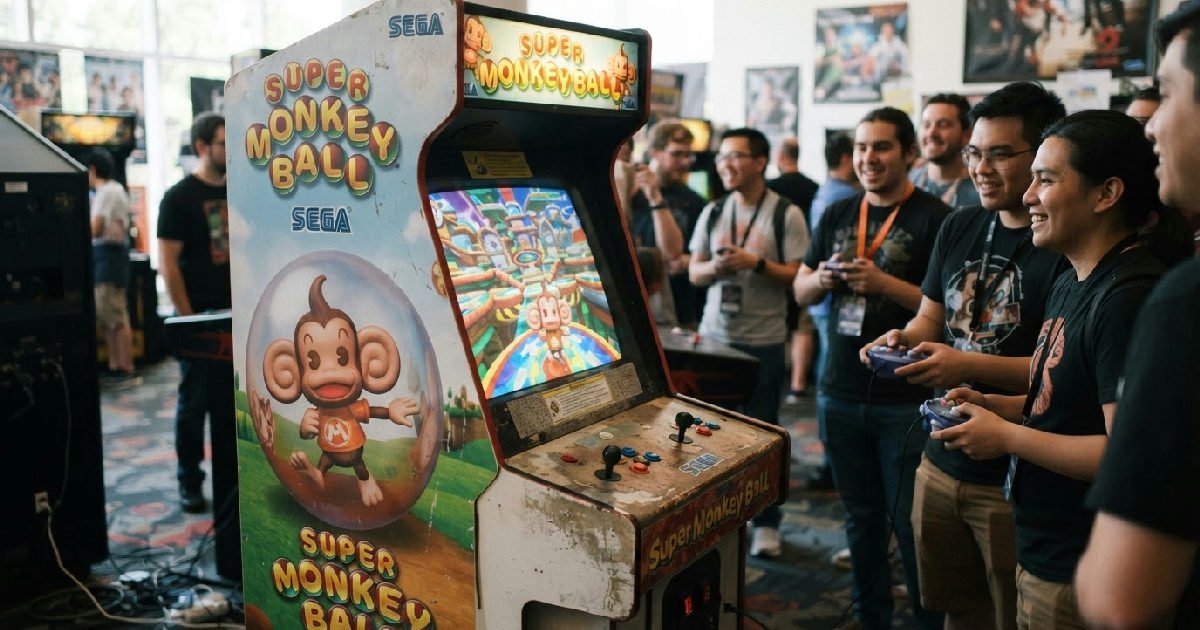
Sega poised to revive Super Monkey Ball
The Super Monkey Ball remake is poised for critical and commercial success, positioning Sega favorably within the classic video game industry.
With its original arcade launch and subsequent debut as a Nintendo GameCube title in November 2001, Super Monkey Ball is celebrating its 25th anniversary this month, sparking renewed calls among fans and industry observers for a comprehensive Super Monkey Ball remake.
Super Monkey Ball remake: enduring appeal
The success of recent, thoughtfully executed remakes like The Legend of Zelda: Ocarina of Time and Star Fox has shown there’s a significant appetite for bringing classic experiences to modern platforms. This trend positions Sega with numerous franchises ripe for revival, even as some publishers like Nintendo maintain platform exclusivity for their titles.
Among them, the innovative, physics-based platformer featuring AiAi and his simian friends stands out as a prime candidate for a triumphant return.
At its heart, Super Monkey Ball offers a deceptively simple yet profoundly engaging gameplay loop. Players guide one of four monkeys, encased in a transparent ball, through elaborate floating courses. The objective is to reach a goal post before time runs out, collecting bananas along the way to boost scores.
What sets the game apart is its unique control scheme. Instead of directly controlling the monkey, players tilt the entire stage. This mechanic demands precise environmental manipulation, allowing for momentum-based jumps over gaps and careful navigation of razor-thin beams. This indirect control is a core part of its lasting charm and challenge.
The game’s design harkens back to earlier, pioneering titles like Atari’s 1984 arcade classic, Marble Madness. While Marble Madness offered only a few short stages, Super Monkey Ball significantly expanded on the concept with dozens of compelling courses. The increased quantity and varied difficulty levels provided a much richer experience for players.
The initial stages of Super Monkey Ball are accessible enough for newcomers. But the difficulty quickly ramps up, introducing complex obstacles and demanding precise timing. This escalating challenge, combined with its distinct mechanics, has solidified its place as a cult classic. Many players remember the intense satisfaction of mastering a particularly tricky level.
Sega’s aggressive strategy to revive classic IP
Sega has made it clear it intends to lean heavily into its extensive back catalog. In December 2024, executive director Shuji Utsumi articulated the company’s vision to actively revive classic intellectual properties. This strategy aims to expand Sega’s influence through a multi-platform publishing approach and cross-field cooperation, extending classic characters into TV series and other media.
This initiative gained further momentum in April 2026 with the launch of “Sega Universe,” a transmedia project. Operating under the tagline “no old, stay gold,” it seeks to reimagine classic gaming franchises across film, music, fashion, and more. This broad effort is spearheaded by Justin Scarpone, global head of transmedia since 2024, aiming to replicate the success seen with the Sonic the Hedgehog franchise.
Several other beloved Sega franchises have already received confirmed modern reimaginings. These include a new 3D Golden Axe game and an open-world Jet Set Radio, both announced at The Game Awards 2023. Additionally, Crazy Taxi: World Tour, the fourth main installment in its series, is slated for early 2027, promising a single-player campaign and multiplayer modes across five cities.
The strategy also extends to 2D action platformers, with Shinobi: Art of Vengeance, featuring a hand-drawn look, released on August 29, 2025. A version for the Nintendo Switch 2 is set for September 24, 2026. This comprehensive effort by Sega underscores a strong commitment to bringing its celebrated history into the modern gaming era.
The booming market for video game remakes
The video game industry has seen a substantial surge in remakes and remasters, driven by both nostalgia and sound commercial strategy. Data from Ampere Analysis indicates that remakes and remasters released between January 2024 and September 2025 collectively attracted 72.4 million players across various platforms. These titles generated an estimated $1.4 billion in revenue from premium game sales and microtransactions.
Publishers are increasingly turning to their back catalogs because remakes, while requiring higher development and marketing investments, often yield significant returns. An average remake, for example, generated approximately 2.2 times the revenue of an average remaster during that period. This makes a full-fledged remake a more attractive proposition than a simple graphical update.
Notable successes include 2019’s Resident Evil 2, which has sold over 13.9 million units as of Q3 2024. The 2023 release of Resident Evil 4 Remake also sold over 5 million units within four months.
Even more recently, the Silent Hill 2 remake has surpassed 6 million copies, becoming the best-selling title in its franchise’s history. These figures illustrate the immense commercial viability of well-executed remakes.
Industry veteran Shigeru Miyamoto commented in July 2026 that while some might observe an abundance of remakes, they play a crucial role. They make classic games accessible to younger generations who might otherwise be unable to experience titles from decades past. This perspective highlights remakes as a bridge between gaming history and its future.
A September 2025 report by MTM revealed that 90% of PC and console gamers had played a remaster or remake in the previous 12 months. Furthermore, 76% found these releases “appealing,” often because they rekindled positive, comforting memories. However, the report also noted concerns about studios prioritizing these projects over innovative new experiences.
Beyond AiAi: what a modern remake could offer
An ambitious Super Monkey Ball remake could elevate the original experience for contemporary audiences without sacrificing its core identity. Visually, a full remake could introduce stunning modern graphics and detailed environments, bringing the vibrant world of the game to life in new ways. The original GameCube launch title was a graphical showpiece for its time, and a remake could capture that spirit again.
The endearing personality of the starring monkey, AiAi, could also be further developed. AiAi has already proven his mascot potential, even appearing in 2012’s Sonic & All-Stars Racing Transformed. A remake could provide opportunities for enhanced character animations, expressions, and perhaps even expanded lore.
Perhaps most significantly, a modern remake could vastly improve the included party games and competitive play. Features like launching balls towards distant targets could benefit immensely from robust online multiplayer capabilities. This would allow friends and strangers to compete globally, potentially expanding the game’s longevity and community engagement beyond what was possible with local multiplayer alone.
The concept of new content is also compelling. While Super Monkey Ball Triple Pack, a physical bundle for Nintendo Switch, releases on November 10, gathering titles like Banana Rumble and Banana Mania (which remastered original GameCube stages), none have fully recaptured the original’s impact. A truly ambitious remake could introduce entirely new courses, mechanics, or modes, ensuring it feels fresh even to veteran players.
Other Sega platformers vying for a remake spotlight
While Super Monkey Ball is a strong contender, it isn’t the only classic Sega platformer generating remake buzz. Sega’s deep vault holds several other titles that fans frequently cite as deserving of a modern revival. The discussions around these games highlight the rich legacy Sega possesses and the potential for a wave of new interpretations.
NiGHTS into Dreams…, a 1996 Sega Saturn title developed by Sonic Team, is often mentioned. Praised for its unique flying gameplay, graphics, and soundtrack, it received a PlayStation 2 remake in Japan in 2008 and an HD re-release in 2012.
However, fans still anticipate a full modern remake or collection of the first two games. Some even point to a secret element in Sonic Racing: CrossWorlds hinting at its return.
Another cult classic, 1998’s Burning Rangers, developed by Sonic Team and directed by Naoto Ohshima, focused on futuristic firefighters. Despite its devoted fanbase, it has never received an official re-release or sequel. An unofficial “Burning Rangers Tribute” fan remake by Andreas Scholl, featuring modernized visuals, has been in development since 2021, showcasing the community’s desire for its return.
The 1995 Sega Genesis title Ristar, known for its anthropomorphic star protagonist who uses stretchable arms, is also frequently highlighted. Its unique mechanics and vibrant personality make it a strong candidate for a modern reimagining, as it never spawned a franchise despite positive reception.
For fans of classic console games, the enduring appeal of these titles is clear, much like the lasting impact of certain player morality choices in older RPGs.
Vectorman, a Genesis exclusive celebrated for its vector graphics and animation, was once poised to be Sega’s next big franchise. With a third game planned but never released, it remains a strong candidate for a remake or sequel.
Similarly, Comix Zone, a visually striking 16-bit game where a comic artist fights through his own comic panels, offers a unique concept. Despite its late Genesis release and poor sales, its innovative design makes it a prime candidate for a modern update, especially with a film adaptation announced in 2022.
The broader impact of remakes on IP longevity
The strategy of revisiting and remaking classic titles offers more than just short-term revenue. It helps maintain the relevance of older IPs and introduces them to new generations of players. This is particularly important for franchises that predate the modern gaming landscape. A well-executed remake can reignite interest, leading to potential sequels or spin-offs, and even transmedia opportunities.
This approach aligns perfectly with Sega’s “Sega Universe” project, which aims to extend its legacy into various entertainment mediums. By refreshing games like Super Monkey Ball, Sega isn’t just selling nostalgia; it’s investing in the future of its most iconic creations. This also mirrors the continued interest in classic gaming experiences, inspiring numerous fan projects and discussions across the gaming community.
Ultimately, the question for Super Monkey Ball isn’t if it deserves a remake, but when Sega will decide to give it the full treatment. With its 25th anniversary shining a spotlight on its enduring legacy, the time certainly seems ripe for AiAi and his friends to roll into a new era with a modern, ambitious reimagining.