

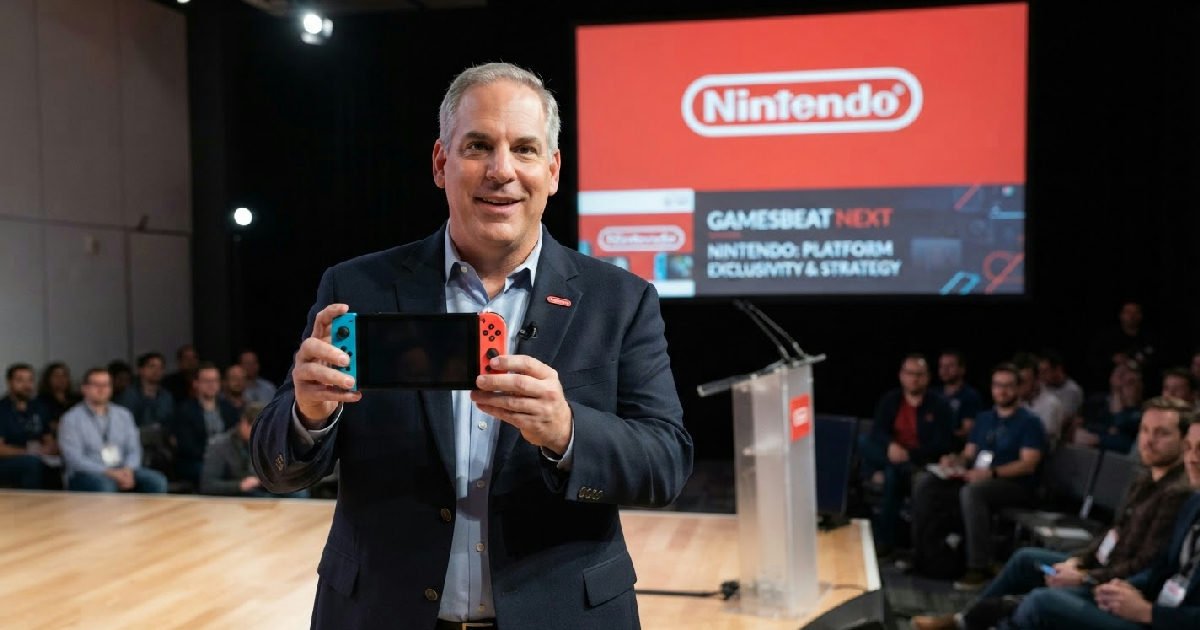
Doug Bowser affirms Nintendo platform exclusivity
Doug Bowser, former President and Chief Operating Officer (COO) of Nintendo of America, recently reaffirmed Nintendo’s steadfast commitment to platform exclusivity for its video games. Speaking at the GamesBeat Next Legends Panel, Bowser reiterated a position he first articulated in an interview on 2021-09-23, asserting that the company doesn’t currently “feel the need” to bring its popular intellectual properties (IPs) to rival platforms.
Bowser, who retired from his Nintendo role on December 31, 2025, and joined the Board of Directors for Hasbro on January 20, 2026, participated in the panel alongside other industry veterans like Peter Moore and Shawn Layden. His remarks underscore a foundational philosophy at Nintendo. An integrated approach means software development is deeply intertwined with hardware creation.
Nintendo platform exclusivity and an integrated hardware-software vision
This symbiotic relationship aims to optimize performance and cultivate a unique “Nintendo universe” experience for players. It’s a strategy designed to differentiate Nintendo in an increasingly competitive market.
Nintendo’s approach to game development isn’t just a business decision; it’s a design philosophy deeply rooted in its history. The company’s software and hardware teams work in close conjunction, a strategy Bowser highlighted as crucial for optimizing game performance and managing development costs.
This collaborative model, he explained, allows Nintendo to deliver highly polished experiences tailored specifically for its own consoles, differentiating it from many industry peers. This exclusivity fosters a strong brand identity and encourages consumers to invest in Nintendo’s platforms.
This integrated development process also offers a notable advantage in managing production costs. Bowser specifically pointed out the significant gap in development costs at Nintendo compared to other companies.
He attributes this efficiency to the tight collaboration between hardware and software teams. By optimizing games directly for their proprietary platforms, Nintendo achieves high performance without incurring massive development expenditures. This contributes to healthier profit margins for the company.
Diverging paths in the console market
Nintendo’s unwavering commitment to Nintendo platform exclusivity stands in stark contrast to the evolving strategies of its primary competitors, Microsoft and Sony. Both companies have, in recent years, shown a willingness to broaden the reach of their once console-exclusive titles.
Microsoft, for instance, has long pursued a multi-platform direction for Xbox, aiming for its content to be accessible across various devices, including PCs and mobile platforms, through services like Game Pass. This strategy dates back to 2014, with Phil Spencer’s arrival.
Sony, while historically reliant on exclusives to drive PlayStation hardware sales, has also notably shifted its stance. Since 2020, major first-party PlayStation titles such as Horizon Zero Dawn and God of War have found their way to PC, often years after their console debut. This move was initially seen as a way to expand intellectual property reach.
More recent reports suggest a potential scaling back for narrative-driven single-player games on PC, possibly due to concerns about brand dilution and hardware revenue impact. Still, their willingness to experiment with broader availability marks a significant departure from Nintendo’s current position.
The enduring success of Nintendo’s exclusive platforms
Nintendo’s confidence in its exclusivity model is largely bolstered by the phenomenal success of its dedicated hardware. The original Nintendo Switch, for example, has sold an astounding 157.20 million units worldwide as of September 30, 2026.
This places it as the second best-selling console of all time, rapidly approaching the PlayStation 2’s record of 160 million units. This demonstrates the immense drawing power of Nintendo’s exclusive game library, which includes iconic franchises such as Mario, Zelda, and Pokémon.
Furthermore, the recently launched Nintendo Switch 2 has also shown strong performance, selling 26.35 million units worldwide since its release. Nintendo reported a net profit of 220.92 billion yen for the half-year ending September 2026, an 11% increase year-over-year.
This financial health, driven by software, digital sales, and licensing, reinforces the company’s belief that its current strategy effectively captures and retains market share. It proves they don’t need to port games to other systems.
Doug Bowser’s evolving industry role
Doug Bowser’s recent comments echo views from his time leading Nintendo of America, though his perspective now comes from a different vantage point. After a distinguished career at Nintendo, he transitioned to the Board of Directors for Hasbro.
This new role provides him with a broader view of the entertainment and gaming industry, extending beyond console manufacturing. His participation in the GamesBeat Next Legends Panel alongside other influential figures highlights his continued prominence and thought leadership.
The panel itself focused on the industry’s perceived reluctance to embrace creative risks. Nintendo’s singular focus on crafting unique experiences within its own ecosystem might be seen as a form of calculated risk, prioritizing depth over widespread platform availability.
The conversation often circles back to the idea of dedicated “universes,” much like The Legend of Zelda franchise has built, reinforcing the value of platform-specific content.
Broader implications for game development and player choice
Nintendo’s firm stance on platform exclusivity inevitably shapes the broader game development landscape. By tightly controlling both hardware and software, the company can maintain specific performance targets and artistic visions. This often results in games that are uniquely optimized for their platforms, pushing the boundaries of what’s possible within their ecosystem.
However, it also means that millions of potential players on other consoles or PC will never experience these titles unless they purchase a Nintendo system. For players, this creates a choice: invest in the Nintendo ecosystem for its unique offerings, or forgo them entirely.
In an industry increasingly defined by accessibility and cross-platform play, Nintendo remains a powerful outlier. It demonstrates that a curated, exclusive experience can still be a tremendously successful model.
This strategy introduces a fascinating dynamic, forcing other companies to constantly re-evaluate their own approaches to platform strategy and player engagement.
Looking ahead in a dynamic industry
The gaming industry is constantly in flux, with technology evolving rapidly and player expectations shifting. Doug Bowser’s remarks confirm that, for now, Nintendo remains confident in its distinctive path.
The company continues to explore other avenues for IP expansion, such as theme parks and movies. Bowser believes these introduce more people to their characters and worlds.
While Nintendo stated in 2021 that it’s “constantly looking at technology” like cloud gaming, Bowser explicitly mentioned that the company is not looking to “port our content to other platforms.” This suggests any future technological integrations would likely enhance the existing Nintendo experience.
These enhancements would not extend its core game library to competitor hardware. As the market continues to evolve, Nintendo’s commitment to its unique ecosystem will remain a key factor in its ongoing success and influence within the global gaming community.