

Best Sonic games of all time ranked as SEGA nears 35th anniversary milestone
Sonic the Hedgehog officially turns 35 on June 21, 2026, marking three and a half decades since the blue blur first sprinted onto the SEGA Mega Drive in 1991.
While North America generally observes June 23 as the franchise’s launch date, historical records show that retailers in the United Kingdom were selling copies of the debut title as early as June 21.
This anniversary serves as a major milestone for a character that has successfully transitioned from a 16-bit icon to a versatile mascot appearing on every major modern platform.
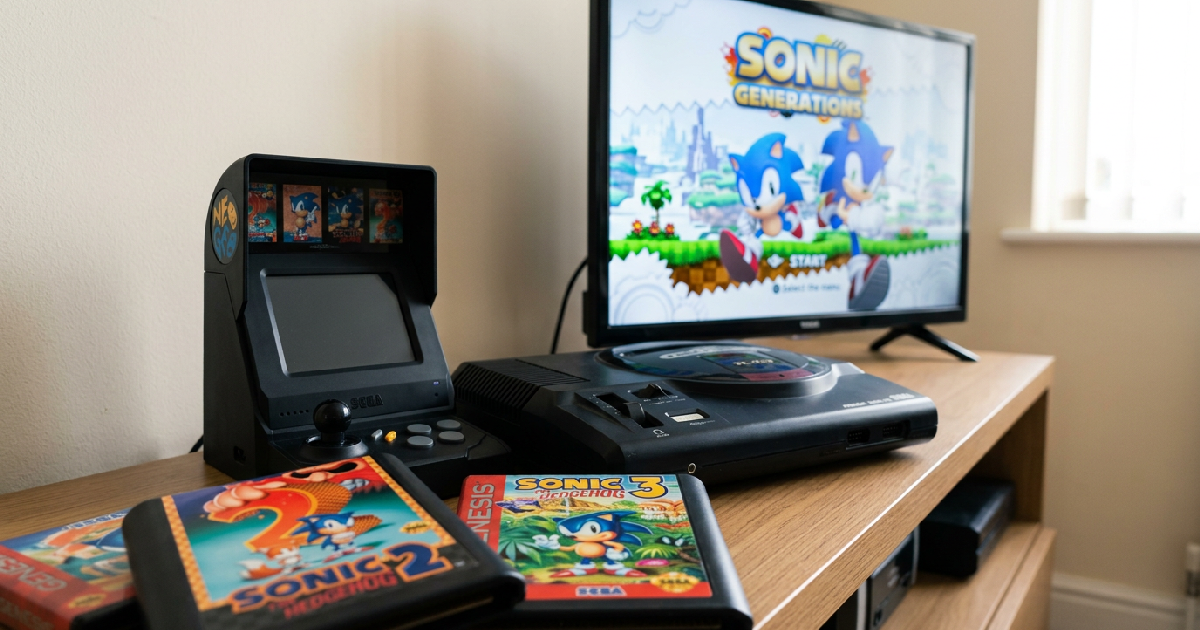
Sonic Generations remains the definitive celebration of the franchise
The anniversary comes at a time when the franchise’s popularity is surging, bolstered by a mix of high-speed platforming and cross-media expansion. Critics and fans are currently revisiting the mascot’s extensive library, which includes over 40 platforming titles ranging from undisputed 2D classics to experimental 3D adventures.
Despite some turbulent eras, the blue hedgehog has demonstrated remarkable staying power, outlasting many of his 90s peers to remain a pillar of the gaming industry.
SEGA has used the lead-up to this milestone to republish definitive rankings of its mainline platformers. These retrospective lists highlight a clear consensus on which titles represent the “peak” of Sonic’s speed. Gamers looking to catch up on these hits often find them bundled in modern collections or featured in seasonal promotions like the Xbox Deals Unlocked Sale 2026, which frequently highlights legacy franchises.
Originally released in 2011 to mark the series’ 20th anniversary, Sonic Generations has secured its spot as the top-ranked title in multiple modern critical assessments. Developed by Sonic Team, the game blends “Classic” and “Modern” gameplay styles, recreating iconic zones like Green Hill and Chemical Plant.
It serves as a comprehensive history lesson, featuring levels and bosses from across the timeline, including those from Sonic Adventure and the 2006 series reboot.
IGN and Hardcore Gamer both ranked the title as the number one Sonic experience in late 2024 and early 2025 respectively. Critics praise its ability to evoke nostalgia through refined mechanics rather than just shallow references. By combining the “boost” style of the modern era with tight side-scrolling platforming, it remains the gold standard for how to celebrate a legacy franchise.
Sonic Mania and the return to 2D roots
While Generations celebrates the whole history, Sonic Mania is widely regarded as the best pure 2D entry in the series. Developed by PagodaWest Games in collaboration with SEGA, the 2017 release was a “love letter” to the original Genesis trilogy. It famously took the physics and aesthetics of the 1990s games and infused them with new ideas and refined visual fidelity.
The game introduced standout new levels such as Studiopolis and Mirage Saloon Zone, which fans claim surpass some of the 16-bit stages that inspired them. Mania’s high replayability, driven by hidden collectibles and rewards, solidified it as a title every platforming fan should play. It effectively proved that there was still a massive market for high-quality, pixel-art Sonic adventures in the modern era.
The 16-bit origins and the Sonic 3 & Knuckles legacy
For many purists, the 1990s output on the Mega Drive represents the pinnacle of the character’s design. Sonic 3 & Knuckles stands out as a “complete and rich experience” that was originally intended to be a single game.
Due to development deadlines, it was split into two separate cartridges, but when combined, it offers the most complex and rewarding level design in the 2D series. It introduced save files and unique abilities for Knuckles that expanded exploration.
Sonic the Hedgehog 2, released in 1992, remains arguably the most popular entry based on cultural impact. It introduced the sidekick Tails and the fundamental “Spin Dash” mechanic. According to GamesRadar, it remains a standard of any Genesis collection and often tops lists of the best Sonic games ever made.
For players tracking newer blockbusters like the next Grand Theft Auto, these retro classics still offer a masterclass in momentum-based gameplay.
Experimental 3D transitions and the best of the modern era
The transition to 3D has been notoriously difficult for the franchise, yet some titles emerged as “touchstones” of the medium. Sonic Adventure 2: Battle on the GameCube is frequently cited for its iconic soundtrack, featuring tracks like “Live and Learn” and “City Escape.”
While its treasure hunting and shooting stages were more divisive, the high-speed Sonic and Shadow levels are considered some of the best 3D platforming ever produced by Sonic Team.
Sonic Colors, released in 2010, is often credited with giving the series a “much-needed shot in the arm.” It simplified the narrative and introduced the Wisp power-up system, which added variety to the linear, fast-paced stages.
This game also marked the debut of Roger Craig Smith as the voice of Sonic, a role he has maintained through the character’s 35th-anniversary milestone. Other gaming events, such as the Combo Breaker 2026 crossover news, show how legacy characters can continue to find new life through modern collaborations.
Exploring the lower rankings and technical failures
The 35-year journey has not been without significant failures. Sonic Boom: Rise of Lyric for the Wii U is frequently cited as the lowest point in the brand’s history. Released in 2014, it was panned for a vacant open world and severe technical glitches.
Similarly, Sonic Labyrinth for the Game Gear is often criticized for removing speed—the character’s defining trait—in favour of slow, isometric puzzle-solving that failed to engage players.
Despite these lows, the mascot’s “staying power” remains his most impressive attribute. Whether it is through the sword-fighting of Sonic and the Black Knight or the third-person shooting of Shadow the Hedgehog, SEGA’s willingness to experiment has kept the brand relevant.
As the 35th birthday festivities continue through June 2026, the focus has returned to the core ingredients of speed, attitude, and refined platforming that first made the hedgehog a star in 1991.