

Bitcoin climbs above $64,000 as altcoins slide and miners shift to AI infrastructure
Bitcoin (BTC) pushed back above the $64,000 mark on Tuesday, August 18, posting a solitary gain in a crypto market where most other major digital assets continued to drift lower. Trading at $64,150.17, Bitcoin climbs above $64,000 with a gain of 1.09% for the day.
This upward movement stands in stark contrast to its peers, highlighting a significant divergence in the near-term performance of the leading cryptocurrency.
Bitcoin climbs above $64,000 as altcoins slump
This limited strength suggests that capital is consolidating into the most established digital asset as overall risk appetite shrinks. However, analysts warn that the price remains stubbornly confined to a tight trading range. This split performance comes against a backdrop of deep structural changes within the crypto industry, particularly the strategic shift of miners toward artificial intelligence and heightened geopolitical tensions.
On Tuesday, Bitcoin was the only major cryptocurrency to record a meaningful daily advance, climbing over 1% on the day. The token is also marginally higher on the week, showing isolated bullish momentum. This strong performance relative to its rivals suggests that institutional and retail interest remains laser-focused on the sector’s bellwether.
The rest of the crypto market largely registered declines or flat performance. Ethereum (ETH), the second-largest token, eased 0.12% to trade at $1,895.76, though it still holds an almost 1% weekly gain.
XRP saw one of the sharpest drops among the large-cap tokens, falling 0.56% to $0.99. XRP is now down more than 2% over the last seven days, marking it as the weakest performer in the group. This current market action continues a pattern of divergence, bucking historical trends where altcoins often followed or amplified Bitcoin’s movements during periods of crypto market stability.
Other notable assets also showed weakness. Dogecoin dropped nearly half a percent to seven cents, indicating a broader risk-off mood across the altcoin space. Solana (SOL) was nearly flat, posting a small 0.63% increase to $75.82, while BNB and tron both slipped marginally. The smaller token Hyperliquid’s HYPE provided an exception, rising nearly 1% and achieving a robust 7.5% weekly gain to just over $59.
Technical resistance keeps sellers in control
Despite the encouraging daily price rebound, technical indicators suggest that market control still rests with sellers. The recent move above $64,000 has not been enough to reverse the broader technical outlook. Traders are waiting for a decisive breakout to confirm any genuine shift in market sentiment, especially on longer timeframes.
Alex Kuptsikevich, chief market analyst at FxPro, observed that Bitcoin has now spent four consecutive days below its 50-day moving average. An earlier attempt to breach this level had failed to establish a sustained rally. This weakness is compounded by the longer-term view, where the price remains below its 200-week average.
Kuptsikevich argues that these technical readings keep sellers firmly in command of the medium- and very long-term trends. He asserts that the market outlook will not fundamentally change until the Bitcoin price leaves its current, entrenched range. That range is defined by strong support at $62,000 and resistance at $65,000. A sustained break above the higher limit is necessary to invalidate the bearish outlook.
Bitcoin miners shift focus to AI infrastructure
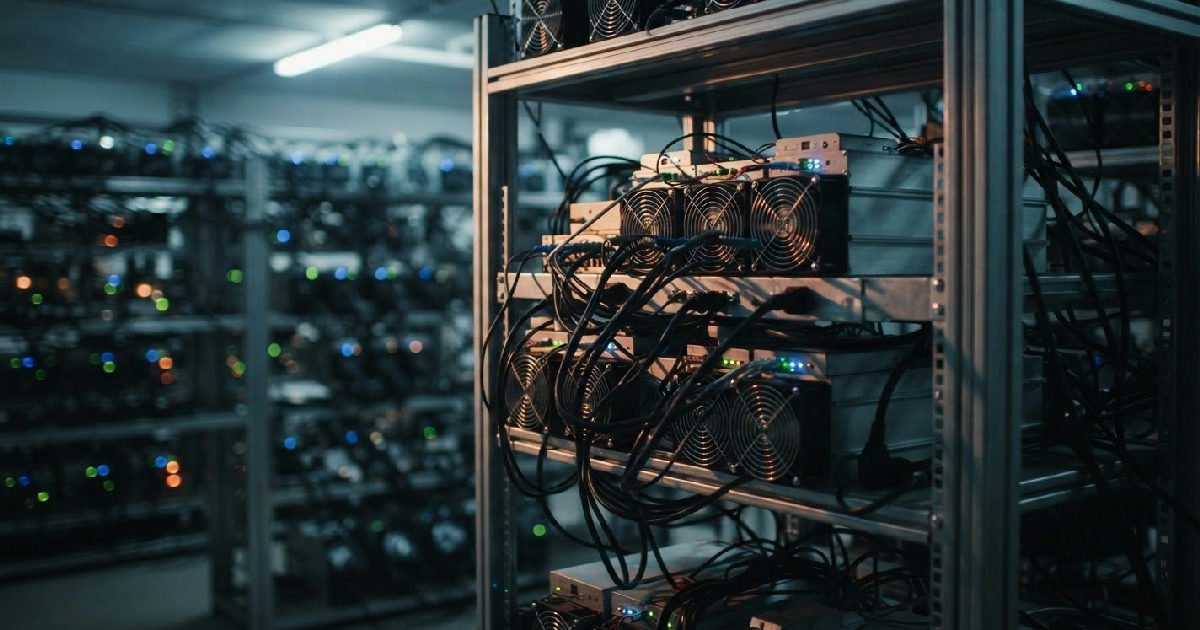
Beneath the daily volatility, the underlying structure of the Bitcoin network is undergoing a quiet, fundamental change. Publicly listed miners are increasingly shifting their operational capacity away from cryptocurrency mining. They are instead redeploying power resources toward the burgeoning demand for artificial intelligence infrastructure.
According to a detailed report by Miner Weekly, these publicly traded mining operations have reduced their combined computing power by 21%. This reduction has occurred over the span of three fiscal quarters, representing a massive shift in capital deployment. This strategic pivot is driven primarily by weak mining economics, which have squeezed profitability for large-scale operations.
The competition from the AI sector for both investment capital and critical electrical power has intensified. For many miners, repurposing their expensive hardware for AI computing offers a more predictable and potentially more profitable revenue stream. This reallocation demonstrates the complex, dual-use nature of digital asset infrastructure.
The economics behind the hashrate reduction
The economics of Bitcoin mining are continually challenged by network difficulty adjustments and the quadrennial halving event. These factors significantly reduce the revenue generated per unit of hashrate. High energy costs further compress already tight profit margins, forcing miners to seek alternatives.
AI requires massive computing data centers and stable, high-capacity electrical grids. Bitcoin miners already possess this specialized infrastructure. By leasing their existing capacity to AI firms, miners gain a more stable income source, mitigating volatility inherent in the Cboe BZX Exchange filings and general crypto markets. They are making a calculated bet on the computational demands of AI over the fluctuating returns of block rewards.
This trend underscores a broader integration where the infrastructure originally built for decentralized finance is being leveraged by centralized technology sectors. The infrastructure’s versatility provides a crucial economic lifeline for publicly traded mining companies facing difficult market conditions and rising operational costs.
Venice AI showcases successful crossover
While some view the AI industry as competition for scarce resources, the platform Venice demonstrates a powerful synergy between the two sectors. Venice, an AI platform founded by serial crypto entrepreneur Erik Voorhees, recently announced a significant financial milestone. The company reported that it had crossed $100 million in annualised revenue.
This impressive revenue figure immediately boosted investor confidence in the project. The company’s native digital asset, the VVV token, reacted sharply to the news. The VVV token climbed 10% on the day, trading around $13.30 following the announcement.
The success of Venice highlights a key emerging narrative in the digital asset space: projects that effectively merge decentralized Web3 concepts with high-growth AI applications are attracting major capital. This blend validates the strategic pivot seen among miners who are recognizing the commercial potential of high-performance computing beyond traditional Bitcoin mining.
Broader macro fears return to global markets
The cryptocurrency market’s cautious movement is overshadowed by renewed inflationary concerns stemming from global geopolitical events. Increased oil prices and geopolitical conflict have cast a long shadow, driving a wider risk-off sentiment. These external factors introduce significant volatility for risk assets of all kinds, including digital currencies.
Oil prices surged higher after several international developments sparked supply fears. Brent crude oil rose over half a percent to surpass $91 a barrel. This spike was driven by President Donald Trump’s signal that he would not renew an expiring agreement with Iran.
Simultaneously, fighting flared up again in Lebanon, further intensifying regional instability and heightening energy market anxiety. Higher energy prices immediately trigger worries that persistent inflation will gain pace. This is especially true given the current global economic backdrop.
These worries quickly transferred to fixed-income markets. Asian bonds and U.S. Treasuries both declined on rising concerns about government finances and future borrowing costs. The increase in perceived risk sent stocks and futures falling, demonstrating how tightly connected the crypto and traditional markets remain.
Market anxieties stemming from political and military conflict abroad continue to dictate sentiment for assets like Bitcoin, regardless of internal crypto developments or price resilience.