

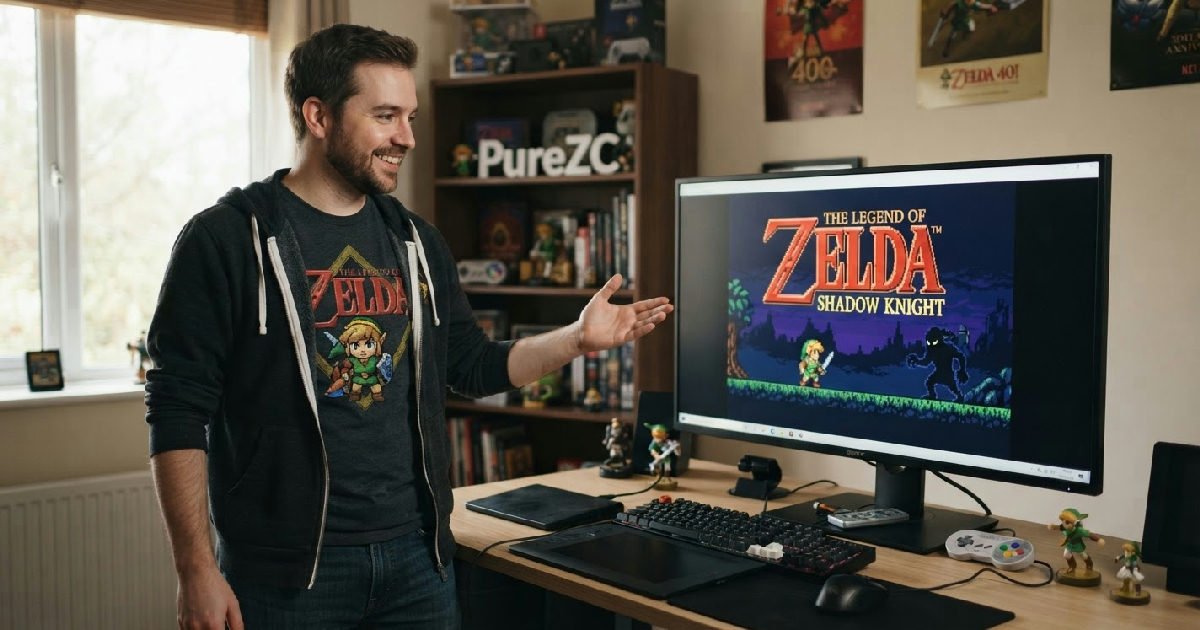
Blackpaintbowser Legend unveils Zelda Shadow Knight fan game
A new, free fan game titled The Legend of Zelda: Shadow Knight has officially launched, offering players a classic-style adventure deeply rooted in the series’ origins. Created by developer Blackpaintbowser and hosted on the PureZC platform, this brand-new quest arrived on November 7, 2026. It provides a nostalgic experience for long-time fans, especially as the broader Zelda franchise currently enjoys significant attention.
The release of The Legend of Zelda: Shadow Knight comes amidst a major wave of official franchise news, most notably the recent launch and critical acclaim of The Legend of Zelda: Ocarina of Time remake. While Nintendo’s latest official title captivates many, this fan-made project offers a distinct, complementary experience for enthusiasts. It underscores the vibrant community engagement that continually expands the beloved Hyrule universe.
Blackpaintbowser legend unveils a new old-school adventure
The Legend of Zelda: Shadow Knight draws heavily from the aesthetic and gameplay mechanics of the original Legend of Zelda titles. Players can expect an iconic pixel art style, reminiscent of the Nintendo Entertainment System era, paired with a brand-new story. This approach aims to deliver a sense of familiarity while introducing fresh challenges and narrative elements.
Built using ZQuest Classic, a dedicated engine for crafting fan-made Zelda games, Shadow Knight promises approximately three hours of new content. The creator has filled the quest with unique puzzles, distinct events, and a variety of bosses, including the titular Shadow Knight. Its visual design features an overwhelmingly purple aesthetic, helping it stand out among other fan creations.
Early reception for Shadow Knight has been positive. Despite its recent release, the game has garnered an impressive 4.5/5 rating on PureZC. It also earned recognition by winning the Fall 2026 Quest Rebirth Contest, indicating its quality and appeal within the fan community.
Fan creativity drives enduring Zelda engagement
The development of games like The Legend of Zelda: Shadow Knight highlights the robust and creative energy within the Zelda fanbase. Platforms like PureZC serve as crucial hubs for these projects, fostering a community where developers can share their creations. This site has hosted hundreds of fan quests since its launch in May 2002.
ZQuest Classic, the engine behind Shadow Knight, is instrumental to this ecosystem. Originating as “Zelda Classic” in 1999, this free, open-source engine has evolved over two decades, allowing creators to build top-down adventure games without extensive coding knowledge. It democratizes game development, enabling passionate fans to contribute their own visions of Hyrule.
Shadow Knight is not an isolated example of this thriving scene. Another notable ZQuest Classic project, The Legend of Zelda: The Rosemaster, recently released, offering an expansive 50 to 80 hours of new content. Such projects underscore the dedication of the community to continually expand the universe with original stories and gameplay.
Nintendo’s complex approach to fan projects
While fan-made games like The Legend of Zelda: Shadow Knight are celebrated by their communities, they often operate in a complex legal landscape concerning intellectual property. Nintendo, known for rigorously protecting its brands, has a history of issuing cease and desist letters or DMCA takedowns against fan projects that utilize its assets.
The company’s enforcement can appear unpredictable. Legal action often intensifies if a fan project gains significant press, seeks funding through platforms like Kickstarter, or is perceived as commercially exploiting Nintendo’s intellectual property. Projects that are free and non-commercial, like Shadow Knight, sometimes fly under the radar, but no fan creation is entirely immune.
Past examples include the shutdown of *Full Screen Mario* in 2013 and the popular *Pokémon Uranium* in 2016. More recently, *Metroid Prime 2D* faced a takedown in 2021. The unpredictability creates uncertainty for creators, as projects can remain untouched for years before suddenly facing legal challenges.
A banner year for The Legend of Zelda franchise
The Legend of Zelda: Shadow Knight arrives during what can only be described as a landmark year for the official franchise. Nintendo released the highly anticipated The Legend of Zelda: Ocarina of Time remake on November 5, 2026, for the Nintendo Switch 2.
This remake has been met with universal acclaim, earning a 96 out of 100 on Metacritic and a perfect 100% on OpenCritic.
The year 2026 also marks the 40th anniversary of The Legend of Zelda series, a milestone celebrated by fans and the industry alike. This anniversary year has seen significant developments beyond game releases, including the announcement of a live-action The Legend of Zelda movie scheduled for April 30, 2027. Nintendo has also partnered with Hasbro for a multi-year toy collaboration beginning in 2027.
The franchise’s commercial power remains undeniable. Recent mainline entries, The Legend of Zelda: Breath of the Wild (2017) and The Legend of Zelda: Tears of the Kingdom (2023), have collectively sold over 55 million copies.
An enhanced version of Breath of the Wild also launched for the Nintendo Switch 2 in June 2025, further extending the reach of these celebrated titles. Such widespread appeal consistently fosters a passionate and deeply engaged fan base.
The enduring appeal of fan-made experiences
The continued emergence of sophisticated fan games like The Legend of Zelda: Shadow Knight speaks to several core aspects of the gaming community. For many players, these projects offer a crucial bridge between official releases. They satisfy the desire for more content, allowing fans to explore familiar worlds through new lenses.
Moreover, fan games often tap into a strong sense of nostalgia, particularly when they emulate classic styles that defined earlier gaming eras. Shadow Knight‘s pixel art and classic adventure design directly cater to this, appealing to those who grew up with the original Zelda titles. It’s a love letter from fans, to fans.
These creations also foster a deeper sense of community. The collaborative nature of development, the sharing of resources via platforms like PureZC, and the collective excitement around new releases strengthen the bonds among enthusiasts. This creative output ensures that the spirit of exploration and adventure, central to The Legend of Zelda, continues to evolve in unexpected ways.