

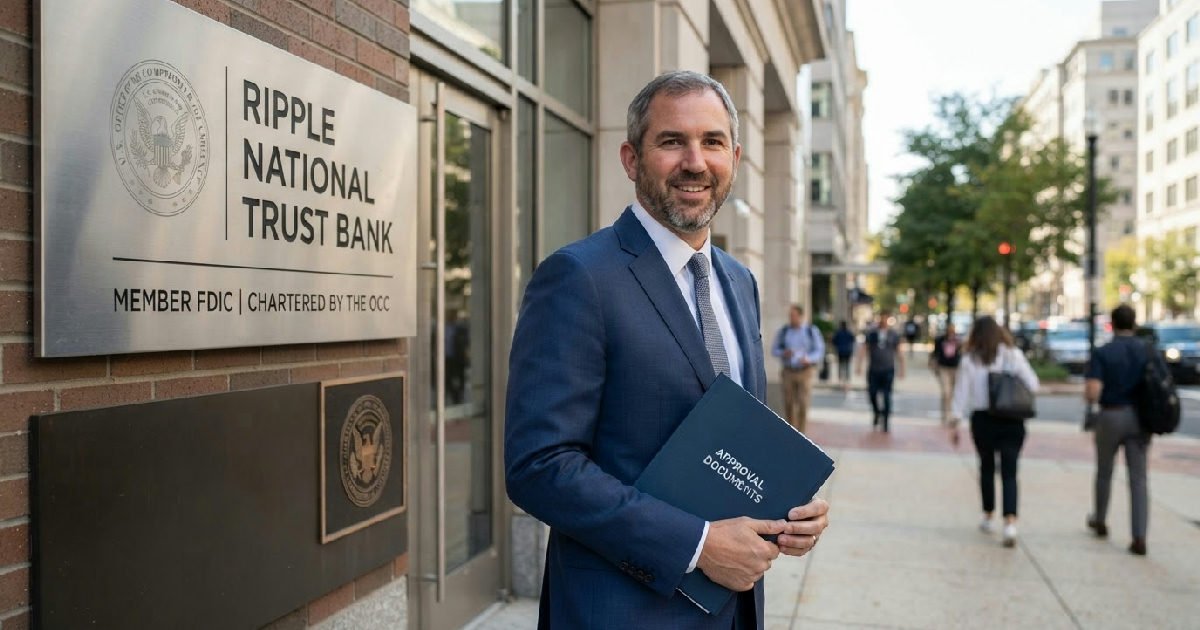
Ripple National Trust Bank gets final OCC approval
Ripple, the blockchain and crypto solutions provider, has received final authorization from the U.S. Office of the Comptroller of the Currency (OCC) to establish Ripple National Trust Bank (RNTB). This pivotal development, announced by Ripple CEO Brad Garlinghouse on X on Monday, October 26, 2026, marks a significant step towards integrating digital assets further into the regulated American financial system.
The approval allows Ripple to operate a specialized bank under federal supervision. It culminates a process that began with an application in July 2025 and saw conditional approval granted in December 2025. The move signals a clear regulatory pathway for one of the crypto industry’s major players, affirming the company’s strategy to build within established financial frameworks.
Ripple National Trust Bank: federal oversight
The establishment of Ripple National Trust Bank aligns with Brad Garlinghouse’s long-held belief that crypto and traditional banking systems should collaborate. He emphasized this point in a press release, stating that the final approval demonstrates this synergy in practice. Garlinghouse believes this integration builds trust and enables scalable solutions for institutions looking to engage with digital assets.
RNTB will operate as a federally supervised national trust bank, although it will not function like a traditional commercial bank. It won’t take deposits or issue loans, and its services are not covered by Federal Deposit Insurance Corporation (FDIC) insurance. Instead, its focus will be on crucial areas for digital asset adoption, setting a precedent for specialized crypto financial services.
Managing Stablecoin Reserves and Custody
A primary responsibility for the new Ripple National Trust Bank will be managing the reserves that back Ripple USD (RLUSD), the company’s dollar-backed stablecoin. These reserves, comprising U.S. dollar deposits, government securities, and cash equivalents, are fundamental to RLUSD’s value. The bank will also provide collateral trust services for RLUSD holders, ensuring robust oversight and investor confidence.
Additionally, RNTB will offer fiduciary digital asset custody services to corporate clients and enterprises. This means it will securely hold digital assets for large firms navigating payments, trading, and treasury management in the crypto space.
This brings federal OCC supervision directly into the infrastructure used by institutions, a move praised by Ripple’s Chief Legal Officer, Stuart Alderoty, who noted it shows commitment to “build within the regulatory perimeter, not around it.”
RLUSD’s Journey and Market Impact
Ripple’s stablecoin, RLUSD, has rapidly gained traction since its launch in December 2024. It has achieved a market capitalization of approximately $2.5 billion. This growth underscores the increasing demand for regulated, reliable digital assets in the broader financial landscape.
The issuance of RLUSD will continue through Standard Custody & Trust Company, Ripple’s New York-regulated entity. This means RLUSD now benefits from a dual layer of regulatory oversight, combining New York state regulation with federal supervision from the OCC via RNTB. BNY Mellon also serves as the primary reserve custodian for RLUSD, further solidifying its traditional finance ties.
Strategic Importance for Institutional Adoption
The regulatory clarity offered by a national trust charter is crucial for attracting mainstream institutional players to the crypto market. Ripple has consistently advocated for building within the existing regulatory framework, rather than attempting to circumvent it. This strategy, articulated by Alderoty, suggests that clear rules foster trust and enable growth for new financial systems.
This development comes as many institutions are looking for regulated entry points into digital assets. RNTB’s specialized focus fills a critical gap, providing a trusted intermediary for large-scale digital asset operations. This reinforces Garlinghouse’s assertion that “the revolution isn’t happening outside the system. It’s happening from within it.”
The Evolving Landscape of Crypto Banking
Ripple isn’t alone in seeking formal banking integration. The company now joins a growing list of crypto firms that have secured national trust bank status in the U.S. This cohort includes industry giants like Circle, which received final approval in July, and BitGo, whose approval came in December 2025. Fidelity Digital Assets also holds such a charter, demonstrating a wider industry shift.
Moreover, several other prominent crypto entities, such as Coinbase, Crypto.com, and Stripe’s stablecoin division Bridge, have garnered conditional approvals for similar operations. These approvals collectively highlight a clear trend: the crypto industry is maturing, increasingly operating under the scrutiny and guidance of federal financial regulators. This structured approach aims to mitigate risks and enhance stability for participants.
Regulatory Frameworks and Future Growth
This wave of approvals comes as the U.S. continues to refine its digital asset regulatory landscape. The implementation of the GENIUS Act, a significant piece of legislation establishing a framework for payment stablecoins, provides crucial clarity. Ripple’s RNTB, with its dual state and federal oversight for RLUSD, exemplifies compliance within this evolving environment.
The emphasis on robust regulatory frameworks is vital for attracting hesitant traditional financial institutions. Jack McDonald, Senior Vice President of Stablecoins at Ripple, articulated this impact, stating the charter “brings federal banking supervision directly into the infrastructure institutions use.” This level of assurance is indispensable for broader adoption and systemic integration of digital assets.
Broader Implications for Ripple and XRP
While Ripple National Trust Bank primarily serves the stablecoin and institutional custody segments, its establishment carries significant implications for Ripple’s broader ecosystem. The enhanced regulatory credibility provided by federal oversight strengthens the company’s position as a trusted partner for financial institutions worldwide. Ripple already holds over 85 global licenses, and RNTB adds a critical U.S. federal layer.
The move indirectly benefits the XRP ecosystem, even though the XRP token itself is not directly chartered by the bank. XRP, the world’s fifth-largest digital asset with a market cap of approximately $82 billion and currently trading around $1.30 to $1.31, is integral to Ripple’s cross-border payments infrastructure.
Greater institutional confidence in Ripple’s regulated offerings could foster wider use of its overall suite of products and services.
Anticipation Ahead of Ripple Swell
This landmark approval arrives just before Ripple’s annual Swell conference, where industry leaders and partners gather to discuss the future of blockchain and digital payments. CEO Brad Garlinghouse notably termed the decision “Big news” ahead of the event. Such a significant regulatory milestone is likely to be a central talking point, potentially unveiling further strategic initiatives.
The timing underscores Ripple’s methodical approach to intertwining innovation with regulatory compliance. This strategy aims to solidify its standing in the global financial system, providing a robust platform for future growth. The integration of traditional banking oversight into crypto operations signals a new era for digital assets, moving them further into the mainstream.