

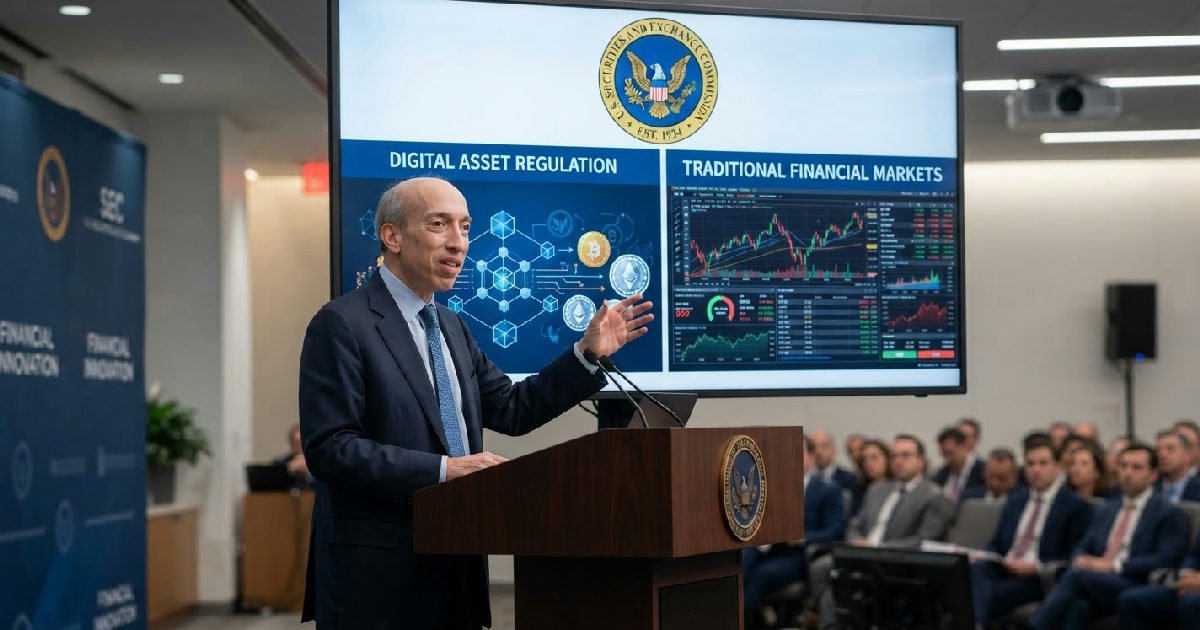
SEC flags tokenization in 2027 examination priorities
The U.S. Securities and Exchange Commission (SEC) announced on Thursday, October 23, 2026, that tokenization is a key examination priority for fiscal year 2027. S. Securities and Exchange Commission (SEC) announced on Thursday, October 23, 2026, its examination priorities for fiscal year 2027, prominently featuring tokenization for the first time.
This move signals a significant shift, placing blockchain-based financial products under a heightened level of regulatory scrutiny for investment advisers, brokers, and transfer agents across the nation.
While the SEC has not introduced new regulations or declared tokenization illegal, its inclusion in the FY2027 priorities indicates where the agency’s examination teams will concentrate their efforts. The goal remains to identify potential risks within these evolving financial instruments and ensure regulated firms adhere to existing securities laws, particularly regarding ownership, custody, cybersecurity, and overall compliance.
SEC Targets Tokenization for Enhanced Oversight
The explicit naming of tokenization as a priority marks a pivotal moment for the burgeoning sector. The SEC’s Division of Examinations, led by Division Director Keith Cassidy, highlighted that the transformation of traditional financial assets onto blockchain technology introduces novel challenges. These include ensuring clear ownership, secure custody solutions, robust cybersecurity measures, and comprehensive regulatory adherence.
This increased focus aims to verify that companies offering tokenized products are fully compliant with relevant securities laws, encompassing critical aspects like recordkeeping, clearing processes, and safeguarding client assets. It is a proactive step to manage the integration of these technologies into the broader financial system, rather than an attempt to prohibit innovation.
Significantly, the SEC’s document guides examination activity but does not impose new obligations or establish new rules specifically for tokenization at this stage. It acts as a clear directive for examiners and a warning shot for registrants to review their practices meticulously.
What Increased Scrutiny Means for Financial Firms
The SEC’s intensified focus on tokenization will have direct implications for various financial entities. Over 34,000 registrants, including investment advisers, investment companies, broker-dealers, clearing agencies, and transfer agents, are now on notice.
For these firms, the immediate consequence is the imperative to meticulously review and bolster their internal processes and systems. This includes ensuring robust controls for the ownership and custody of tokenized assets, implementing cutting-edge cybersecurity measures to protect blockchain-based products, and verifying comprehensive adherence to all existing securities laws.
Ultimately, this heightened scrutiny serves a dual purpose: to manage the inherent risks of emerging technologies and to reinforce investor confidence in a rapidly evolving market. This also comes amidst fluctuating market conditions, with Bitcoin ETFs experiencing volatility in recent months.
As Division Director Keith Cassidy indicated, the SEC’s adaptive approach ensures market conditions are met with appropriate oversight. Chairman Paul Atkins also underscored the importance of examinations as a “vital tool for promoting compliance and protecting investors.”
Key Areas of SEC Examination Focus for Tokenization
Impact on Clearing Agencies and Risk Management
For clearing agencies, examinations will delve into high-risk areas such as the management of defaults, recovery and wind-down procedures, securities lending, and general operations, with tokenization explicitly listed. Examiners will scrutinize policies, procedures, processes, and controls related to these blockchain-based assets.
Furthermore, covered clearing agencies will face assessments of their compliance with SEC’s Standards for Covered Clearing Agencies, particularly concerning financial risk management, operational risk, and governance frameworks.
Regulation SCI and Emerging Technologies
Reviews under Regulation SCI (Systems Compliance and Integrity) will broaden to encompass emerging trends, specifically citing the “tokenization of securities.” This sits alongside other cutting-edge areas like “super intelligence” (artificial intelligence), extended trading hours, and quantum computing.
Regulation SCI applies to national securities exchanges, registered clearing agencies, and alternative trading systems that meet specific trading-volume thresholds, ensuring the integrity of critical market infrastructure. While the 2027 transfer-agent section does not explicitly name tokenization, the ongoing scrutiny of transfer agents utilizing emerging technology continues from 2026.
A Shifting Regulatory Landscape for Digital Assets
This strategic move by the SEC reflects an evolving approach to digital assets, signaling a more granular focus on specific technologies like tokenization rather than broad categories. It also marks a departure from previous years.
Notably, this marks the second consecutive year that “crypto” or “digital assets” has been absent as a standalone focus from the SEC’s examination priorities, having been dropped from the FY2026 list. This indicates a shift away from a broader, often enforcement-heavy, approach characteristic of earlier periods.
Instead, the agency is now targeting specific technological implementations, providing more focused guidance for firms navigating the complexities of blockchain-based financial instruments. Such targeted oversight aligns with the SEC’s broader strategic vision, as detailed in its Strategic Plan for Fiscal Years 2026 through 2030.
This comprehensive plan aims to establish a robust regulatory foundation for digital assets and distributed ledger technologies. It focuses on clarifying the boundaries of securities law for digital assets, facilitating compliant capital formation through tokenized offerings, and fostering the development of secure on-chain financial infrastructure, all crucial for the industry’s future growth.
From Broad Crypto to Specific Tokenization
The fiscal year 2026 priorities did not specifically mention tokenization. More notably, “crypto” or “digital assets” as a standalone focus area has been absent from the SEC’s priorities for the second consecutive year, having been dropped from the FY2026 priorities released in November 2025.
This shift suggests a move away from the more enforcement-heavy approach seen under former Chairman Gary Gensler, opting instead for targeted examination of specific technological implementations.
The SEC’s broader strategic vision, outlined in its Strategic Plan for Fiscal Years 2026 through 2030, aims to establish a robust regulatory foundation for digital assets and distributed ledger technologies. This comprehensive plan includes clarifying the boundaries of securities law for digital assets, facilitating compliant capital formation through tokenized offerings, and fostering the development of secure on-chain financial infrastructure.
Defining Tokenization and Regulatory Precedents
Tokenization involves the representation of rights in an asset through a digital token, recorded on a blockchain or similar distributed ledger. Tokenized securities are essentially financial instruments, such as stocks, bonds, or fund interests, that are formatted as or represented by a crypto asset on a blockchain.
These can manifest in several models: issuer-sponsored, where a company directly issues the security on a blockchain; custodial, where a third party holds the underlying asset and issues a token representing an indirect interest; or synthetic, where a third party issues a linked security offering exposure to a referenced asset.
The SEC has been laying the groundwork for this. On March 17, 2026, it issued an interpretive release to clarify that tokenized securities fall under federal securities laws and are therefore subject to SEC regulation. This regulatory development coincides with continued innovation and shifts among key players in the crypto venture capital landscape, as seen with changes in leadership at a16z.
The agency has also launched formal rulemaking to replace earlier interpretive guidance, proposing a “Regulation Crypto Assets” framework and two fundraising exemptions, including a modified Regulation A pathway, to provide greater clarity for token issuers.
Broader Market Trends and Industry Adoption
The SEC’s intensified scrutiny comes as the real-world asset (RWA) market, where tangible assets are tokenized, continues its rapid expansion. This growth has fueled significant competition among various platforms and blockchain networks, indicating a maturing ecosystem.
While Ethereum (ETH) has historically been the dominant blockchain for tokenized assets, other networks such as Solana (SOL) and BNB Chain are steadily gaining traction, offering alternative infrastructures for these digital representations of value. This diversification suggests a healthy competition that could drive further innovation and efficiency within the tokenization space.
As traditional finance increasingly explores and adopts blockchain technology, new ventures are emerging. For example, a joint venture between OKX and Intercontinental Exchange recently filed plans to launch a platform that would offer tokenized shares in over 60 U.S.-listed companies, showcasing the mainstreaming of tokenized securities.
Meanwhile, the market dynamics for RWA perpetual futures trading reveal a growing assertiveness from centralized exchanges. Platforms like Binance and OKX are capturing an increasing share of this trading volume, indicating aggressive competition with on-chain decentralized platforms for liquidity and trading activity. This trend highlights the ongoing convergence and competition between traditional crypto trading venues and newer blockchain-native financial infrastructures.
Implications for the Future of Tokenized Finance
The SEC’s decision to prioritize tokenization for its 2027 examinations sends a clear message to the financial industry: innovation must proceed hand-in-hand with robust compliance. This isn’t just about checking boxes; it’s about instilling confidence and ensuring investor protection as increasingly complex financial products migrate to blockchain rails.
For firms operating in or looking to enter the tokenized asset space, this means a need for enhanced internal controls, transparent operational procedures, and a deep understanding of how existing securities laws apply to their novel offerings. It will likely spur greater investment in compliance technology and legal expertise within these organizations.
Ultimately, this heightened regulatory focus, while potentially presenting initial hurdles, could foster a more secure and credible environment for tokenization to thrive. By addressing potential risks proactively, the SEC aims to build a more resilient market infrastructure, ensuring that the benefits of blockchain technology can be realized without compromising financial stability or investor trust.
The ongoing rulemaking efforts, particularly the proposed “Regulation Crypto Assets,” are expected to provide much-needed clarity, reducing uncertainty and paving the way for more widespread, compliant adoption of tokenized assets.
Frequently Asked Questions
- What is tokenization?
- Tokenization is the process of converting rights to an asset into a digital token on a blockchain. This allows for fractional ownership, increased liquidity, and automated management of assets.
- Why is the SEC focusing on tokenization now?
- The SEC is including tokenization in its 2027 examination priorities due to the rapid growth of the sector and the novel challenges it presents regarding ownership, custody, cybersecurity, and compliance with existing securities laws.
- Does this mean tokenization is illegal?
- No, the SEC has not declared tokenization illegal or introduced new regulations prohibiting it. Instead, its inclusion in the priorities indicates an area where examination teams will focus their efforts to ensure compliance with existing laws.
- What should firms do in response to this SEC focus?
- Firms should review their practices meticulously, enhance internal controls, ensure transparent operational procedures, and deepen their understanding of how existing securities laws apply to their tokenized offerings. This may involve investing more in compliance technology and legal expertise.