

India-US trade talks nearing conclusion: Jaishankar
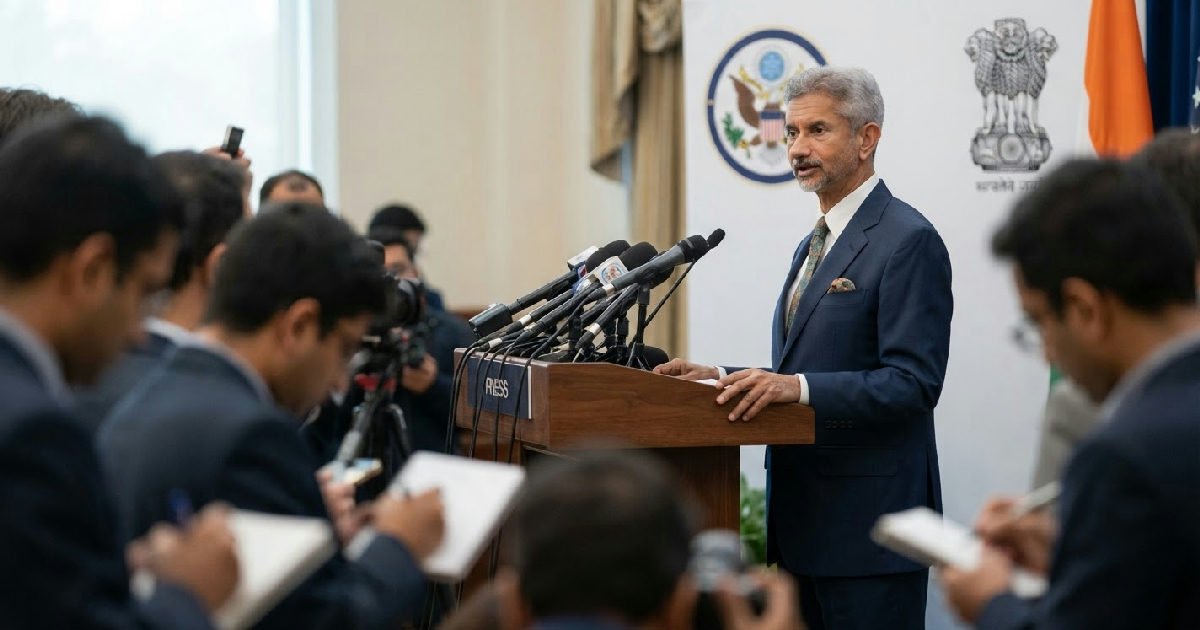
India’s External Affairs Minister Subrahmanyam Jaishankar announced on September 29, 2023, that India-US trade talks with the United States were “heading in the right direction.”
Speaking in Washington D.C., he highlighted this progress, while also indicating during a special interaction in New York on the same day that “more or less an understanding on the trade agreement” had been reached, signaling significant advancements in the complex bilateral discussions.
Progress in India-US Trade Talks
However, the Indian minister cautioned that final details remained to be resolved. These lingering issues primarily revolve around changes in US tariff rules and the ongoing Section 301 process, which still require careful navigation by both nations.
The optimistic assessment from Subrahmanyam Jaishankar highlights recent breakthroughs in India-US trade. A key achievement was the resolution of the seventh and final outstanding World Trade Organization (WTO) dispute between the two countries, which was formally announced in September 2023. Six previous disputes had already been settled in June 2023, marking a considerable step towards reducing trade friction.
Beyond dispute resolution, both nations have made concrete concessions. India agreed to remove additional duties on specific US products, including chickpeas, lentils, almonds, walnuts, and apples. Concurrently, the United States granted market access for Indian mangoes and pomegranates and restored access for Indian wild-caught shrimp. These moves represent tangible efforts to ease trade barriers and foster greater economic cooperation.
The mutual steps taken by India and the US reflect a concerted effort to foster stronger economic partnerships. These reciprocal actions are crucial for building confidence and paving the way for more comprehensive trade agreements in the future.
Navigating Remaining Hurdles
Despite the positive trajectory, significant challenges persist, particularly concerning the US Section 301 process and evolving tariff regulations. Jaishankar specifically noted that the “301 process is still in the works, it’s still unfolding.” This highlights the complexity of concluding an agreement when such significant trade policy tools are actively in play.
Section 301 of the US Trade Act of 1974 empowers the US to investigate trade practices it deems unfair and impose retaliatory measures, including tariffs. In July 2023, the US Trade Representative (USTR) implemented final measures under Section 301, which included an additional 10% tariff on certain Indian imports, following an investigation into forced-labor-related import restrictions.
Jaishankar also underscored fundamental differences in the economic structures of India and the United States. He explained that India, with its vast base of small farmers and producers, requires a meticulous and patient approach to trade negotiations.
“So, a trade negotiation required a certain amount of, I think, of patience and detailing to see it through,” he remarked, emphasizing that these structural disparities make a quick resolution challenging. Global markets have often felt the impact of such nuanced international trade relations.
Evolving Trade Volume and Economic Ties
The positive sentiment around the trade talks is underpinned by a robust and growing bilateral trade volume between India and the United States. In 2022, bilateral trade between the two nations surpassed $191 billion, indicating a strong economic relationship. This upward trend continued into 2023, with trade in goods and services expected to exceed $200 billion for the calendar year.
By 2025, US goods and services trade with India reached an estimated $239.6 billion, marking a significant 12.1% increase from 2024 figures. This included $45.4 billion in US goods exports to India and $103.8 billion in US goods imports from India. Such figures underscore the substantial economic interdependence that both countries share.
US Secretary of State Antony Blinken has echoed India’s positive outlook, affirming that both countries are “working together to resolve trade disputes” and are “deeply engaged” in strengthening their economic relationship. The overarching goal remains to resolve existing trade irritants and ultimately pave the way for a more comprehensive free trade agreement (FTA).
Broader Context of India-US Trade Diplomacy
The recent progress didn’t happen in a vacuum; it builds upon years of diplomatic engagement and ongoing dialogues. Key to these efforts are forums like the India-US Trade Policy Forum (TPF), which serves as a crucial platform for high-level discussions.
The 13th Ministerial-level meeting of the TPF took place in Washington, D.C., on January 11, 2023, co-chaired by U.S. Trade Representative Ambassador Katherine Tai and Indian Minister of Commerce and Industry Shri Piyush Goyal.
Just over a year later, the 14th Ministerial-level meeting of the India-United States Trade Policy Forum (TPF) convened in New Delhi, India, on January 12, 2024, with the same co-chairs. During these meetings, both countries committed to establishing a new joint mechanism designed to identify and resolve specific investment hurdles.
They also addressed topics such as resilient supply chains, trade in high-tech products, and broader market access issues, demonstrating a holistic approach to enhancing their economic partnership.
However, the relationship hasn’t always been smooth. In 2019, the Trump administration terminated India’s Generalized System of Preferences (GSP) beneficiary status, impacting approximately $6 billion worth of Indian goods. This decision stemmed from claims that India failed to provide “equitable and reasonable access” to its markets for US goods and services, highlighting past trade frictions that both nations continue to work through.
Future Outlook and Expert Perspectives
While Jaishankar’s comments signal advanced discussions, not all officials share the same immediate optimism regarding a swift conclusion to a comprehensive deal. India’s Finance Minister Nirmala Sitharaman previously indicated that trade talks had reached a “plateau,” suggesting that further major concessions would be “very, very difficult.” U.S.
Trade Representative Jamieson Greer has also stated that a trade deal isn’t “imminent,” though negotiators have successfully identified the outstanding sticking points.
Independent analysis reinforces this cautious perspective. BMI, a FitchSolutions company, predicts that while India and the U.S. are likely to reach a narrow interim trade deal eventually, a near-term breakthrough on a broader agreement remains unlikely. This is largely due to ongoing divisions over market access, agricultural policies, India’s purchases of Russian oil, and the persistent bilateral trade deficit.
The economic landscape for both nations remains a key factor. A stable and predictable trade relationship between two of the world’s largest economies becomes even more vital. The patient, detailed approach described by Jaishankar reflects the intricate nature of reconciling diverse economic interests and policy frameworks for long-term benefit. Global growth forecast discussions often highlight the importance of such partnerships.
Moving forward, the focus will likely remain on incrementally resolving specific issues rather than pushing for a sweeping agreement. This pragmatic strategy aims to build upon the current understanding, addressing complex areas like the Section 301 process and ensuring that tariff adjustments align with both countries’ broader economic goals.
The ongoing dialogues underscore a commitment to deepening economic ties, even if the path to a full free trade agreement remains a marathon, not a sprint.