

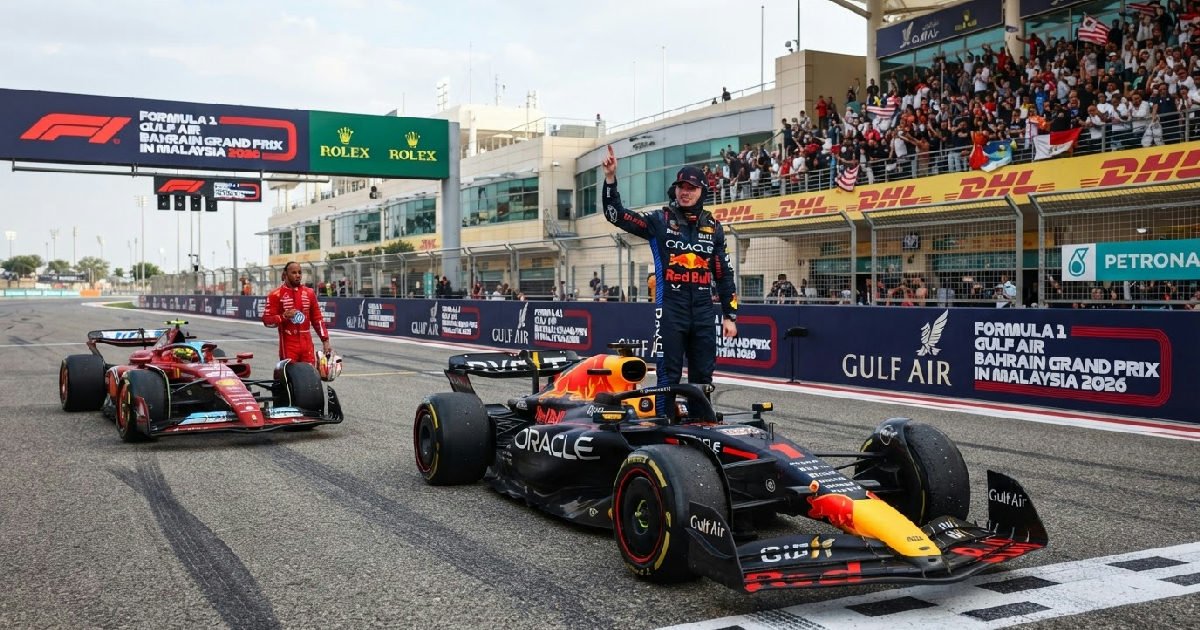
max verstappen f1 pole position bahrain gp in malaysia
Max Verstappen secured his first pole position of the 2026 Formula 1 season, delivering a blistering final lap for Oracle Red Bull Racing at the Bahrain Grand Prix qualifying session in Malaysia.
The Dutch driver edged out his old rival, Scuderia Ferrari HP’s Lewis Hamilton, in a tense battle at the Sepang International Circuit on Saturday, October 3. The result sets the stage for a dramatic front-row showdown in a race being held thousands of miles from its home.
Max Verstappen F1 Pole Malaysia: A familiar front row in an unfamiliar setting
The event, officially titled the “Formula 1 Gulf Air Bahrain Grand Prix in Malaysia 2026,” is an unprecedented fixture on the F1 calendar.
It was relocated from the Bahrain International Circuit to Sepang due to the ‘2026 Iran war’, which created significant security risks in the Middle East, rendering Bahrain and neighbouring Saudi Arabia unsafe for hosting Grands Prix.
This forced a significant shift in the F1 calendar, prompting unique considerations for organizers and teams as they adapt to unexpected changes. The dynamic nature of F1 scheduling often involves swift responses to global events, a factor that can profoundly influence sporting event predictions.
In the sweltering Malaysian heat, Verstappen demonstrated formidable pace, topping all three qualifying segments. His pole-winning time of 1m 35.130s in Q3 marked Red Bull’s first pole since the 2025 Abu Dhabi Grand Prix, breaking a season-long qualifying drought for the team. The performance signals a potent return to form for the reigning constructors’ champions.
For Verstappen, the Sepang circuit holds positive memories. He was the winner of the last Formula 1 race held here back in 2017, a fact that may provide a psychological advantage heading into Sunday’s Grand Prix. Now, he is perfectly positioned to repeat that success and claim a crucial victory in the championship fight.
Lewis Hamilton, in his first season with Ferrari, will start alongside him in second place. The British driver pushed his car to the limit, clocking a 1m 35.428s, but fell just short of toppling Verstappen. The prospect of a vintage Hamilton-Verstappen duel off the line and into Sepang’s challenging first corners is a thrilling one for fans worldwide.
Grid shake-up sees penalties and promotions
While the front row is set, the rest of the starting grid has been shuffled by a series of power unit penalties. Red Bull’s other driver, Isack Hadjar, put in a spectacular performance to qualify in third place. However, the Japanese driver is set to take a grid-place penalty, demoting him down the order and robbing him of a career-best starting position.
Hadjar’s penalty promotes Mercedes AMG Petronas F1 Team rookie Kimi Antonelli, who will now start from a remarkable third place. Despite the team expressing some disappointment after introducing a new update package this weekend, Antonelli’s elevated grid slot offers a prime opportunity for a podium finish.
Charles Leclerc, in the second Ferrari, moves up to start from fourth, ensuring the Italian team has two cars in the hunt at the front.
The revised top of the grid
The McLaren Mastercard F1 Team drivers locked out the next row, with Lando Norris qualifying sixth and Oscar Piastri seventh, but they will start fifth and sixth, respectively. They have shown consistent pace throughout the weekend and could be a disruptive force in the race.
Behind them, George Russell in the second Mercedes has work to do after qualifying in eighth place, which becomes a seventh-place start.
Rounding out the top ten in Q3 were the Alpine of Pierre Gasly and the Audi of Gabriel Bortoleto. They will start eighth and ninth, inheriting positions due to the penalties applied to others. Further down the field, drivers like Franco Colapinto and Arvid Lindblad also received grid penalties for technical infringements, complicating their race-day strategies.
An unprecedented grand prix
This weekend’s race is a unique logistical and sporting challenge. The decision to move the Bahrain Grand Prix from its original April date was made in July 2026, giving Malaysian organisers less than two months to prepare for F1’s return. The entire event is being financed and managed by the Bahraini promoters, who have effectively transported their entire race operation to Southeast Asia.
For Malaysia, it represents a low-risk “dress rehearsal” for a potential permanent return to the F1 calendar. The country is hosting the event without paying the massive registration fees that led to the original Malaysian Grand Prix being dropped after 2017.
Instead, it incurred only around RM16 million for circuit upgrades, a fraction of the previous cost. The event has seen immense anticipation, with nearly 100,000 tickets sold, a record for the Sepang venue, promising a vibrant atmosphere and a significant economic injection for the local area.
Such rapid, large-scale preparations highlight the intricacies of international event planning.
The success of this relocation highlights how adaptable global sports calendars must be. Long-term plans can require sudden shifts, a reality underscored by the rapid turnaround needed to prepare Sepang for this Grand Prix. This capability to pivot quickly ensures that major international sporting events can still proceed despite unforeseen global circumstances.
Sepang’s return tests drivers and machines
F1’s return to the Sepang International Circuit for the first time in nine years has reacquainted teams with one of the most demanding tracks on the calendar. Designed by Hermann Tilke, the 5.543 km circuit is renowned for its combination of long, fast straights and tight, technical corners, which provide numerous overtaking opportunities.
The primary challenge, however, is the climate. The extreme heat and high humidity test driver endurance and car reliability to their absolute limits. Furthermore, Sepang is notorious for its frequent and intense tropical downpours, which can arrive suddenly and completely transform track conditions, turning a predictable race into a chaotic lottery.
This volatile weather is a stark contrast to the dry, stable conditions of the original Bahraini venue.
Practice sessions across the weekend have already shown how competitive the field is. While Verstappen led the first session, Ferrari’s Leclerc topped the second, and Mercedes’ Antonelli surprised many by leading the final practice. This suggests that no single team has a definitive advantage, which could lead to a closely contested race from start to finish.
Outlook for a memorable race
With Verstappen and Hamilton on the front row, a rookie in third, and unpredictable weather on the horizon, the Bahrain Grand Prix in Malaysia is poised to be a standout event of the 2026 season. Verstappen’s return to pole-sitting form is a statement of intent from Red Bull, but Hamilton’s strong performance proves Ferrari is ready to fight for every inch.
The midfield battle will be just as fierce. The promotion of Antonelli and the solid starting positions for McLaren and the second Ferrari promise a multi-team fight for the podium. The race will test strategy, tyre management, and driver skill under some of the most strenuous conditions imaginable. For fans and teams alike, Sunday’s Grand Prix is an exciting leap into the unknown.