

ICC unveils World Cup 2027 schedule with new format
Cricket fans now have a clear roadmap for the ICC Men’s ODI World Cup 2027, as the full schedule, including fixtures, dates, and venues, was unveiled on October 1, 2026. The prestigious tournament, co-hosted by South Africa, Zimbabwe, and Namibia, promises a revamped format and a series of high-stakes encounters across Southern Africa.
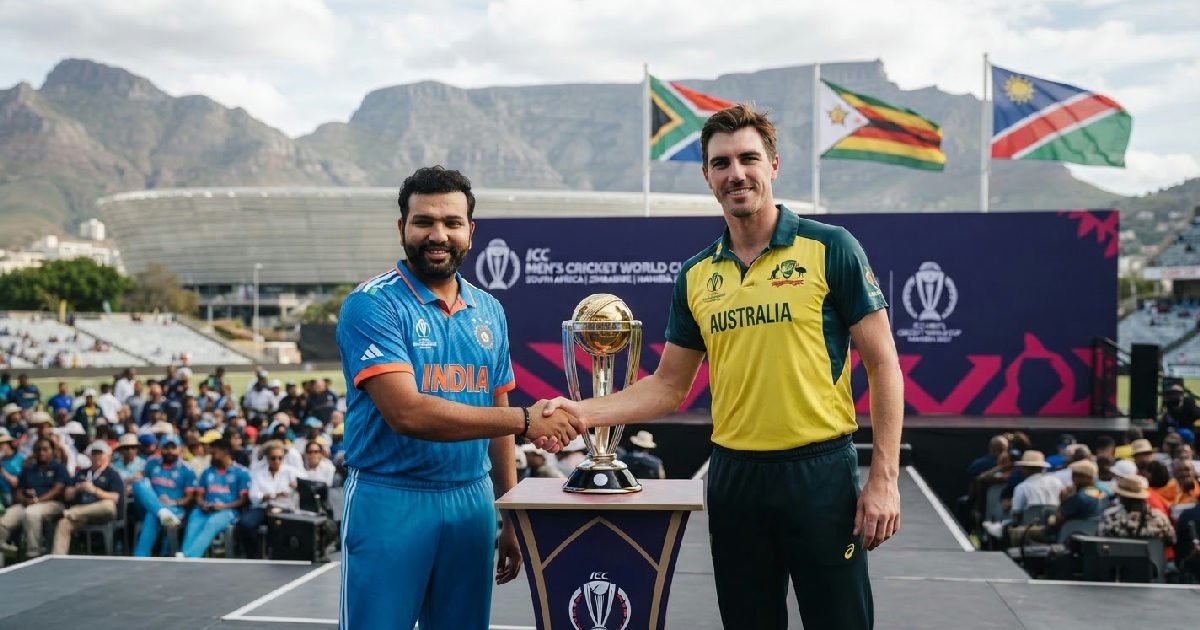
The announcement detailed the tournament’s innovative three-stage structure before the semi-finals, designed to intensify competition and broaden participation. A highlight includes defending champions Australia facing India in a repeat of the 2023 final, kicking off the group stages in Cape Town on October 7, 2027. The future of sports events like this often sees format changes.
Understanding the ICC World Cup 2027 schedule and format
The International Cricket Council (ICC) has significantly overhauled the World Cup structure for 2027, expanding to 14 teams and introducing two distinct phases before the knockout stage: the Super Series and the Super Sevens. This marks a departure from recent World Cups, aiming for more meaningful contests.
The new format, approved on July 15, 2026, at the ICC’s Annual General Meeting in Edinburgh, is intended to heighten competitive standards. It will span from October 2 to November 21, 2027, featuring 57 matches across twelve venues.
Super Series and Group Stage Mechanics
The action begins with a “Super Series” from October 2, 4, and 6, 2027, involving the three lowest-ranked qualified teams (12th, 13th, and 14th) in a round-robin format, hosted in Namibia. Only one of these teams will advance to the main group stage.
Following this preliminary round, the 12 direct qualifiers—joined by the Super Series winner—will be split into two groups of six. Each team within a group will play every other team once, completing 30 group stage matches. This ensures every side gets a comprehensive run.
The Super Sevens Pathway to Knockouts
The tournament then progresses to the “Super Sevens” stage. The top three teams from each group, plus the next best-ranked team across both groups, will qualify, creating a seven-team round-robin. Points from the initial group stage do not carry forward, resetting the competitive landscape.
The top four teams emerging from the rigorous Super Sevens will then proceed to the semi-finals. These crucial knockout matches are slated for November 17 and 18, 2027, hosted in Cape Town and Centurion respectively. The grand final will culminate in Johannesburg on November 21, 2027.
Key Group Stage Fixtures Revealed
The group stage promises immediate drama with several marquee matchups. Cricket’s most anticipated rivalry will reignite when India takes on Pakistan in Johannesburg on October 10, 2027, marking the first game at that iconic venue for the tournament.
The opening fixture on October 7, 2027, in Cape Town, will see Australia, the defending champions, clash with India, a rematch of the 2023 ODI World Cup final. South Africa will also open their campaign in Cape Town, facing New Zealand on October 9, 2027.
Here’s a look at the confirmed preliminary group stage schedule:
Tri-Nation Hosts Embrace New Era
This tournament marks a significant return for the Cricket World Cup to Southern Africa, twenty-four years after South Africa, Zimbabwe, and Kenya co-hosted the 2003 edition. The 2027 event will see South Africa and Zimbabwe once again take on co-hosting duties, with Namibia joining as a host for the first time.
The co-hosting arrangement underlines the ICC’s commitment to expanding cricket’s global footprint. It offers a unique opportunity for Namibia, an Associate Member of the ICC, to showcase its cricketing infrastructure and passion for the sport on the world stage.
South Africa’s Renewed Hosting Role
South Africa, a seasoned host of major ICC events, including the inaugural World Twenty20 in 2007, brings extensive experience to the table. Their venues, including Cape Town, Centurion, Johannesburg, Paarl, Gqeberha, and Durban, are well-equipped to manage the demands of a global spectacle. The nation has a rich cricketing history, having participated in nine World Cup tournaments.
Hosting the event provides a chance for South Africa to once again unite its diverse population through sport. The country’s previous hosting of the men’s tournament in 2003, alongside various women’s and under-19 World Cups, has cemented its reputation as a capable and vibrant cricketing destination.
Zimbabwe and Namibia’s Involvement
For Zimbabwe, this is also a return to co-hosting, building on their experience from 2003. Matches in Zimbabwe will be held at Harare Sports Club, Queens Sports Club in Bulawayo, and the newly constructed Mosi-oa-Tunya International Cricket Stadium in Victoria Falls. This expanded set of venues highlights their growing capacity.
Namibia