

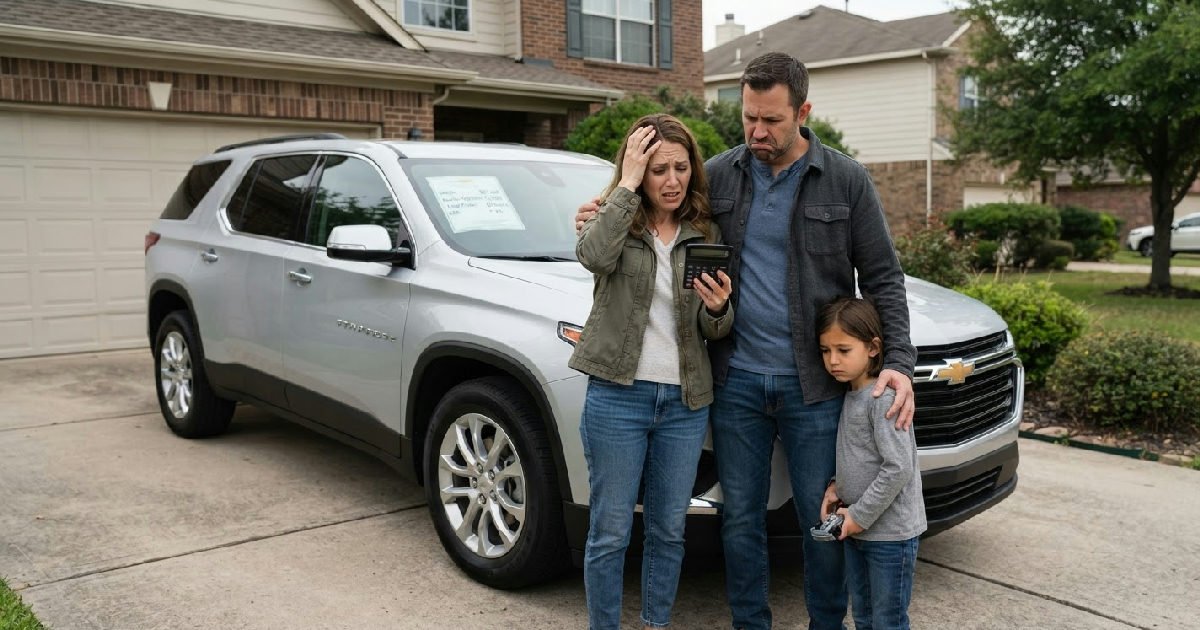
US car unaffordability bites as prices, rates soar
The dream of car ownership is becoming increasingly elusive for many Americans. Surging vehicle prices and escalating interest rates have created a crisis of car unaffordability, pushing the cost of personal transportation beyond comfortable limits for countless households across the United States.
MarketWatch, in an analysis updated on September 30, 2026, highlights that the average new car now commands a price tag exceeding $50,000. Even a used vehicle, often considered a more accessible option, costs around $27,000, presenting a significant financial hurdle.
Soaring Costs Define Car Unaffordability
The primary driver of this growing crisis is the dramatic escalation in vehicle prices. Through 2026, the average transaction price for a new vehicle in the U.S. has consistently hovered between $49,000 and $50,000, frequently surpassing the latter figure.
This represents a staggering 31% increase since 2019, when the average new vehicle sold for $37,310. Even earlier in 2023, the average new vehicle price stood at $46,437, marking a 4.2% year-over-year rise, demonstrating a relentless upward trend.
The used car market, traditionally a refuge for budget-conscious buyers, offers little relief. While average listing prices are near $25,400, the amount financed on a used vehicle reached a record $30,414 in the second quarter of 2026. This indicates that even older models require substantial borrowing.
For instance, three-year-old used vehicles recorded an average transaction price of $32,461 in Q2 2026. This figure marks a 4% increase from the previous year. These inflated costs mean that many established affordability benchmarks are now easily exceeded, even for second-hand purchases.
The Pinch of Rising Auto Loan Rates
Beyond the sticker price, rising auto loan interest rates are dramatically inflating monthly payments, making vehicle ownership increasingly burdensome. According to the MarketWatch report, new-car loan rates have climbed to 6.35% from 4.09% in 2021.
Similarly, used-car rates have jumped significantly to 11.19% from 8.59% over the same period. These elevated rates translate directly into higher monthly outflows for American consumers, eroding household budgets.
Data from Experian for Q2 2026 corroborates this trend, showing the average new-car loan rate at 6.39% and the average used-car rate at 11.43%. Strong borrowers might secure rates around 5.5%, while those with outstanding credit could see rates in the 4s. However, individuals with poorer credit often face rates up to 16%, highlighting a widening disparity.
The Federal Reserve’s decision to raise its baseline interest rate from 3.75% to 4% in September 2026, the first such increase since summer 2023, further underscores the challenging lending environment. This policy shift impacts everything from mortgages to auto loans.
Escalating Monthly Payments
The combination of higher prices and increased interest rates has pushed average monthly payments to new highs. The average monthly payment for a new vehicle reached $765 in Q2 2026, a 2.1% increase from a year earlier.
Used vehicle payments averaged $542 per month, while leased vehicles came in at $617 monthly. These figures reflect the substantial ongoing financial commitment required to own or lease a car today.
A striking 18.31% of all new car loans now exceed $1,000 per month. Moreover, 4.95% of used car loans also cross this threshold, demonstrating how luxury-level payments are becoming increasingly common even for standard vehicles.
The Illusion of Affordability: Longer Loan Terms and Debt
To mitigate the immediate impact of high prices and rates, both lenders and buyers are increasingly turning to prolonged loan terms. The average term for a new-vehicle loan currently stands at 69.5 months, while used-vehicle loans average 67.9 months.
This trend toward extended financing periods allows consumers to achieve lower monthly payments, but it significantly increases the total cost of the vehicle over time. It also delays the point at which equity can be built in the asset.
In Q2 2026, 36.5% of financed new-vehicle purchases had terms of 73 months or longer. A significant 23.9% extended past 84 months, both representing record highs. Almost one in four buyers financing a new vehicle now take out a loan of 84 months or longer.
Some lenders are even offering car loans stretching up to 120 months, or 10 years. While these terms can make monthly payments seem manageable, they can trap consumers in debt for far longer than the useful life of the vehicle, often leading to negative equity.
Growing Auto Loan Debt and Delinquencies
The cumulative effect of these trends is a mounting burden of auto loan debt across the U.S. Total outstanding auto loan debt reached $1.713 trillion in Q2 2026, according to background research. This figure represents 9.1% of total consumer debt, even exceeding student loan debt.
More concerning are the rising delinquency rates. The share of auto loan balances that were at least 90 days delinquent hit a record 5.6% in Q1 2026, easing only slightly to 5.5% in Q2 2026. This level is near a 23-year high, signaling widespread financial distress.
Additionally, 7.9% of all auto loans became 30 days past due in Q2 2026. The increasing number of consumers falling behind on payments has led to auto repossession rates hovering near historic highs, an outcome that can severely damage credit scores.
The issue of negative equity further complicates the picture. Average negative equity in U.S. auto trade-ins increased to $6,884 in Q2 2026, up from $4,576 in 2015. This means many car owners owe more on their vehicle than it’s worth when they try to trade it in, making it harder to escape the cycle of debt.
Underlying Factors Fueling Vehicle Cost Increases
Several interconnected factors contribute to this pervasive car unaffordability. Automaker strategies play a significant role, with companies increasingly focusing on producing higher-margin vehicles such as trucks and SUVs rather than more affordable sedans.
This product mix inflates average prices. For example, a $60,000 Ford F-150 might generate over $15,000 in profit for the manufacturer, vastly more than the $1,500 profit from a $22,000 Ford Fiesta.
Technology and Feature Creep
Modern vehicles, even at entry-level price points, come equipped with a host of advanced features and technologies. These include sophisticated infotainment systems, premium amenities, and advanced driver-assistance systems (ADAS) as standard.
While these additions enhance safety and convenience, they inevitably drive up the base price of vehicles. Consumers often pay for technology they might not actively seek, bundled into the standard offerings.
Supply Chain Disruptions and Inflation
Global supply chain disruptions, particularly the persistent semiconductor chip shortage, significantly contributed to rising car prices in 2022 and 2023. This scarcity limited production, pushing up demand and prices for available vehicles.
Inflationary pressures have also rippled through the economy, impacting both new and used car markets. The cost of raw materials and manufacturing has increased, which ultimately gets passed on to the consumer.
Mounting Operating Expenses
Beyond the purchase price, the cost of operating a vehicle has also surged. Auto insurance costs, for instance, have jumped an alarming 37.5% since 2021, far outpacing income growth of 23.9% over the same period. This adds a substantial, unavoidable expense to car ownership.
Motor vehicle repair costs climbed 6.2% in 2025, with a median monthly inflation rate of 9.7% over the last three years. The increasing complexity of older vehicles, which are staying on the road longer due to high replacement costs, contributes to these elevated repair expenses.
Tariffs and Consumer Demand
Tariffs on imported autos and auto parts have also played a part in the price hikes. Tariffs, including those up to 50% for imported steel and aluminum in 2025, raise production costs. Average import duties climbed from about $360 per vehicle in 2024 to roughly $3,700 year-to-date in 2026.
Compounding these issues is the consistent American consumer demand for larger, more expensive vehicles like SUVs and trucks. This preference inherently skews the average transaction price higher, making the overall market seem even more unaffordable.
The Burden on American Households
The cumulative effect of these financial pressures means that many Americans are now “transportation cost-burdened.” The U.S. Department of Transportation sets a benchmark, stating that consumers with active auto loans spend an average of 15.0% of their income on car-related expenses.
This includes loan payments, insurance, fuel, and maintenance. Reaching this 15% threshold indicates a significant strain on household finances, diverting funds from other essential needs or savings. This problem is particularly acute in some regions.
States like Louisiana face the highest burden, with residents spending 23.2% of their income on car-related costs. Mississippi follows at 21.5%, and New Mexico at 19.8%, highlighting geographical disparities in affordability challenges. For many, this means making difficult choices to sustain their mobility.
As prices continue their ascent and interest rates remain elevated, the question of accessible personal transportation looms large for American families. Policymakers and industry leaders face increasing pressure to address the structural issues contributing to this widespread car unaffordability before it further constrains economic mobility and household stability.