

Anthony Joshua rejects US move, demands Tyson Fury honor UK fight contract
The Anthony Joshua Tyson Fury fight location
Heavyweight star Anthony Joshua has decisively rejected attempts to move his long-awaited clash against Tyson Fury to the United States. He insists the Anthony Joshua Tyson Fury fight location must be in the United Kingdom as originally contracted, according to Matchroom Boxing promoter Eddie Hearn.
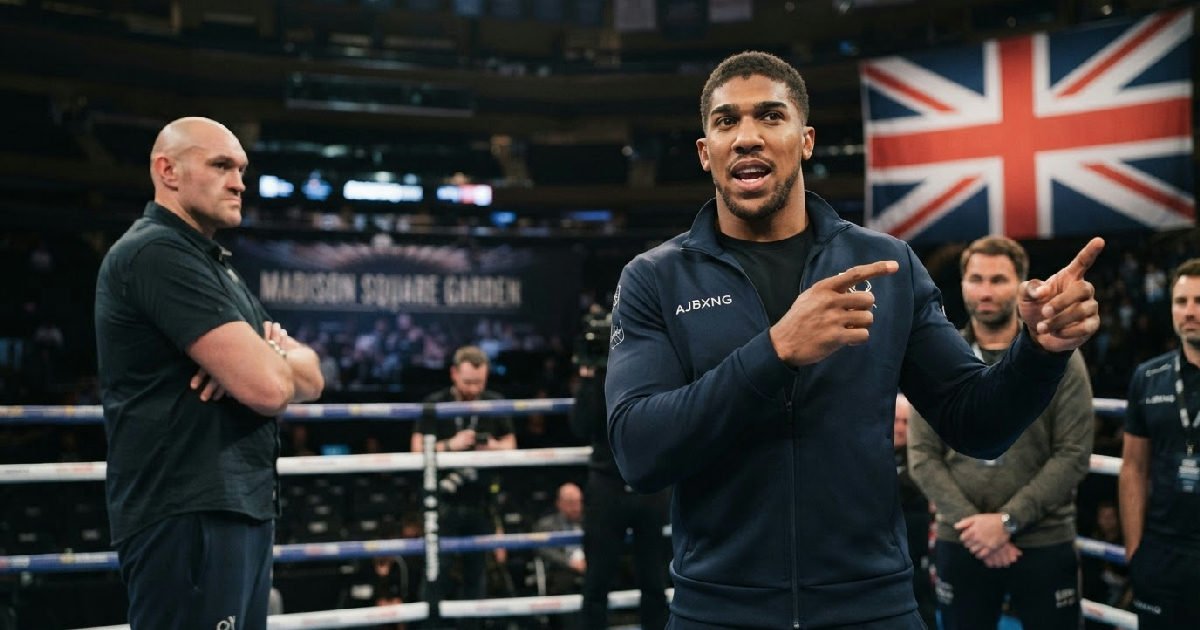
Hearn stated that despite Fury’s recent social media announcement claiming the fight would be held at Madison Square Garden in New York City, Joshua is "standing firm" against what he views as significant last-minute changes from the event’s organizers, including Turki Alalshikh and Netflix.
The highly anticipated showdown, which is widely expected to occur on November 20, 2026, is now jeopardized by the bitter dispute over its location.
Contractual agreements reportedly specified a fight in the UK for Anthony Joshua, but key financial stakeholders have pushed hard for a US location.
Streaming giant Netflix, which is set to broadcast the event, views the American market as a significantly more profitable destination for pay-per-view revenue and subscription growth.
Event backers, including Saudi Arabia’s General Entertainment Authority chairman Turki Alalshikh, have aligned with this push to stage the contest stateside.
The push to move the fight to New York has created a complex legal and financial headache just weeks before the planned date, leading to Anthony Joshua demanding adherence to the initial terms.
Matchroom promoter Eddie Hearn confirmed that while he and Joshua were willing to cooperate with Netflix, they demanded specific addendums to the contract to offset the costs and inconvenience.
It appears that the requested changes were not satisfactory to Alalshikh and the other funders, prompting Joshua to take a hard line against the proposed venue change.
Hearn told IFL TV on Thursday, September 4, that Joshua had reached a breaking point with the protracted negotiations.
"AJ was like, ‘You know what: f**k these guys. Make them fight in the UK – where we signed for,’" Hearn reported, underscoring the shift in Joshua’s position.
Tyson Fury’s unilateral Madison Square Garden announcement
The confusion surrounding the fight’s location escalated significantly earlier this week when Tyson Fury took to social media to declare the venue settled.
On or around September 2 or 3, 2026, Fury used his Instagram account to officially announce that the fight would take place at Madison Square Garden (MSG) in New York City.
The announcement was presented as a done deal, with "The Gypsy King" posting enthusiastic messages about the location.
One post read: "What a place NYC, and what a venue MSG, and what a fight Fury vs AJ, the land of opportunity."
Another quote focused on the spectacle: "What a weekend away for the lads on the piss in NYC. Iconic! Not long now guys."
Crucially, as of September 3, 2026, Anthony Joshua and his team at Matchroom Boxing had not publicly confirmed or ratified Fury’s venue claim.
Fury’s action essentially pre-empted a formal agreement, putting immense pressure on Joshua’s side to accept the changes or risk being seen as the party stalling the highly anticipated contest.
This tactic appears to have backfired, stiffening Joshua’s resolve to enforce the original terms for a UK venue.
The move mirrors a tactic sometimes seen in major sports negotiations, where one party uses public pressure to force the hand of their opponent.
However, forcing the move without explicit, finalized consent from both camps has thrown the entire November 20 timeline into chaos.
Financial and contractual sticking points in New York
The resistance from Anthony Joshua’s camp to the US location is not purely a matter of preference; it involves substantial financial and contractual risk.
According to sources close to the negotiations, Joshua’s original agreement with organizers stipulated a UK fight, which has different tax and liability implications than fighting in America.
The key concern for Matchroom Boxing and Joshua’s legal team centered on the tax implications of competing in the US. Hearn specifically noted these concerns could reduce Joshua’s net purse.
After the organizers moved the bout without their consent, Joshua’s team submitted new financial demands to compensate for the unexpected change in venue and associated costs.
Hearn explained that while they understand the commercial lure of the US market, the move must "work for everybody" financially. This echoes the broader financial considerations that high-profile athletes face in their careers, similar to Lewis Hamilton’s career moves.
He indicated that a decision on revised terms had to be made by the end of the current week—the week of September 2, 2026—for the November 20 date to remain viable.
The timeline is now critically tight, with Hearn noting that organizers were already "running out of time" if they hoped to meet the proposed date.
Missing this week’s deadline could result in the massive heavyweight bout being pushed back into 2027, further frustrating fans who have waited years for this matchup.
The financial demands are a direct attempt by Joshua to uphold the integrity of the original contract or ensure he is not financially penalized for accommodating the organizers’ late commercial preferences.
Hearn accuses Tyson Fury of trying to swerve the fight
The public posturing by Tyson Fury has fueled suspicions from the Anthony Joshua camp that "The Gypsy King" may be looking for a way out of the November contest entirely.
Promoter Eddie Hearn pointed to Fury’s recent social media activity, including videos mentioning alternative opponents like Agit Kabayel and Daniel Dubois, as evidence of deliberate distraction.
"I feel like Fury’s just trying to duck out the fight, with his [social media] videos and stuff like that," Hearn asserted, indicating frustration with the constant theatrics.
This behavior has galvanized Joshua, turning the contract dispute into a matter of principle for the former champion.
Fury’s public attempts to cast the issue as Joshua’s reluctance to fight anywhere has backfired, according to Matchroom.
Joshua’s response, as filtered through Hearn, is clear: "You’ll fight anywhere? Okay, fight where we signed to fight. I’m standing firm on the UK."
The promoter stressed that "a number of changes to a contract we signed" were presented, and they simply do not accept those last-minute revisions.
For many fans, the history of this rivalry makes the current impasse feel like a frustrating replay of past disappointments.
An earlier attempt to stage the blockbuster bout collapsed back in 2021 after a US court intervened. That ruling stated Fury was obligated to face Deontay Wilder in a third fight.
The current disagreement, although over location rather than a legal mandate, carries the same high-stakes risk of the fight failing to materialize again. Such prolonged negotiations can influence fan sentiment, much like how public figures react to historic sports moments.
If the November 20 date falls through, the long-term momentum for the fight could be severely damaged, irrespective of who is ultimately blamed for the breakdown.
The perception that one fighter is seeking leverage or an exit strategy often dominates the news cycle, sidelining the contractual complexities that underpin the dispute.
Ultimately, Hearn believes the public commentary from Fury is what "made AJ go, ‘All right … you want me to make a decision? I’ve made my decision – honour your contract.’"
The consequences of contractual breakdown
While negotiations continue behind closed doors, the public spat over the venue risks damaging the credibility of the promoters and organizers involved.
Both Anthony Joshua and Tyson Fury reportedly signed contracts for the bout with Turki Alalshikh, suggesting a degree of commitment that is now being tested by commercial pressures.
The fact that Netflix and powerful Saudi funders are involved adds layers of complexity, where global commercial interests often outweigh the initial sporting agreements.
If the terms presented by Alalshikh and Sela, which favor the US move, cannot meet the financial requirements demanded by Joshua, the entire deal collapses.
The proposed date of November 20 is fast approaching, leaving minimal time to finalize an alternative venue, secure visas, launch a press tour, and sell tickets internationally.
Postponing the fight to 2027 is a real possibility, according to Hearn’s latest warnings, which would be a severe blow to the heavyweight division.
Such a delay would freeze movement among the top contenders, forcing rivals to wait or take interim fights that could potentially derail the planned super-fight.
Moreover, the continuous delays and contractual quagmires surrounding the biggest potential British boxing match tarnish the image of the sport itself. Fans grow weary of promises that never materialize.
If the fight does move forward in the UK, it would be a huge victory for Anthony Joshua, asserting his contractual power over the financial desires of the global organizers.
Should they ultimately compromise on the US venue, it would only happen after significant financial concessions are made to alleviate Joshua’s tax concerns and satisfy his team’s demands.
The ball remains firmly in the court of Turki Alalshikh and the organizing committee, who must decide if meeting Joshua’s financial demands is preferable to canceling or indefinitely delaying the contest.
For the division, securing this fight remains paramount, offering clarity and potentially an undisputed champion path, which has been clouded for years.
Precedent and impact of location disputes
Location disputes, particularly for major global events, are not uncommon, but the visibility of the Tyson Fury and Anthony Joshua negotiations is highly unusual.
Moving a fight from a fighter’s preferred home territory to a foreign location introduces complications ranging from jet lag and acclimatization to the critical matter of taxation.
When fighters like Anthony Joshua agree to terms, the financial breakdown often relies heavily on the expected local tax rates.
Changing the location from the UK to the US introduces different tax implications, which Eddie Hearn acknowledged could significantly reduce Joshua’s net purse.
It’s no surprise that Joshua’s team submitted new financial demands when the venue shifted, as they sought to maintain the net income originally agreed upon in a UK scenario.
Fighters in high-profile events often demand a guaranteed net figure, ensuring that unforeseen tax burdens do not deplete their earnings.
This situation highlights a growing tension in modern boxing, where large-scale funding from entities like Saudi Arabia or global streaming partners like Netflix dictates the venue based on commercial viability, not necessarily sporting convenience.
While the allure of racing or fighting in iconic locations such as Madison Square Garden is clear, the fighters often bear the hidden costs.
The organizers’ belief that staging the fight in the US would be "more profitable" for the funders is directly clashing with the contractual obligations to the athletes.
The outcome of this standoff will set a precedent for future negotiations involving international promoters and streamers controlling the venue selection for mega-bouts.
If Anthony Joshua succeeds in forcing the fight back to the UK, it will reinforce the power of the signed contract over late-stage commercial opportunism.
Conversely, if he accepts the US terms after demanding concessions, it will confirm the dominance of the funders’ vision, albeit at a higher cost to them.
The next few days are critical. Eddie Hearn has made it clear that the negotiation window for a November 20 date is rapidly closing, forcing a final decision before the end of the week.
This type of public dispute can also lead to broader implications for those involved in similar high-stakes agreements, as parties look to better protect themselves from late changes.
For instance, major organizations must constantly review contract clauses concerning event flexibility, particularly when dealing with international tax codes and cross-border commercial viability.
Whether it’s in boxing or other high-value sports, controlling the narrative and the location is often half the battle, long before the first punch is thrown.
The pressure now sits squarely on the shoulders of Turki Alalshikh to mediate the commercial desires of Netflix with the contractual demands of the British heavyweight star.
Should the fight be postponed, it would mark the second major failure to stage the long-awaited match between the two biggest names in British boxing.
This ongoing saga means that fans who have been waiting since the original breakdown in 2021 are left entirely "none the wiser" regarding the ultimate fate of the contest, continuing the frustrating wait for a definitive answer.
This tension underscores how complex global sporting deals have become, linking television rights, national preference, and athlete compensation in an inextricable way.
The eventual resolution will be less about where the fight is held and more about who wields the ultimate authority in the modern boxing power structure.
Impact on the broader heavyweight division
The potential collapse or further delay of the Anthony Joshua versus Tyson Fury bout has immediate ripple effects across the entire heavyweight landscape.
Since an earlier attempt to arrange the fight collapsed in 2021, the division has often been impacted by the on-again, off-again nature of this potential matchup, affecting mandatory challenger schedules and title consolidation.
Should the November 20 date fall away, the immediate priority for both fighters will be finding suitable, high-profile opponents for late 2026 or early 2027.
Tyson Fury has already name-checked contenders like Agit Kabayel and Daniel Dubois, indicating potential backup plans if the Joshua deal fully unravels.
These interim fights are necessary to keep both fighters active but carry the risk of injury or unexpected defeat, eliminating the possibility of the massive undisputed clash.
If the postponement stretches into 2027, pressure will mount from governing bodies like the World Boxing Council (WBC) and World Boxing Association (WBA) to enforce mandatory defenses.
This enforcement could force one or both heavyweights to vacate a belt or take a less lucrative fight against a challenger rather than holding out for the stadium showdown.
Eddie Hearn’s strong stance to keep the fight in the UK shows a commitment not just to contractual clauses but to securing maximum public interest and revenue from a home crowd.
The UK appetite for this fight is massive, arguably surpassing the general US boxing market interest, making the commercial argument for MSG less clear-cut than Netflix suggests.
A UK venue ensures a favorable time slot for European audiences and capitalizes on the deep national rivalry between the two stars.
Meanwhile, the uncertainty also affects rising prospects and other ranked fighters who are waiting for the top of the division to stabilize.
Every fighter in the top 10 is watching these negotiations, as their immediate future depends on whether Joshua and Fury proceed or vacate their upcoming schedules. Such intense situations are also seen in other sports, where coaches like Dan Quinn manage expectations and player futures.
This stalemate serves as a perfect example of how one mega-fight can paralyze progress in a major professional division for extended periods.
It remains to be seen if the influence of figures like Turki Alalshikh can ultimately push through a deal that satisfies both sides’ financial and contractual stipulations.
Until then, the November 20 date hangs by a thread, contingent on a quick and expensive compromise between the athletes and the organizers.