

Walmart stock tumbles despite raised outlook and $2.9B tariff windfall
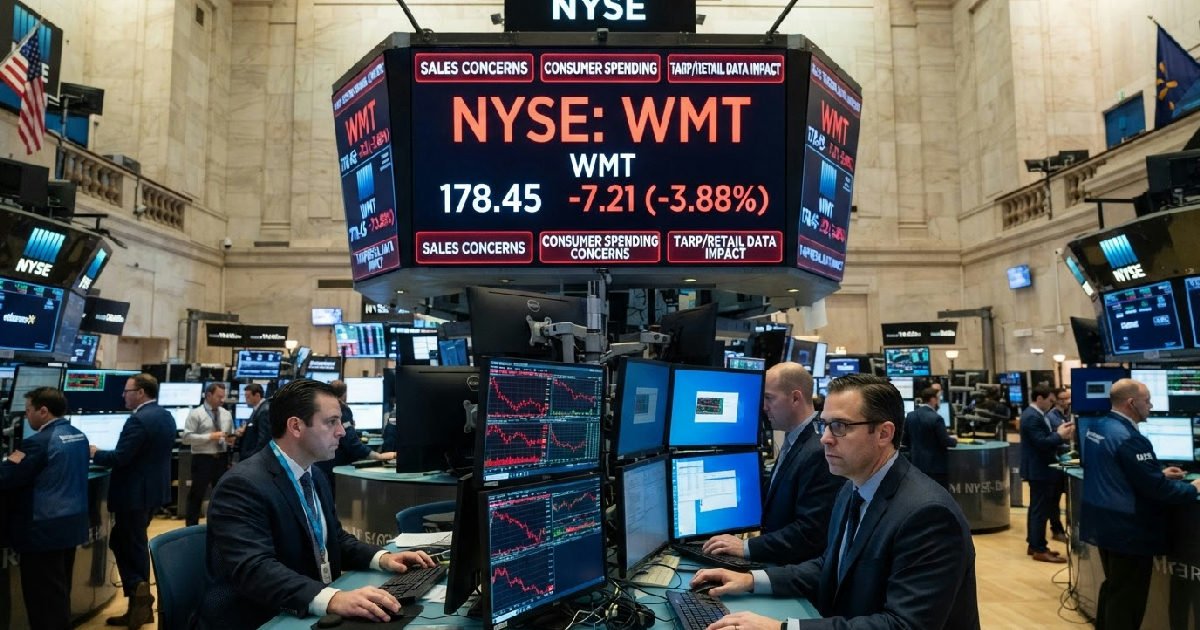
Walmart stock tumbles despite a strong second-quarter performance and an increased annual forecast on Thursday, August 20, as investors recoiled from slowing U.S. sales growth.
posted a strong second-quarter performance and raised its annual forecast on Thursday, August 20, but saw its Walmart stock tumbles as investors recoiled from slowing sales growth in its core U.S. market.
The mixed results show a complex picture of a retail giant navigating a stretched consumer base, even as it benefits from a massive $2.9 billion tariff refund.
The Bentonville, Arkansas-based retailer reported total revenue of $187.9 billion for the quarter ending July 31, a 5.9% year-over-year increase that surpassed Wall Street’s expectations. Adjusted earnings per share also beat forecasts at 81 cents. Despite the positive headline figures, shares fell as much as 8% in morning trading as the market focused on underlying weaknesses.
Why Walmart stock tumbles despite strong headline numbers
The primary driver for the negative market reaction was a slowdown in a key metric: U.S. comparable sales. The figure grew just 2.6% in the second quarter, falling short of the 3.7% to 3.8% consensus analysts had predicted. This marks the retailer’s slowest pace of growth in this segment in six years, setting off alarm bells for investors.
Adding to the cautious sentiment was Walmart’s guidance for the third quarter, which also missed analyst estimates. The company’s outlook suggested continued pressure on consumers, a sentiment that weighs heavily on the retail sector and the broader economy. These trends come as many await clues on future Federal Reserve interest rates, which could further impact household budgets.
Analysts were quick to point out the disconnect. “The underlying trends are more concerning than the headline beats suggest,” wrote Steven Shemesh, an analyst at RBC Capital Markets. He noted that the miss on U.S. comparable sales points to a potential pullback in consumer spending on discretionary goods, even as grocery sales remain resilient.
Tariff refund provides a multi-billion dollar boost
A significant factor buoying Walmart’s bottom line was the receipt of a nearly $2.9 billion federal tariff refund. The payment stems from a Supreme Court ruling in February that deemed former President Trump’s “Liberation Day tariffs” illegal. This one-time benefit provided a substantial, if artificial, lift to the company’s financials.
The refund directly contributed to a 96 basis point increase in Walmart’s gross profit rate, which climbed to 25.4%. In a call with reporters, Executive Vice President and CFO John David Rainey confirmed the company plans to pass these savings on to shoppers. “We will use those refunds to lower prices,” he stated, a move that will begin to materialize in the third quarter.
This strategy aligns with Walmart’s long-standing reputation as a value leader. The company noted it had already implemented over 11,000 price reductions across its U.S. stores during the quarter. The tariff windfall provides further ammunition to press its price advantage at a time when consumers are highly sensitive to costs.
Investing back into the customer
The commitment to lowering prices is not just a reaction to the refund but a core part of Walmart’s strategy to maintain market share. With competitors also vying for cost-conscious shoppers, using this financial lever to improve its value proposition is a critical move. It reinforces the brand’s identity and aims to drive traffic both in-store and online.
This reinvestment is seen by some as a necessary measure to combat the very sales slowdown that spooked investors. By making goods more affordable, Walmart hopes to encourage more frequent shopping trips and larger basket sizes from its core demographic, which is feeling the pinch of inflation and higher living costs.
Bright spots in e-commerce and advertising can’t calm market nerves
While U.S. physical store sales caused concern, Walmart’s digital operations continued to show robust growth. Global e-commerce sales jumped 23% in the quarter, with the U.S. online segment growing at an even faster clip of 24%. This demonstrates the success of the company’s ongoing investment in its digital infrastructure, including pickup, delivery, and its third-party marketplace.
Other business units also posted impressive results. Walmart’s global advertising revenue surged 38%, showing the increasing importance of its retail media network. Furthermore, global membership fee revenue, driven by its Walmart+ program, climbed 17%. The company’s warehouse division, Sam’s Club U.S., also reported strong net sales growth of 8.8%.
These modern growth engines show the company is diversifying its revenue streams effectively, similar to how other firms like GrubMarket enters U.K. food supply chain through strategic expansion.
Shifting consumer demographics
An interesting detail from the earnings call was the changing profile of Walmart’s customer base. CFO John David Rainey noted that the biggest component of its market share gains came from high-income consumers. These shoppers, also feeling the squeeze of inflation, are increasingly turning to Walmart for groceries and other essentials.
This trend helps explain a 6.7% year-over-year increase in inventory, as Rainey said a significant portion was related to stocking more expensive and elevated brands to appeal to this new, wealthier shopper. While a positive sign of expanding appeal, it also highlights the pressure on the company’s traditional low-to-middle-income customers.
Reading the tea leaves on consumer spending
As the largest retailer in the United States, Walmart’s performance is often seen as a bellwether for the health of the American consumer and the broader economy. The latest report paints a complicated picture. While CFO John David Rainey acknowledged that shoppers are “stretched thin” by high fuel and food costs, he also noted their resilience.
“Consumers are still spending, and real wage growth is keeping pace,” Rainey told CNBC. This observation stands in contrast to the slowing comparable sales figures, suggesting a bifurcation in spending habits. Shoppers may be spending, but they are being far more selective and prioritizing essentials over general merchandise, which saw only slight growth.
The pressure from rising costs is a global issue, with reports showing UK inflation accelerates for similar reasons.
This what this actually means for the economy is that while a full-blown recession may not be imminent, consumer behavior has clearly shifted. The era of free-wheeling post-pandemic spending appears to be over, replaced by a more cautious and value-driven approach that benefits discounters but also caps their potential for explosive growth.
What’s next for Walmart and the retail sector?
Despite the market’s skittishness, Walmart’s leadership projected confidence, raising its full-year guidance. The company now expects net sales to increase between 4% and 5%, up from a previous range of 3.5% to 4.5%. It also lifted its adjusted earnings per share forecast to between $2.80 and $2.87.
However, the path forward is not without obstacles. Walmart anticipates incurring over $2 billion of incremental cost headwinds this year related to higher fuel prices. Balancing its pledge to lower prices with these rising operational costs will be a key challenge for President and CEO John Furner’s team.
Ultimately, the mixed signals from Walmart’s earnings report send a powerful message to the entire retail industry. Even a dominant player with massive scale and a timely financial windfall is not immune to shifts in consumer behavior. As the industry heads toward the crucial holiday season, the pressure to deliver value without sacrificing profitability has never been greater.