

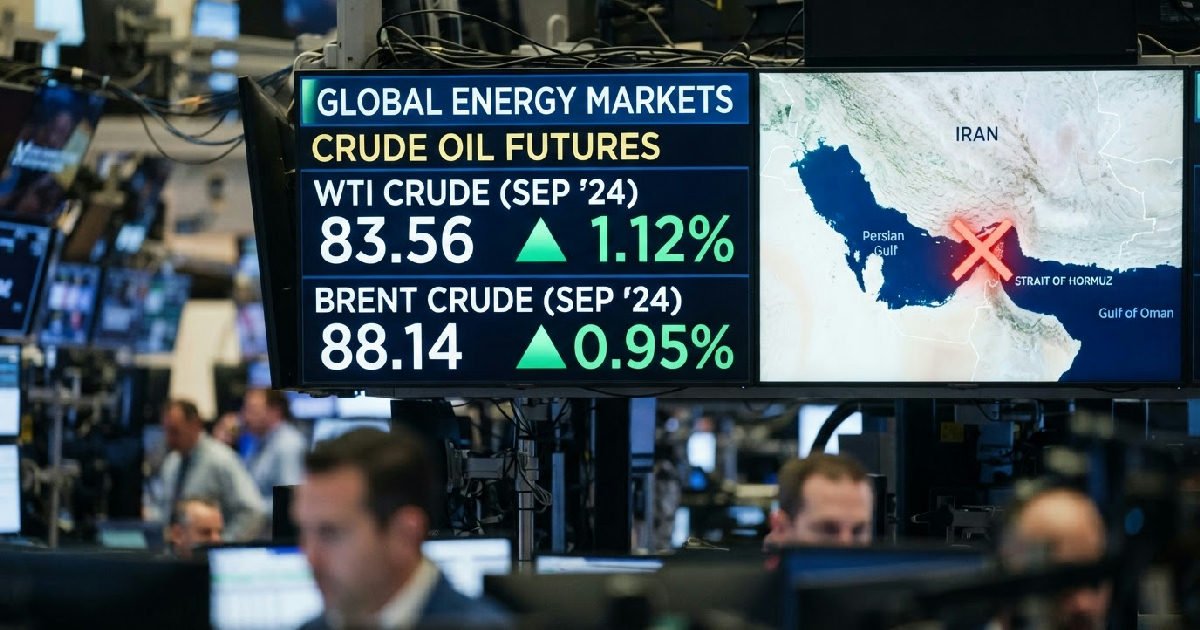
US oil futures climb as Iran links Hormuz reopening to frozen funds
US oil prices pushed above $83 a barrel on Tuesday, reacting sharply to a declaration from Iran that the vital Strait of Hormuz will remain closed until Washington meets Tehran’s conditions. This latest development exacerbates ongoing geopolitical tensions and further tightens global energy markets, which have already grappled with the strategic waterway’s closure since late February.
The immediate surge saw West Texas Intermediate (WTI) futures rise by 1.4% to $83.25 per barrel, while the international benchmark, Brent crude, increased by 1.2% to $88.75 per barrel. These movements reflect heightened market anxiety over crude oil supply, with traders weighing conflicting signals about the potential for a diplomatic resolution between the US and Iran.
Iran’s firm stance on Hormuz closure
Mohsen Rezaei, the Secretary of Iran’s Supreme National Security Council, made it unequivocally clear: the Strait of Hormuz will not reopen until the United States unfreezes Iranian funds held overseas. This demand, relayed by Reuters, positions the release of billions in frozen assets as a prerequisite for resuming normal maritime traffic through the critical chokepoint.
The strait, a narrow passage connecting the Persian Gulf to the open sea, handles approximately one-fifth of the world’s total oil consumption. Its closure, which began on February 28, has severely disrupted global shipping routes and triggered persistent supply concerns.
Long-term implications of blocked transit
The prolonged disruption has already had a tangible impact. Data from trade intelligence firm Kpler showed only eight vessels crossed the strait on Monday, a stark contrast to the more than 130 ships that traversed the route daily before the February 28 attacks involving the US and Israel.
This dramatic reduction in transits underscores the fragility of global supply chains and the immense leverage Iran holds over a crucial artery for international trade. The economic pressure mounts on nations dependent on Persian Gulf oil exports.
US rhetoric and diplomatic efforts
The Iranian demand comes amid escalating rhetoric from US President Donald Trump, who has insisted Iran pay reparations to the United States. This hardened stance from Washington seems to complicate any swift resolution to the standoff.
Conversely, there are indications of potential de-escalation. Pakistan’s Defense Minister Khawaja Asif told Bloomberg News on Tuesday that a “peace arrangement or a deal” might be emerging. Pakistan previously mediated an interim US-Iran deal in June, though that agreement ultimately collapsed and led to renewed fighting in Hormuz.
Contrasting views from Washington
Adding to the mixed signals, US Treasury Secretary Scott Bessent had suggested last week that a deal on Hormuz could materialise soon. However, as of Tuesday, no such agreement has been reached, leaving markets in a state of uncertainty.
Energy Secretary Chris Wright, however, painted a more resilient picture regarding current oil flows. He stated that oil exports through Hormuz have achieved a seven-day moving average of 9 million barrels per day, attributing this to the protective presence of the US military. When pipeline exports are factored in, total oil flows from the Gulf region are averaging around 15 million barrels per day.
Strategic petroleum reserve and shipping waivers
The ongoing crisis is unfolding against a backdrop of historically low US crude oil stockpiles. Government data reveals these reserves have fallen to their lowest level in over four decades, intensifying domestic concerns about energy security.
In a related move, President Trump on Monday extended the suspension of a shipping law that typically restricts the transport of goods between American ports to US vessels. This waiver, however, was narrowed specifically to vessels hauling certain energy resources, indicating a strategic effort to mitigate potential energy shortages and maintain supply flexibility during the current instability.
The decision to selectively waive the shipping law underscores the administration’s awareness of the fragile energy supply situation. It highlights the lengths Washington is prepared to go to ensure the flow of critical resources, even as tensions simmer in the Middle East.
Global energy market implications
The closure of the Strait of Hormuz and the subsequent rise in US oil prices reverberate throughout global energy markets. Importers are facing higher costs, which could translate into increased prices at the pump for consumers and elevated operating expenses for businesses reliant on fuel.
This situation also puts additional pressure on central banks globally, many of whom are already contending with persistent inflationary pressures. A sustained period of high oil prices could complicate efforts to tame inflation, potentially forcing difficult monetary policy decisions.
Broader economic impact and market sentiment
Beyond direct energy costs, prolonged uncertainty around a critical trade route can dampen overall economic confidence. Businesses may delay investment decisions, and consumer spending could be impacted by rising living costs, creating a ripple effect across various sectors.
Despite the current volatility, some European stock markets have shown resilience. This is partly due to strong earnings reports and, at times, optimism for easing Iran tensions. However, the energy market remains particularly sensitive to every statement from Tehran and Washington, reflecting the high stakes involved.
The path forward: Diplomacy or escalation?
The immediate future for oil prices hinges on the diplomatic dance between the US and Iran. Iran’s clear condition for reopening Hormuz puts the ball firmly in Washington’s court regarding the unfreezing of funds. However, President Trump’s demand for reparations introduces another layer of complexity, suggesting a quick resolution isn’t guaranteed.
The role of mediators like Pakistan will be crucial in bridging the gap between the two sides. Yet, the failure of the interim deal in June serves as a cautionary tale, indicating the deep-seated disagreements that still need to be addressed before any lasting peace arrangement can be secured.
Watching the oil flow data
While diplomatic talks continue, global markets will be closely monitoring oil flow data. Energy Secretary Wright’s figures on continued exports, albeit with US military protection, offer some reassurance. But the vastly reduced commercial vessel traffic through Hormuz signals that normal operations are still a long way off.
Any perceived weakening of the US military