

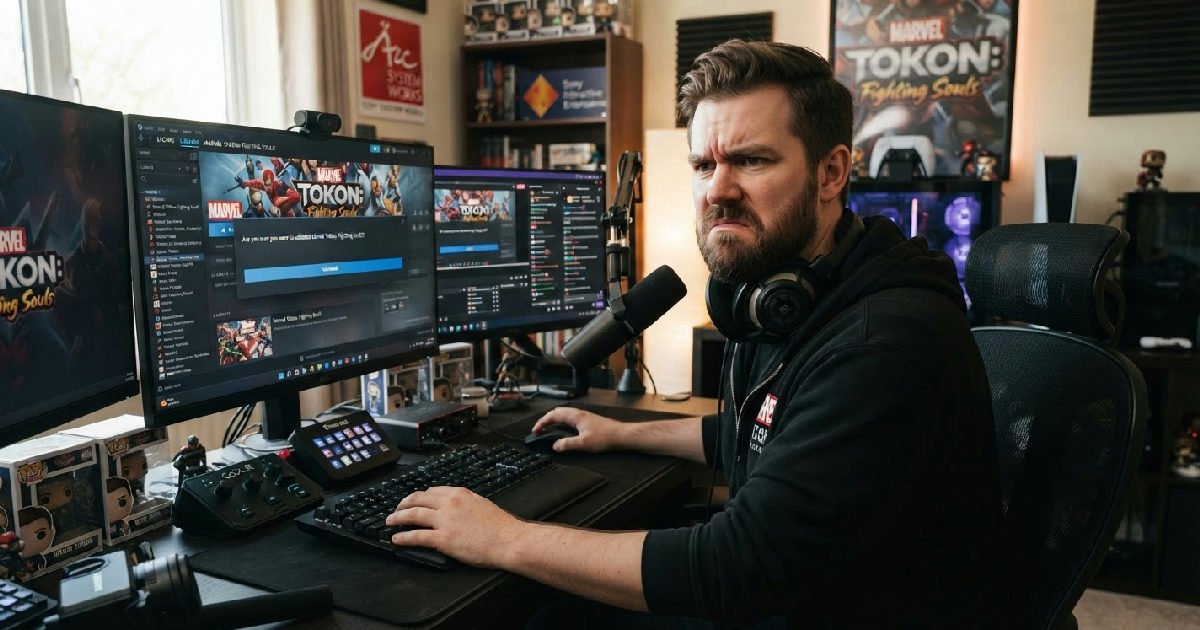
Maximilian Dood uninstalls Marvel Tokon: Fighting Souls on stream over abysmal PC port issues
Maximilian Dood uninstalls Marvel Tokon: Fighting Souls from his PC live on stream on August 7, 2026, citing dissatisfaction with the new 4v4 superhero tag fighter.
This dramatic move came just two days after the game’s official PC launch, highlighting severe technical problems plaguing publisher Sony Interactive Entertainment and developer Arc System Works’ latest title.
PC port plagued by stuttering and instability
During an August 7 livestream titled “Last day with PC version, sheesh,” Christiansen minced no words. He called the PC port “really s**t,” explaining that constant stuttering made the game “un-fun” and practically unplayable. This outspoken condemnation from one of the FGC’s most influential voices has brought the game’s troubled rollout squarely into the spotlight.
The issues aren’t just anecdotal; they’re reflected in widespread player feedback. Gamers have flooded Marvel Tokon: Fighting Souls‘ Steam page with complaints, causing its review scores to plummet. Initially, the game held a “Mixed” rating with 44% positive reviews across all languages, but that number quickly worsened.
As of this week, the PC version stands at a “Mostly Negative” rating, with only 41% positive reviews in all languages and an even grimmer 39% in English. Players routinely report significant performance dips, graphical glitches, and game-breaking stuttering that directly contradict the smooth experience promised by a modern fighting game.
Pre-launch warning signs from beta testing
The writing was on the wall well before launch. An open beta for the PC version of Marvel Tokon: Fighting Souls, held in late July 2026, already suffered from what many described as “intense stuttering and all-round shoddy optimisation.” Developer Arc System Works acknowledged these early issues and assured players that fixes would be implemented before the game’s official August 6 debut.
However, the persistent problems suggest those promised fixes either weren’t fully realized or introduced new complications. Gamers who invested in the PC version based on these assurances are now left with a product many feel is unplayable, raising questions about quality control and communication.
Sony’s shifting strategy and infrastructure concerns
The debacle also shines an unflattering light on publisher Sony Interactive Entertainment, which has faced growing scrutiny over its PC port strategy. Many players point to Sony’s underlying PC infrastructure, citing “bloated background runtimes, SDKs, and anti-cheat” as potential culprits for the technical woes.
This isn’t the first time Sony’s PC practices have sparked controversy. A mandatory PlayStation Network (PSN) account login requirement, which led to the game being blocked in over 100 countries, drew comparisons to the significant backlash surrounding the PC launch of Helldivers 2 in May 2024.
While Sony has historically seen substantial revenue from PC ports, earning over $1.5 billion on Steam by December 2025, these repeated missteps could erode player trust.
Arc System Works’ Unreal Engine transition
For developer Arc System Works, the launch of Marvel Tokon: Fighting Souls marks a significant technical milestone. This game is their first title built using Unreal Engine 5, a powerful but complex engine.
The studio has a storied history of creating critically acclaimed fighting games, including fan favorites like Guilty Gear and BlazBlue, and successful licensed titles such as Dragon Ball FighterZ, which utilized Unreal Engine 4.
The transition to a new engine, especially one as demanding as Unreal Engine 5, often presents unforeseen challenges. It’s possible the team encountered unexpected hurdles in optimizing the game for PC hardware within this new development environment, contributing to the performance issues. Learning a new engine can be tricky for developers, and these complexities often manifest during initial platform releases.
Fallout in the fighting game community
Maximilian Dood’s public uninstallation carries considerable weight within the FGC. As a highly respected figure, his pronouncements often guide community sentiment and purchasing decisions. His unequivocal abandonment of the PC version, coupled with his endorsement of the PlayStation 5 version, sends a clear message to players contemplating which platform to buy on.
The lack of cross-progression between the PC and PS5 versions further exacerbates the problem. Christiansen himself lamented having to “unlock everything all over again” on his PS5, a frustrating prospect for any dedicated player. This design choice effectively punishes early adopters who chose the PC platform, forcing them to restart their progress if they want a stable gameplay experience.
The cost of a broken launch
A launch as troubled as Marvel Tokon: Fighting Souls‘ PC version can have far-reaching financial and reputational consequences. For Arc System Works, it risks tarnishing their reputation for delivering high-quality fighting games. For Sony Interactive Entertainment, it undermines their efforts to expand their presence in the competitive PC gaming market.
Winning back a disillusioned player base is an uphill battle, especially in the fighting game genre where initial momentum and a healthy online population are crucial. The negative Steam reviews and high-profile complaints could deter new players, limiting the game’s potential lifespan and future revenue streams.
This also impacts digital transaction systems, as issues like these can slow down player investment in a game’s ecosystem, a factor in broader digital commerce.
What comes next for Marvel Tokon: Fighting Souls
Arc System Works has publicly committed to investigating the reported issues, but the timeline and effectiveness of potential fixes remain uncertain. Maximilian Dood, for his part, has entirely abandoned the PC version, stating he’ll exclusively play the PlayStation 5 version going forward. He confirmed on X/Twitter that “PS5 version works, thank god,” even reporting smooth matches with higher ping, indicating a stark contrast in stability.
The question now is whether the developers can implement robust solutions quickly enough to prevent further damage. The FGC is notoriously discerning, and first impressions, especially for a highly anticipated title like this, are hard to shake. If the PC port isn’t brought up to snuff soon, Sony and Arc System Works risk alienating a significant segment of their potential audience for good.
The broader implications extend to other publishers considering simultaneous PC and console releases. Ensuring a smooth PC launch is critical for digital commerce and player retention in today’s competitive gaming landscape.
As game developers continuously work on improving their titles, a smooth experience is paramount, much like Mojang’s ongoing work to refine popular games across platforms. Even payment systems like new Bitcoin app Glow depend on user trust for adoption.