

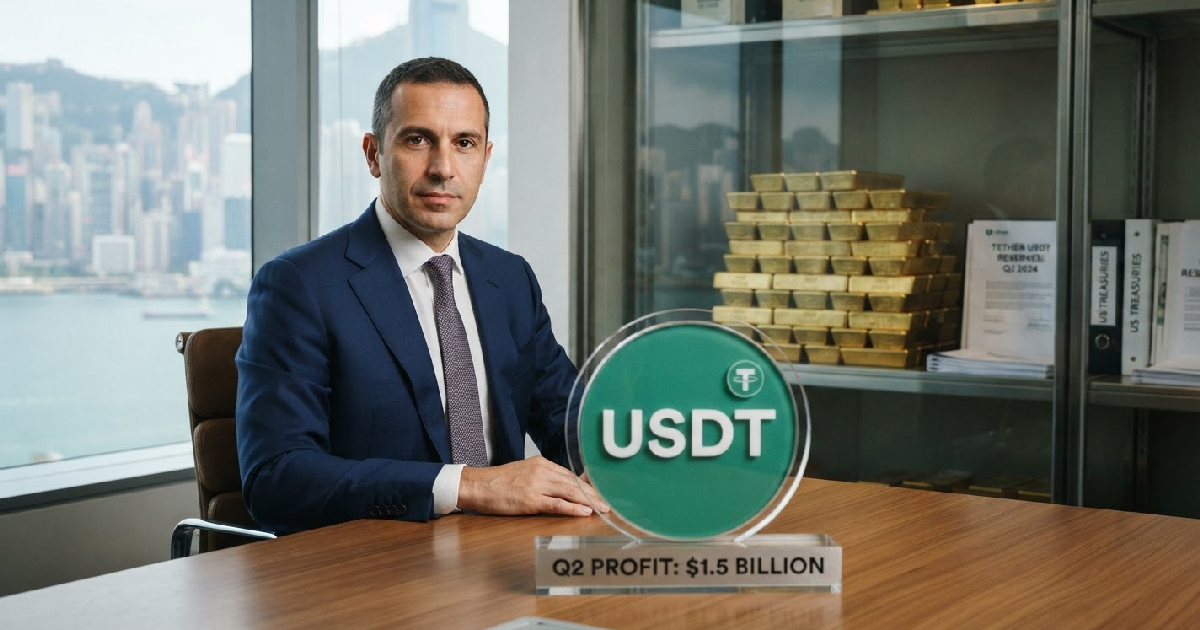
Tether posts $1.5 billion Q2 profit as USDT supply and gold holdings surge
Tether, the company behind the widely used USDT stablecoin, announced a substantial net operating profit of approximately $1.5 billion for the second quarter of 2026. This impressive financial outcome, revealed in its latest BDO attestation on Friday, July 31, 2026, coincided with significant growth in USDT circulation and a notable expansion of its gold reserves.
The stablecoin issuer’s strong performance was largely fueled by strategic investments in U.S. Treasuries and repurchase agreements.
Strong second quarter performance underscores stablecoin dominance
This financial achievement underscores Tether’s continued influence in the cryptocurrency market. It also highlights the company’s ability to generate considerable returns from its reserve assets, even as the broader stablecoin market faces fluctuating conditions.
Tether’s financial results for the second quarter of 2026 highlight its consistent strength in the often-volatile cryptocurrency market. The reported $1.5 billion net operating profit marks a nearly 50% increase over the previous quarter’s figures, demonstrating robust operational efficiency.
This surge in profitability comes at a time when the overall stablecoin market experienced some contraction. Despite this, Tether’s stablecoin, USDT, further solidified its position, capturing over 60% of the total stablecoin market share by the end of the quarter.
This dominance suggests growing trust in Tether’s ability to maintain its peg and manage its reserves effectively, allowing it to thrive even when competitors face headwinds.
USDT circulation and reserve strength
The latest attestation confirmed that USDT in circulation reached approximately $184.6 billion by June 30, 2026. This figure represents an increase of about $446 million compared to the end of March, indicating continued demand for the digital dollar.
Tether’s balance sheet also showed robust health, reporting total assets of $187.75 billion against liabilities of $183.64 billion at the close of Q2. This meticulous accounting left the company with a healthy reserve surplus of roughly $4.11 billion.
It’s worth noting, however, that this reserve surplus did halve from a record $8.23 billion in the first quarter of 2026. This reduction suggests that while the company remains highly profitable, the assets backing part of its reserves experienced some direct strain during the period.
Strategic asset allocation and growing gold holdings
The bulk of Tether’s impressive operating profit stemmed from its prudent investment strategy, heavily focused on short-term U.S. Treasuries and repurchase agreements. These highly liquid, government-backed assets form the bedrock of its reserve portfolio, providing both stability and income.
The company maintains a significant position in these instruments, holding close to $115 billion in U.S. Treasuries. This substantial investment makes Tether one of the largest private holders of American government debt, an influential role in traditional financial markets.
Beyond traditional assets, Tether isn’t just relying on conventional financial instruments; it’s also making significant moves into physical commodities. The firm added 14 metric tons of physical gold during the second quarter, expanding its tangible asset base.
This brought its total gold holdings to more than 146 metric tons, valued at $18.83 billion. Such a substantial increase in gold reserves highlights a strategic move towards greater diversification and a hedge against potential economic uncertainties.
Diversifying the reserve portfolio with Bitcoin
In addition to gold, Tether also maintains substantial Bitcoin holdings as part of its broader diversification strategy. Its Bitcoin reserves grew to over 98,932 BTC, representing approximately $5.8 billion in value. This continued accumulation signals a belief in the long-term potential of the flagship cryptocurrency.
The company also took steps to de-risk its balance sheet by reducing its secured lending exposure. Tether cut its secured lending by approximately $2.38 billion, or 15%, during the quarter. This move further strengthens its liquidity profile and reinforces investor confidence in its overall stability and risk management.
CEO Paolo Ardoino champions financial inclusion
Tether CEO Paolo Ardoino articulated a clear vision for the company, emphasizing its commitment to financial inclusion, particularly in developing nations. He highlighted Tether’s unique role in expanding access to financial services and emerging technologies like artificial intelligence for underserved populations worldwide.
Ardoino proudly stated that Tether’s impact on global financial inclusion is unparalleled in human history. He contrasted Tether’s approach with what he perceives as the broader financial industry’s fixation on booming AI stock valuations, opting for a more grounded, impactful investment strategy.
Instead, Tether is channeling its investments into foundational technologies that democratize financial access. This strategic direction underlines the company’s dedication to its long-term mission rather than chasing short-term market trends, aiming for sustainable growth.
This approach isn’t just about profits; it’s about building accessible financial infrastructure. The focus on empowering underserved communities through technology aligns with a growing demand for equitable economic opportunities globally.
Navigating market dynamics and transparency initiatives
Ardoino also addressed the company’s resilience amidst fluctuating market conditions. He noted that Tether’s reserve strategy successfully navigated periods of market volatility for both Bitcoin and gold, ensuring that USDT remained fully backed and stable. This consistent performance is a key factor for market participants relying on stablecoins for their operations.
Transparency remains a critical focus for Tether, especially with the ongoing efforts towards a full “Big Four” audit. While that comprehensive audit is still in progress, the quarterly BDO attestation serves as an interim measure, providing regular snapshots of the company’s financial health.
These attestations aim to reassure investors and the broader market about the backing of USDT. This continuous push for transparency is vital in the often-scrutinized stablecoin sector, where trust and verifiable reserves are paramount to market confidence.
As the crypto market matures, regulatory bodies and investors alike demand greater clarity on asset backing and operational integrity. Tether’s proactive reporting seeks to meet these expectations, bolstering its credibility and setting a standard for the industry.
Broader implications for the stablecoin ecosystem
Tether’s robust Q2 performance sends a strong signal across the stablecoin ecosystem and the wider crypto industry. Its ability to generate significant profits while expanding its market share, even during a period of overall stablecoin market contraction, underscores the utility and consistent demand for a reliable digital dollar.
This success strengthens its position as a dominant force in the digital asset landscape. Competitors in the stablecoin space constantly vie for market share, but Tether’s established network effect and deep liquidity provide a significant advantage that’s hard to match.
The fact that USDT’s market share increased to over 60% during a period when the overall market for stablecoins contracted speaks volumes about its capital consolidation. This indicates that users and institutions are increasingly centralizing their stablecoin holdings around the most trusted and liquid options.
The company’s strategic diversification into physical gold and substantial holdings in U.S. Treasuries provides a multi-faceted approach to reserve management. Such moves offer a potential blueprint for other stablecoin issuers looking to enhance their stability and appeal to a broader institutional investor base.
For users, Tether’s consistent performance and commitment to financial inclusion offer a stable and accessible entry point into the digital economy. The growth in user base, expanding by over 30 million during the quarter, demonstrates its practical utility and widespread adoption.
This growing adoption helps bridge traditional finance with decentralized applications, driving real-world utility. Moreover, the increasing supply chain resilience within the crypto sector, partly exemplified by robust stablecoin operations, is becoming more central to overall market stability.
Future outlook and regulatory landscape
As Tether continues its impressive growth trajectory and asserts its dominance, the spotlight on its operational practices and reserve management will inevitably intensify. The ongoing pursuit of a “Big Four” audit remains a significant milestone that could further cement its reputation and meet increasing regulatory demands.
Completing this audit would likely provide an even higher degree of assurance to the market, addressing long-standing questions about its reserves. Tether’s substantial holdings in U.S. Treasuries and its growing gold reserves position it as a formidable economic entity, with influence extending beyond just crypto.
Its deep investments in traditional financial markets through significant holdings means the interplay between stablecoin operations and global stocks will only become more pronounced. This interconnectedness highlights the growing maturity of the digital asset space and its integration into the wider economy.
The company’s focus on financial inclusion and its investment in technologies for underserved populations also presents a compelling narrative for its long-term strategy. This social impact component could resonate with a broader audience and potentially attract further partnerships and development opportunities, far beyond what any firm sees from a mere record profit.
This strategic emphasis aligns with growing global trends towards equitable access to financial services, solidifying Tether’s role as a major player in the evolving landscape of digital finance. Its continued performance will be watched closely by investors, regulators, and market participants alike.