

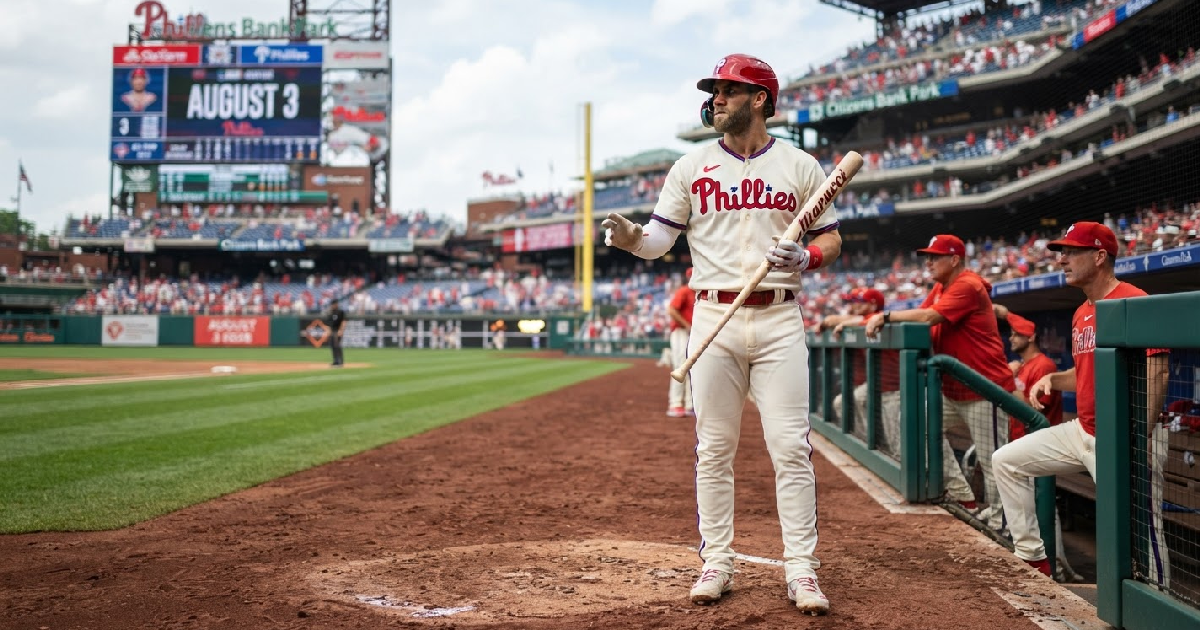
Bryce Harper calls for urgent Phillies trades
With the August 3rd Major League Baseball trade deadline fast approaching, teams across the league are scrambling to solidify their rosters. Star outfielder Bryce Harper has publicly urged the Philadelphia Phillies front office to make aggressive moves, while New York Mets pitcher Clay Holmes is drawing considerable scout interest despite rehabilitating from an injury.
Meanwhile, the St. Louis Cardinals are charting a distinct course, prioritizing the acquisition of upper-level prospects to bolster their long-term pitching pipeline.
Phillies star Bryce Harper pushes for urgent deadline moves
This flurry of activity underscores the high stakes of the deadline, where strategic decisions can either propel teams toward a championship or set the stage for future contention. Clubs are weighing immediate needs against future stability, all under the shadow of a potential lockout following the current Collective Bargaining Agreement (CBA) season.
Philadelphia Phillies slugger Bryce Harper isn’t holding back, openly calling for the team’s front office to execute significant trades. After a frustrating 1-0 loss to the Miami Marlins, Harper declared, “I think we need some help,” signaling his desire for immediate reinforcements.
His plea comes as the Phillies hit a critical skid, dropping four consecutive series and losing eight of their last 11 games. With a 57-51 record as of July 29, 2026, they sit six games behind the Atlanta Braves in the National League East and hold just a two-game lead for a wild-card spot.
Harper’s rationale and specific targets
Harper believes the looming possibility of a lockout next season, stemming from the current CBA, makes absorbing high salaries for this year a shrewd financial play. He suggests that full salaries might not be paid next year, mitigating the long-term financial risk of acquiring expensive talent.
Specifically, Harper has advocated for the acquisition of a frontline starting pitcher, a right-handed bat to boost the offense, and additional bullpen arms. The Phillies are reportedly scouting Mets pitcher Freddy Peralta and monitoring Clay Holmes’ rehabilitation, indicating they’re looking at both starting and relief pitching options.
Phillies’ recent struggles intensify pressure on Dave Dombrowski
The team’s post-All-Star break performance has been particularly dismal, with a 3-8 record and only 43 runs scored across 11 games. This slump has amplified the pressure on Philadelphia’s President of Baseball Operations, Dave Dombrowski, to act decisively before the August 3rd deadline.
Harper, a cornerstone of the franchise, is performing well personally, batting .252 with 22 home runs, 63 RBIs, and an .850 OPS. But even his consistent production hasn’t been enough to offset the team’s struggles, making outside help seem increasingly essential.
Mets pitcher Clay Holmes drawing strong trade interest
New York Mets pitcher Clay Holmes has emerged as a significant trade candidate, attracting scouts from multiple teams during his rehabilitation appearances. The 33-year-old right-hander, who signed a three-year, $38 million deal before the 2025 season, is reportedly more likely to be traded than signed to an extension.
Holmes is almost certain to exercise his opt-out clause for the 2027 season, a move spurred by his impressive performance as a starter for the Mets this year. This contract situation makes him a valuable, albeit potentially short-term, asset for a contending team.
Rehab progress and scout attendance
Holmes broke his right fibula on May 15th, sidelining him for a significant period. However, his recent rehab outing for Triple-A Syracuse on Thursday, July 22, 2026, showcased his readiness for a return, drawing numerous scouts to the game.
During his 59-pitch performance, he topped out at 94.1 mph with his sinker, struck out four batters, scattered three hits, and issued two walks. His strong showing indicates he could make at least one major league start for the Mets before the trade deadline, assuming he isn’t moved beforehand.
Contract situation fuels trade talks
The Chicago White Sox have been particularly attentive, with special assistant Nick Hostelter closely monitoring Holmes’ recovery and performance. Other clubs are also keen, recognizing his 2.39 ERA across 52 2/3 innings this season as a significant boost to any rotation.
The Mets face a dilemma: keep a productive pitcher who might depart next year, or trade him now for prospects. His opt-out clause means teams trading for him would likely see him as a rental for a playoff push, but his veteran presence and consistent results make him a desirable commodity.
St. Louis Cardinals eye future with pitching pipeline strategy
The St. Louis Cardinals, currently sitting at a .500 record of 53-53 as of July 28, 2026, are taking a different approach to the trade deadline. Instead of chasing immediate wins, they’re focused on acquiring “meaningful pieces” that align with their long-term vision, specifically upper-level prospects to strengthen their pitching pipeline.
This strategy suggests the Cardinals are leaning into a seller’s market, aiming to restock their farm system with future talent. It’s a calculated risk for a team hovering around contention, but one that could pay dividends in the years to come.
Potential outgoing players and internal replacements
Several current Cardinals pitchers could be on the move. Dustin May is scheduled to make a start on Wednesday night, July 29, 2026, which many believe will be his final appearance as a Cardinal. Relievers JoJo Romero and Ryne Stanek are also considered prime trade candidates.
Should these veterans depart, the team plans to promote internal talent. Hunter Dobbins is expected to fill one of the open spots, while top pitching prospect Quinn Mathews appears lined up for his MLB debut. Other prospects like Brycen Mautz, Ryan Fernandez, and Cade Winquest could also see opportunities in the big leagues.
Focus on upper-level prospects
The Cardinals are specifically targeting prospects who are closer to major league readiness, indicating they’re not looking for raw, long-term projects. This focus on upper-level talent suggests they want players who can contribute to the main roster relatively soon, accelerating their rebuilding efforts.
Another interesting trade piece is Riley O’Brien, an All-Star who has saved 26 games this season. Despite having three years left on his contract after 2026, the Cardinals might consider moving him if the right package of prospects emerges, showcasing their commitment to building a sustainable future.
Trade deadline implications for contenders and rebuilders
The diverse approaches of the Phillies, Mets, and Cardinals highlight the complexities of the MLB trade deadline. For teams like Philadelphia, under pressure to win now, securing established talent is paramount, even if it means taking on significant financial commitments.
Harper’s strong stance also reflects a growing trend where star players openly influence front-office decisions, demanding a competitive roster for the present. This dynamic puts General Manager Dave Dombrowski in a tough spot, balancing team needs with player morale and the long-term outlook.
Conversely, the Mets’ position with Clay Holmes exemplifies how teams must navigate valuable assets with expiring or opt-out clauses. Trading Holmes could net them prospects for the future, but it means losing an effective pitcher in the short term. It’s a classic buy-or-sell conundrum, with the Mets appearing to lean towards selling parts of their roster to retool.
The Cardinals’ strategy of selling established players for upper-level prospects is common for teams looking to re-energize their farm system and build a new core. It’s a patient approach that often requires fan understanding, particularly when the team is still capable of competing in the division.
These individual team strategies collectively shape the broader market, influencing prices and availability of talent. A potential lockout next season also adds an unprecedented layer of complexity, making teams cautious about long-term financial commitments but potentially more aggressive on short-term rentals.
The deadline can also reveal the financial health and strategic foresight of ownership and management. Investments in infrastructure or long-term player development, much like any major business decision, require careful planning and a clear vision.
Businesses in various sectors, from sports to manufacturing, constantly evaluate their assets and future growth opportunities, sometimes involving significant capital outlays. For instance, companies often engage in international projects that require careful consideration of market conditions and strategic partnerships.
What’s next as the deadline looms?
The final days leading up to the August 3rd trade deadline promise to be a whirlwind of activity. Phillies fans will be watching closely to see if Dave Dombrowski responds to Bryce Harper’s urgent calls for reinforcements. Acquiring a frontline starter or a impact bat could significantly alter their playoff trajectory.
For the Mets, the decision on Clay Holmes will be a bellwether for their short-term strategy. Will they prioritize a return of prospects, or hold onto him for a brief, final stretch of the season? His next appearances, whether in rehab or the majors, will be heavily scrutinized by potential suitors.
The Cardinals will continue their methodical search for pitching prospects, aiming to acquire talent that can contribute sooner rather than later. The movements of Dustin May, JoJo Romero, and Ryne Stanek will signal their full commitment to this rebuilding phase and offer glimpses of their future rotation.
This period of intense negotiation and strategic maneuvering will ultimately determine the competitive balance for the remainder of the 2026 MLB season. It’s a high-stakes poker game where every move has significant repercussions for both the immediate and distant future of these franchises.