

How Metaverse Development Reshapes Esports Imm
Metaverse development in esports is actively integrating persistent, interactive 3D virtual environments with competitive video gaming. This convergence aims to significantly enhance immersion, ownership, and social interaction within the existing esports ecosystem. It ultimately creates new avenues for competition, deeper fan engagement, and innovative economic models beyond traditional screen-based play.
This evolving landscape moves competitive gaming past simple viewing and participation, forging entirely new digital realms for players and fans. It represents a fundamental shift in how electronic sports are experienced and monetized. This isn’t just an upgrade; it’s a redefinition of the entire ecosystem.
Defining the Core Concepts Shaping Digital Sports
Understanding the intersection of virtual worlds and competitive gaming requires a clear grasp of both “metaverse” and “esports” as distinct but converging concepts. Their combined evolution promises to reshape the digital sports landscape. This collaboration pushes the boundaries of what’s possible in online entertainment.
What the metaverse truly means
The metaverse, a term coined by Neal Stephenson in his 1992 science fiction novel *Snow Crash*, describes a persistent virtual environment. Here, users interact through avatars within a 3D display, primarily fostering social and economic connections. Merriam-Webster defines it as “a persistent virtual environment that allows access to and interoperability of multiple individual virtual realities.”
It often links intrinsically with virtual reality (VR) and augmented reality (AR) technologies. The underlying philosophy of Web3, emphasizing decentralization, also plays a crucial role. This technological foundation underpins its promise of user ownership and interoperability.
Understanding esports as competitive gaming
Esports, or electronic sports, refers to professional-level competitive video game play. These events are often structured into leagues and tournaments where individuals or teams compete for prizes, including substantial monetary rewards. It’s an industry built on intense rivalry and entertainment for a global audience.
Similar to traditional sports leagues, esports aims to entertain viewership and promote fierce competition. Its infrastructure relies heavily on the creation and distribution of video content, primarily through live streaming and broadcasting platforms.
Immersive Experiences: Virtual Venues and VR Esports
Metaverse development in esports is architecturally transforming how events are hosted and experienced. It’s ushering in an era of unprecedented immersion for both participants and observers. The goal is to blur the lines between virtual and physical presence.
Esports events in virtual stadiums
Esports events can now be hosted in elaborate virtual stadiums and arenas within the metaverse itself. Spectators attend these digital venues as customizable avatars, offering dynamic viewing experiences. They can change “seats,” move to different virtual locations like sports bars, and interact with others in ways simply not possible at physical events.
This interactivity fosters a deeper sense of community and participation. It allows fans to tailor their viewing experience. Such environments elevate fan engagement, making each match a truly social occasion.
Enhanced player and spectator immersion
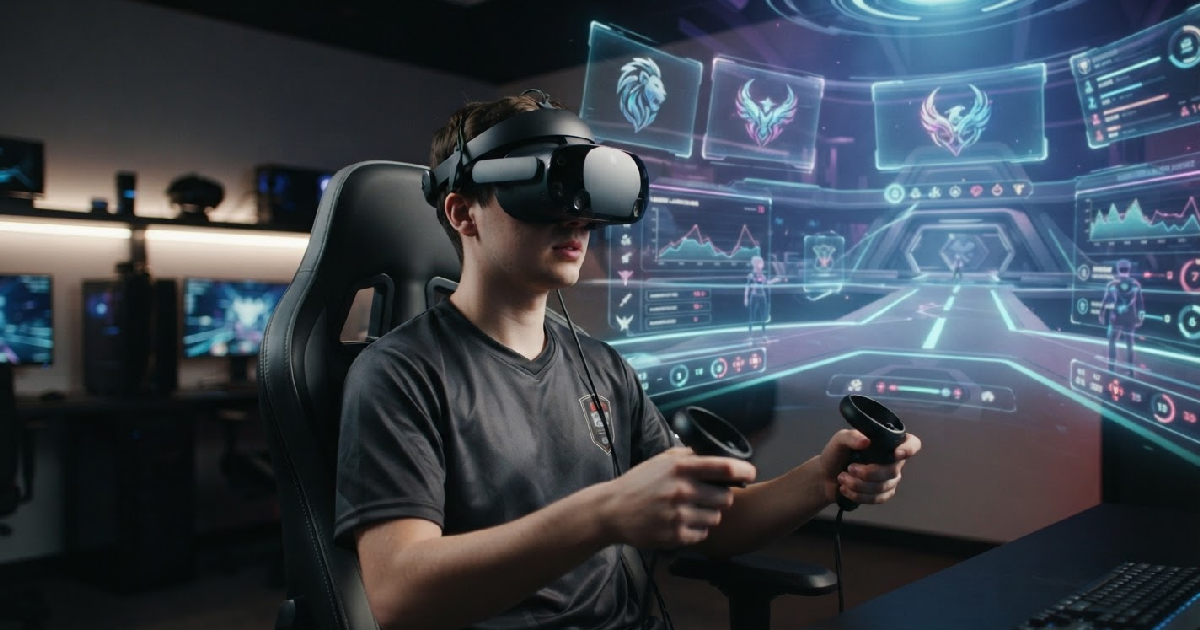
VR Esports represents a significant leap, placing players directly inside the game using virtual reality technology. This demands physical movement, coordination, and spatial awareness, transforming competitive gaming into a more active physical experience. It’s a fundamentally different way to compete.
Audiences can also become part of the action through interactive viewing zones, stepping into the virtual world alongside players. Advanced projection systems and mixed reality graphics further enhance this dynamic spectacle. This creates a multi-layered viewing experience that captivates and engages.
Digital Ownership and Web3 Economies Transform Esports
A core tenet of metaverse development in esports revolves around digital ownership and new economic models. These systems, powered by blockchain technology, are fundamentally reshaping how players and fans interact with in-game assets. It’s creating real-world value from virtual items.
The rise of non-fungible tokens
Non-Fungible Tokens (NFTs) are unique digital assets that represent verifiable ownership of various in-game items. These include virtual real estate, characters, skins, and other digital collectibles, all securely recorded on a blockchain. NFTs reshape esports gaming by enabling true digital asset ownership.
In metaverse esports, NFTs enable players to genuinely own and potentially monetize their in-game assets, fostering a deeper connection to the game world. This facilitates tangible economic value for digital possessions. Utility NFTs can also provide exclusive access to experiences or specialized content, adding another layer of value.
Web3 integration and play-to-earn models
The metaverse integrates Web3 technologies, built on a decentralized foundation, to ensure secure control over digital identities and assets. This decentralized approach is critical for user empowerment and data integrity. It marks a departure from traditional centralized platforms.
This integration facilitates “play-to-earn” (P2E) models, where players can earn real-world economic value through their participation and ownership of digital assets. This mechanism introduces novel financial incentives, directly rewarding engagement and skill. It fundamentally alters the relationship between players and game developers.
Community-Driven Governance Through DAOs
Decentralized Autonomous Organizations (DAOs) are emerging as a pivotal element in the governance of metaverse esports ecosystems. These blockchain-governed entities enable open, worldwide communication and cooperation within virtual worlds. They represent a significant shift towards community empowerment.
In metaverse esports, DAOs facilitate community-driven governance, allowing members to vote on crucial game adjustments, ecosystem changes, and resource allocation. This mechanism shifts control away from centralized entities, placing decision-making power directly with the player community. It ensures that the evolution of these virtual environments aligns closely with the collective interests of their users.
The Future Outlook for Metaverse Esports
The ongoing growth in metaverse development signals a transformative era for competitive gaming. Access to these immersive 3D metaverse environments is often facilitated through advanced AR/VR interfaces. Improved technology in this area will likely drive wider adoption and deeper engagement.
As these technologies mature, we can anticipate even more seamless and widespread integration of virtual worlds into daily esports experiences. This convergence will continue to create unique avenues for competition and fan interaction. The future of esports depends heavily on these technological advancements.
The emphasis on digital ownership and decentralized governance also suggests a more equitable and dynamic future for participants. Players are no longer just consumers; they’re active stakeholders in evolving digital economies. These trends will undoubtedly shape the next generation of competitive entertainment, redefining the very nature of gaming itself.