

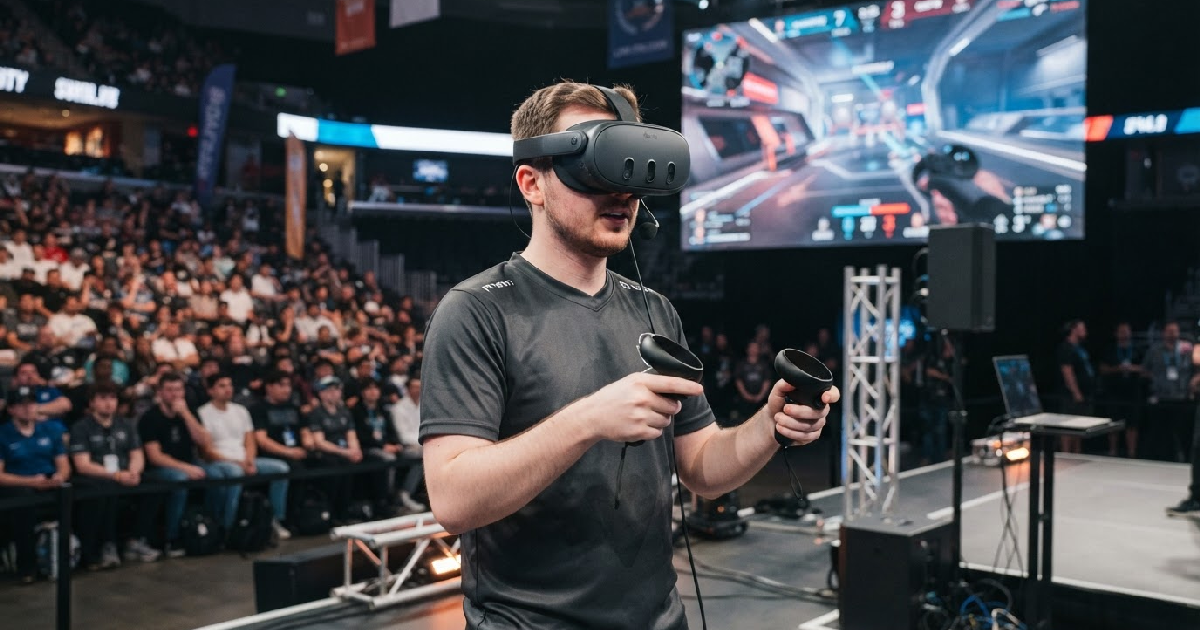
The future of Virtual Reality in esports: immersion and challenges
The landscape of competitive gaming is on the brink of significant transformation, driven by the burgeoning potential of Virtual Reality (VR) in Esports. This emerging field promises unprecedented levels of player immersion and physical engagement, ultimately reshaping how competitive games are played and experienced by audiences.
While still in its nascent stages, VR esports is poised for considerable growth. This expansion is fuelled by ongoing technological advancements, increasing accessibility to VR hardware, and a growing consumer demand for more interactive forms of entertainment. However, its widespread adoption faces clear hurdles.
Understanding Virtual Reality technology
Virtual Reality (VR) represents a cutting-edge technology that uses computer modelling and simulation to forge an artificial, three-dimensional sensory environment. This setup immerses users within computer-generated worlds, designed to simulate reality itself.
Users engage with these environments through a range of specialised devices. These include headsets, goggles, gloves, or bodysuits. These tools deliver visual, auditory, and sometimes haptic feedback to create a compelling sense of “being there” within the digital space.
Fully Immersive VR experiences defined
One primary category is Fully Immersive VR, which completely envelops users in a digital environment. There’s no fixed reference point to the real world, creating the strong impression of physically transporting players into a digital space, a characteristic often found in modern gaming applications.
This level of immersion ensures players are deeply connected to the game’s narrative and mechanics. It also significantly enhances the emotional and sensory impact of the virtual world.
Semi-Immersive VR: digital overlays
Another distinct type is Semi-Immersive VR. This experience is defined by digital components that overlay a user’s view, blending virtual elements directly into their perception of the real world. Think of augmented reality applications that add digital layers to your physical surroundings.
While not as isolating as fully immersive VR, semi-immersive applications still offer unique interactive possibilities. They can enhance real-world environments with digital information or interactive elements, blurring the lines between the physical and virtual.
VR Esports: reshaping competitive gaming
The integration of VR technology holds the potential to revolutionise the competitive gaming landscape. It promises to deliver unparalleled player immersion, deepening participants’ connection to the game world far beyond traditional screen-based interactions.
This means players don’t just control an avatar; they become the avatar, experiencing the game world from a first-person perspective with full spatial awareness. This level of presence can change everything from strategic decision-making to reaction times in fast-paced titles.
Beyond visual engagement, VR also enables greater physical participation, moving competitive play beyond static controllers to more active, body-involved mechanics. Players might physically dodge, swing, or aim, demanding stamina and agility alongside traditional gaming skills.
For spectators, this shift could unlock dynamic new viewing experiences, fundamentally changing how fans follow the action. Imagine watching an esports match from any vantage point within the virtual arena, or even from the perspective of a competing player.
This innovative approach aligns with broader trends in gaming, where esports technology continues to evolve. The unique offerings of VR could attract a wider audience, driving further interest and participation from both traditional gamers and new enthusiasts.
Navigating the challenges for widespread adoption
Despite these exciting prospects, the path to mainstream VR esports adoption is not without significant hurdles. A major barrier remains the substantial cost of high-end VR hardware, which can present a considerable entry barrier for many potential consumers and competitive players.
High-fidelity VR headsets often require powerful graphics cards and processors, adding to the overall expense. This creates a financial divide, limiting access for casual players and grassroots esports organisations.
Technical limitations also persist, influencing the overall user experience and competitive integrity. Issues like motion sickness, caused by discrepancies between visual movement and physical sensation, remain a concern for some users.
Additionally, current VR technology sometimes struggles with optimal resolution, limited field of view, and the nuisance of physical cables. These factors can detract from immersion and impact competitive performance, especially in precision-dependent games.
Crucially, the industry faces the challenge of developing compelling, spectator-friendly content specifically designed for VR esports. Current offerings are often in their early stages, and a lack of established, competitive titles hinders broader engagement from both players and viewers.
Future predictions for competitive gaming often highlight content as a key driver. Developers need to create games that are not only fun to play in VR but also clear and exciting to watch, offering engaging camera angles and intuitive information overlays for broadcast.
Technological advancements driving growth
Despite the existing challenges, the trajectory for Virtual Reality in Esports points towards significant growth. Continuous technological advancements are steadily improving VR hardware and software, making devices more powerful and refined.
We’re seeing rapid progress in display technologies, with higher resolutions and refresh rates reducing screen-door effects and improving visual clarity. Tracking systems are also becoming more precise and less prone to drift, enhancing player movement and interaction accuracy.
Processing power in standalone VR headsets is increasing, allowing for more complex and graphically rich virtual worlds without tethering to a PC. These improvements collectively contribute to a more seamless and believable virtual experience.
This ongoing progress, coupled with efforts to reduce overall costs, is enhancing accessibility for a wider audience. As manufacturing scales and competition increases, VR hardware is becoming more affordable and user-friendly, pushing down the entry barrier.
As prices become more competitive and the setup process simplifies, the pool of potential VR esports participants and fans will naturally expand. This makes the technology more viable for casual gamers and competitive newcomers alike.
There’s also a growing global demand for interactive entertainment, pushing developers and platforms to explore new formats. Consumers are actively seeking novel and engaging experiences that go beyond traditional media consumption, and VR fits this demand perfectly.
This consumer appetite aligns perfectly with VR’s capacity to deliver deeply engaging and novel experiences, positioning the sector for expansion. This growth echoes the overall global esports market size.
The future outlook for competitive VR
Virtual Reality in Esports is currently in its nascent stages, but it is unequivocally poised for significant growth. The vision of esports athletes engaging in deeply immersive virtual arenas, where physical movement translates directly into game actions, represents a transformative frontier in competitive entertainment.
The blend of physical activity and strategic gameplay offers a unique value proposition, distinguishing VR esports from its traditional counterparts. It adds a new layer of athletic prowess and spatial intelligence to the competitive arena.
As technology matures and becomes more accessible, VR esports is set to redefine what competitive gaming can be. We can expect to see dedicated leagues, professional players, and sophisticated broadcasting setups emerge, bringing these immersive competitions to a global audience.
This isn’t just about a new genre of games; it’s about a paradigm shift in how we conceive of competitive interaction. The integration of VR promises a future where esports is not only watched but viscerally experienced, blurring the lines between player and viewer.